

Daily Dose Of Jazz…
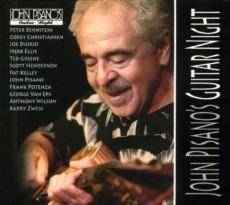
John Pisano was born February 6, 1931 in Staten Island, New York. He began his musical career on the East Coast playing the piano. At age 14 he took up the guitar. In the 1950’s, he entered the service, played guitar with the Air Force Band, then after discharge he followed Howard Roberts and Jim Hall into the guitar chair in the Chico Hamilton quintet. His first significant recordings were made with Hamilton with the quintet in ’57 and South Pacific in 1958.
Pisano’s work with Hamilton and Katz established him as a significant guitarist and arranger and an integral component of the Los Angeles jazz scene. He published some of his own compositions while with the Herb Alpert band. He composed So, What’s New that appeared as the B-side of Herb Alpert’s hit single Flamingo in 1966.
Though he has been a leader in his own right, for most of his career John has resided in his comfort zone as a sideman working with Paul Horn, Fred Katz, Burt Bacharach, Tony Bennett, Herb Alpert, Natalie Cole, Michael Franks, Diana Krall, Peggy Lee, Julie London, Joe Pass, Frank Sinatra, Barbra Streisand, Billy Bean and many more in performance or recordings. He has recorded for Decca,
Starting in the ’90s, John performed with his wife singer Jeanne Pisano in a group called The Flying Pisanos. Today John Pisano continues to influence the jazz guitar community and further the value of jazz guitar with his fabled Guitar Nights and his duet recordings Among Friends, Conversation Pieces, Affinity with Ray Walker, and Homage with Adrian Ingram.

Give The Gift Of Knowledge
More Posts: guitar
Daily Dose Of Jazz…
Rick Laird was born Richard Quentin Laird on February 5, 1941 in Dublin, Ireland. He played music from a young age and enrolled for guitar and piano lessons. He started playing jazz after moving to New Zealand at the age of 16 with his father. He played guitar in jam bands in New Zealand before buying an upright bass. After extensive touring in New Zealand he moved to Sydney, Australia, where he played with many top jazz musicians.
He moved to England in 1962 and became house bassist at Ronnie Scott’s Jazz Club in London, where he had the opportunity to play with Wes Montgomery and Sonny Stitt among others. In 1963 Laird attended London’s Guildhall School of Music and Drama. In 1965 He performed with Victor Feldman and recorded on the Sonny Rollins album ”Alfie” and then went on to play in The Brian Auger Trinity and The Brian Auger Group.
Heading to the States, Rick enrolled in Berklee College of Music in Boston where he studied arranging, composition and string bass. He then teamed up with ex-pat John McLaughlin and The Mahavishnu Orchestra as a founding member to play electric bass until 1973, when the band broke up. Moving to New York he joined Stan Getz’s tour in 1977 followed by Chick Corea the next year.
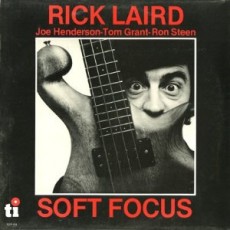
He put out one album as a leader, Soft Focus. Today, he is a successful photographer as well as a private bass tutor and an author of a number of intermediate to advanced level bass books. Richard Laird, as he is known in the art world, in March 2009 came across a collection of photographs in a file cabinet that he had taken in years past. The legendary jazz artists like Miles Davis, Chick Corea, Wayne Shorter, the Mahavishnu Orchestra, Elvin Jones, and Keith Jarrett are now a part of an online archive.
Take A Dose On The Road
More Posts: bass
Daily Dose Of Jazz…
Min Rager was born on February 4, 1975 in Seoul, Korea and began her music career playing in local jazz clubs and her reputation rapidly grew. In 1997, she moved to Montreal to attend McGill University and while there she continued to evolve as a pianist and composer. She graduated in 2003 with an Award of Excellence in Jazz Piano and formed a quintet as support for her original compositions and arrangements.
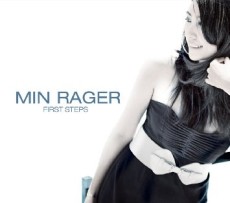
The following year her quintet recorded a studio recording for CBC Radio Beat Jazz II program. The show aired nationally in 2004 and was released as Min debut album Bright Road on Effendi in October 2005. She has composed a jazz suite for two pianos in 2008, performed at the International Jazz Festival of Montreal, had her quintet was named for General Motors Grand Jazz Award and played the Montreal Off Jazz Festival where she received “Best New Artist” honors.
Min Rager is currently on staff both at McGill University as a faculty member part-time where she teaches at the jazz department at the Conservatory of McGill University where she teaches jazz piano when not performing.
Dose A Day – Blues Away
More Posts: piano
Daily Dose Of Jazz…
Jonny King was born Jonathan Z. King on February 2, 1965 in New York City, New York. Raised in New York City, he graduated from Princeton and Harvard Law School. A jazz pianist primarily self-taught, he has neither received any formal music education nor attended any jazz schools. His school of music was life – obsessively listening to records, going to jam sessions and soaking up as much live and recorded music as possible from traditional to avant-garde.
He credits pianist Mulgrew Miller and Tony Aless as his important influences, mentors and personal teachers. As well as recording under his own name, he has performed with, among others Roy Hargrove, Kenny Garrett, Bobby Watson, Christian McBride, Joe Lovano, Ira Coleman, Billy Drummond, Mark Turner, Vincent Herring, Steve Nelson, Peter Washington, Joshua Redman, Steve Davis, David Sanchez, Milton Cardona and Larry Grenadier.
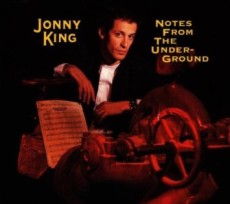
He has released three albums in the 90s on the Criss Cross and Enja labels – In From the Cold, Notes From The Underground and Meltdown. In between his duties as an attorney at a copyright practice, he continues to approach music the way he learned, both as a performer and composer.
Give A Gift Of Jazz – Share
More Posts: piano
Daily Dose Of Jazz…
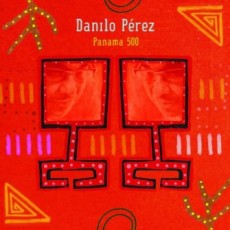
Danilo Pérez was born on December 29, 1965 in Panama and started his musical training at 3 years old on bongos with his father Danilo Sr., a professional bandleader and singer. By age 10 he was studying the European Classical Piano repertoire at the National Conservatory in Panama, eventually transferring to the Berklee College of Music to study Jazz composition.
During the yeas 1985 to ’88 while at Berklee, Danilo played with Jon Hendricks, Terence Blanchard, Claudio Roditi and Paquito D’Rivera. He would go on to tour Poland in ’95 and play the Summer Olympics in Atlanta in ‘96 with Wynton Marsalis, be a part of the Grammy winning album Danzon, perform at President Clinton’s Inaugural Ball and played piano on the Bill Cosby theme song.
Perez has had the fortune to play and record with such luminaries as Charlie Haden, Michael Brecker, Jack DeJohnette, Dizzy Gillespie, Tito Puente, Joe Lovano, Gary Burton, Wayne Shorter, Tom Harrell, Roy Haynes, Steve Lacy and many others.
Pianist and composer Danilo Perez, whose primary influence of style and thought was Dizzy Gillespie, but as a child gleaned from the recordings the styles of Gershwin, Ellington, Coltrane and Monk. He has recorded over a dozen albums, served as a professor at the New England Conservatory of Music, and serves as the artistic director of the Berklee College of Music Global Jazz Institute.
Dose A Day – Blues Away
More Posts: piano