

Daily Dose Of Jazz…
Benny Barth was born February 16, 1929 in Indianapolis, Indiana. As a child he was steeped in high school concerts, marching bands and orchestras and along with his Uncle Ben would go to the Indiana Rooftop Ballroom to hear jazz and big band as well as witnessing battles between the large ensembles of Tommy Dorsey and Buddy Rich.
He attended the Shortridge High School in his hometown and was a member of the Indiana Avenue jazz scene. After his graduation from Butler University , he moved to the West Coast where he worked with Conte Candoli and Lennie Niehaus.
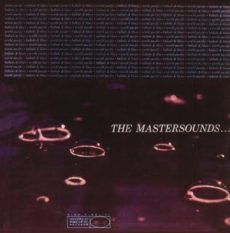
He also worked as a session musician on numerous jazz albums and film scores. From 1957 to 1961 he was a member of The Mastersounds and recorded 12 albums playing with vibraphonist Buddy Montgomery, his brother bassist Monk Montgomery and Richie Crabtree on piano. He later became the house drummer for three years in San Francisco’s Club Hungi I. Barth would be a contributor to the album Drums on Fire, created together with Art Blakey and Chico Hamilton. He recorded with Wes Montgomery, Joe Venuti, Ben Webster, Jimmy Witherspoon, Pearl Bailey, Joe Williams, George Barnes and Mel Tormé.
In 1976, he accompanied Helen Hume on her album Deed I Do and appeared on some of the Vince Guaraldi recordings of the music for the television series Peanuts. Now at 87, drummer Benny Barth continued to play into the new millennium while mentoring young students.
Sponsored By

#preserving genius
More Posts: drums
Daily Dose Of Jazz…
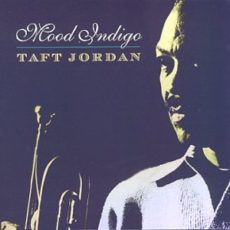
Taft Jordan was born on February 15, 1915 in Florence, South Carolina and as a trumpeter was heavily influenced by Louis Armstrong. Early in his career he played with the Washboard Rhythm Kings before joining Chick Webb’s orchestra from 1933 to 1942. He remained with Webb after Ella Fitzgerald became its frontwoman, trading duties with Bobby Stark as the orchestra’s main trumpet soloist.
From 1943 to 1947 Taft played with Duke Ellington, then with Lucille Dixon at the Savannah Club in New York City from 1949 to 1953. After this stint he played less often, though he toured with Benny Goodman in 1958, played on the Miles Davis album Sketches of Spain, and worked with the New York Jazz Repertory Company.
In 1935 Jordan recorded four tunes, Night Wind, If the Moon Turns Green, Devil in the Moon, and Louisiana Fairy Tale as a leader, with Ward Silloway on trombone, Johnny Mince on clarinet, tenor saxophonist Elmer Williams, pianist Teddy Wilson, guitarist Bobby Johnson, John Kirby on string bass and drummer Eddie Dougherty. He would go on to lead his own band in 1960 and ‘61, recording LPs for Mercury, Aamco Records, and Moodsville labels, as well as with Ruth Brown on Atlantic Records and Dizzy Gillespie on the Norgran label.
Trumpeter Taft Jordan passed away on December 1, 1981 in New Orleans, Louisiana.
Sponsored By

#preserving genius
More Posts: trumpet
Daily Dose Of Jazz…
Frank Ricotti was born on January 31, 1949 in London, England and played in the National Youth Jazz Orchestra while a teenager, then attended Trinity College of Music from 1967 to 1970. From 1968 through 1974 hep performed with Neil Ardley, Dave Gelly, Graham Collier, Mike Gibbs, Stan Tracey, Harry Beckett, Norma Winstone and Gordon Beck.
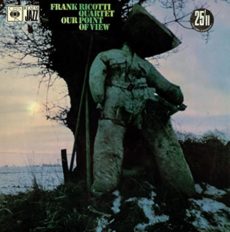
In the late 1960s and early 1970s, Ricotti led his own jazz quartet with a line-up of the band featuring the guitarist Chris Spedding, bassist Chris Laurence and drummer Bryan Spring. Together they recorded the album Our Point of View, and released it in 1969. By 1971, in partnership with bassist Mike de Albuquerque, he released the album First Wind. He recorded with Oliver Nelson on the album Oliver Edward Nelson in London with Oily Rags for the Flying Dutchman label in 1974.
The 1980s saw Frank playing with Chris Laurence and John Taylor in the group Paragonne, and then played with Beck again in 1984. After this he worked primarily as a studio musician recording with groups outside the jazz genre, such as, Status Quo, Freddie Mercury, Pet Shop Boys, Swing Out Sister, Belle and Sebastian, Clannad, Barclay James Harvest, Meat Loaf, Elkie Brooks, Rick Wakeman, Tina Turner, Aztec Camera, Thomas Anders, and Alphaville.
Between 1984 and 1987 Ricotti wrote the soundtrack music for Yorkshire Television’s The Beiderbecke Trilogy, in the style of Bix Beiderbecke. The music was performed by his band, the Frank Ricotti All Stars, and featured Kenny Baker on cornet. The band made a cameo appearance in the final series, playing in a jazz club and the soundtrack album was released in 1988.
In 2007 he played vibes on Mark Knopfler’s album Kill to Get Crimson and vibraphonist and percussionist Frank Ricotti continues to perform, record and compose.

#preserving genius
More Posts: percussion,vibraphone
Daily Dose Of Jazz…
Sam Allen was born on January 30, 1909 in Ohio and accompanied silent films in movie palaces from the age of ten, and in the next few years seemed to have absorbed plenty of slapstick hi-jinx and derring-do from the Hollywood sagas he accompanied. In 1928 he moved to New York City, where he joined Herbert Cowans’s band at the Rockland Palace. Within a year he moved back to Ohio, where he played with Alex Jackson in 1930. Soon afterward he joined James P. Johnson‘s orchestra as the second pianist, as one piano could not play all the chords in the scores. This engagement he followed with an extended run in Teddy Hill’s band, which occupied him for most of the 1930s and included tours of Europe.
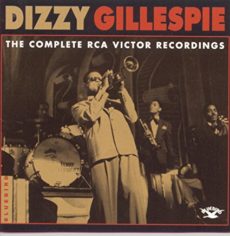
Early in the 1940s Sam worked one of his most musically satisfying collaborations as piano man in the sometimes rowdy combo of violinist Stuff Smith. He then became the pianist for the madcap jive jazz duo of Slim Gaillard and Slam Stewart, the gig for which he was best known, his years in the movie houses came in handy. His talent was further challenged with the bebop hyper-drive of trumpeter Dizzy Gillespie during the same decade.
By the end of the Forties decade Allen moved to Washington and worked locally as a solo pianist for a time, giving up being a touring sideman. Finally he relocated and settled into the Oakland, California, where he often accompanied vocalist Billie Heywood, among others.
Pianist Sam Allen passed away in September 1963.
Sponsored By

Voices From The Community
#preserving genius
More Posts: piano
Daily Dose Of Jazz…
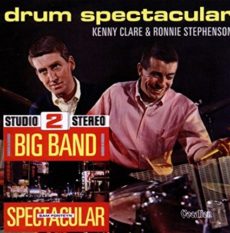
Ronnie Stephenson was born January 26, 1937 in Sunderland, England and as a boy wanted to become a tap dancer like his idol Gene Kelly, but he was persuaded by his father and his pianist brother to take up the drums. Already playing his first public gig the same week he took his first drum lesson at the age of 14, Ronnie was soon working with his elder brother Bob’s band, and then with the Ray Chester’s Sextet. Moving to Birmingham he joined the Cliff Deeley Band at the Tower Ballroom, and played for several months before going on the road.
At 16 he joined singer Lita Roza, a national star who had left the Ted Heath band to tour the variety theatre circuit as a soloist. The 10 months he spent with her garnered him great experience in the music business. Conscripted into the Army, Stephenson performed in The Royal Signals Band until he was demobbed in 1957. Having a close association with Ronnie Scott, he spent two years in Scott’s Quartet, playing the club and accompanying many visiting stars.
He toured Germany with Tom Jones in 1969 and then sat the resident drum chair with the Kurt Edelhagen Band after moving to Cologne, Germany with his wife and two children. After three years with Edelhagen, Ronnie teamed up with pianist Paul Kuhn in Berlin, Germany and toured all over Europe with a variety of bands and artists. He played on the Bond themes Diamonds Are Forever and You Only Live Twice and on other film scores, including Chitty Chitty Bang Bang. Stephenson joined the Theater des Westens Orchestra in Berlin from 1981 to 1995, and taught at the University of Berlin from 1990 to 1993. He retired from music due to poor health, settled in Scotland, and turned to golf as a restorative, becoming a member of Strathmore Golf Club.
Drummer Ronnie Stephenson, one of the most in-demand drummers of the British jazz scene, passed away on August 8, 2002. Over the course of his career he performed or recorded with Sonny Rollins, Stan Getz, Wes Montgomery, Zoot Sims, Quincy Jones, Paul Gonsalves, Johnny Griffin, Roland Kirk, Gerry Mulligan, Sonny Stitt, Barney Kessel, Benny Golson, Benny Goodman, Nelson Riddle, Ella Fitzgerald, Mel Tormé, Tony Bennett, Ronnie Ross, Stan Tracey, Ted Heath, Dick Morrissey, Terry Smith, Jack Parnell, John Dankworth, Tubby Hayes, Cleo Laine, Peter Herbolzheimer, Horst Jankowski, Paul Kuhn, Rolf Kuhn, Kenny Clarke, Victor Feldman, Heinz von Hermann and Hans Rettenbacher, among many others including pop stars Matt Monro, Engelbert Humperdinck, Cilla Black and Shirley Bassey.

Dose A Day-Blues Away
#preserving genius
More Posts: drums