
Daily Dose Of Jazz…
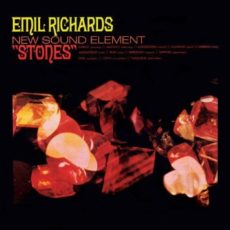
Emil Richards was born Emilio Joseph Radocchia on September 2, 1932 in Hartford, Connecticut. He began playing the xylophone at age six and went on to graduate from the Julius Hartt School of Music. He took private lessons from Asher George Zlotnik and performed with the Hartford Symphony Orchestra and with various jazz musicians in New England.
After serving as Assistant Band Leader of the First Cavalry Army Band for two years, his career took off. He became first call percussionists for jazz, rock and other popular music as well as performing on countless movie and television soundtracks.
In 1954 Emil moved to New York City and played jazz gigs with Charles Mingus, Ed Shaughnessy and Ed Thigpen, while doing studio recordings for artists such as Perry Como, the Ray Charles Singers and Mitch Aires. In 1955 Emil joined the George Shearing Quintet and stayed with the group for over four years, playing 51 weeks a year.
1959 saw Richards settling in Los Angeles,California and working with the Paul Horn Quintet, Jimmy Witherspoon, the Shorty Rogers Big Band, Don Ellis, Lalo Schifrin, Dizzy Gillespie, Stan Kenton, Shelly Manne, Alphonse Mouzon, Dakota Staton, Gábor Szabó, Lenny Bruce and Lord Buckley. He also recorded with Frank Sinatra, Nelson Riddle, Judy Garland, Sarah Vaughan and Doris Day. In 1962, in response to a request from President John F. Kennedy, he and a small jazz combo joined Sinatra on a tour around the world for the benefit of underprivileged children.
He would go on to work with Harry Partch, go on a world tour, then return to Los Angeles to perform and record with among others the Beach Boys, Jan and Dean, Bing Crosby and Nat Cole, Frank Zappa’s Abnuceals Emuukha Electric Symphony Orchestra. He also worked on film scores for Jerry Goldsmith, John Williams, Henry Mancini, Elmer Bernstein, Johnny Mandel, Quincy Jones, Oliver Nelson, Neal Hefti, Lalo Schifrin, Dave Grusin, Michel Legrand, Alex North and Bill Conti, to name a few.
Emil began collecting ethnic percussion instruments that became so diverse and expansive that is became known as the Emil Richards Collection. Having served several terms on the Board of Directors for the Percussive Arts Society, and donating the largest single-donor collection of instruments to the society museum, he directed the sale of part of the collection to be sold to the L.A. Percussion Rentals so that the instruments continue to be heard.
Percussionist Emil Richards remains active in Musicians’ Union Local 47 as part of their campaign to get musicians credited in the film industry.

Inspire A Young Mind

More Posts: percussion
Daily Dose Of Jazz…
Bennie Maupin was born August 29, 1940 in Detroit, Michigan. He started playing tenor saxophone in high school and attended the Detroit Institute for Musical Arts, while playing locally. He moved to New York in 1963, freelancing with many groups, including ones led by Marion Brown and Pharoah Sanders.
Well known for his playing as a part of Herbie Hancock’s Mwandishi sextet and Headhunters band and for performing on Miles Davis’s seminal fusion record, Bitches Brew. Maupin has collaborated with Horace Silver, Roy Haynes, Woody Shaw, Lee Morgan and many others. He has also performed on several Meat Beat Manifesto albums.
Noted for having a harmonically-advanced, “out” improvisation style, while having a different sense of melodic direction than other “out” jazz musicians such as Eric Dolphy.
Maupin was also a member of Almanac, a group with bassist Cecil McBee, pianist Mike Nock and drummer Eddie Marshall. He has recorded a half dozen albums as a leader and another three dozen as a sideman with John Beasley, Marion Brown, Mike Clark, Miles Davis, Jack DeJohnette, Eddie Henderson, Andrew Hill, Darek Oles, Lonnie Smith, McCoy Tyner, Lenny White, Patrick Gleeson and Jim Lang.
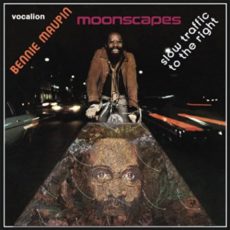
Multireedist Bennie Maupin, who plays various saxophones, flute and bass clarinet, failed to catch on as a bandleader, thus maintained a low profile during the past 15 years, until emerging in 2006 with the critically acclaimed Penumbra followed two years later Early Reflections on the Cryptogramophone label, then on Vocalion with Slow Traffic To The Left, Moonscapes. He continues to perform and tour.
Sponsored By

Daily Dose Of Jazz…
Malcolm Earl Waldron was born on August 16, 1925 in New York City to West Indian immigrants, his father was a mechanical engineer., however they moved out of the city to Jamaica, Long Island when he was four. His parents discouraged his initial interest in jazz, but he was able to maintain it by listening to swing on the radio. He started classical piano lessons around age seven but by 16 he became inspired to play jazz on tenor saxophone after hearing Coleman Hawkins’ 1939 recording of Body and Soul, but unable to afford a tenor he settle for an alto saxophone. He played alto for local bands that performed for dances, bar mitzvahs, Spanish weddings, frequently taking over the pianist’s role when other musicians took their solos.
In 1943 Waldron being called up by the Army was based at West Point, allowing him to listen to the greats of jazz in clubs on 52nd Street. After two years of service he returned as a student to Queens College where he studied under composer Karol Rathaus, making his final decision to switch from saxophone to piano. After college he worked for a short time in rhythm and blues bands, including with Big Nick Nicholas.
In 1950 Mal went on to work with Ike Quebec in New York, made his recording debut with the saxophonist in 1952 and played at Café Society Downtown on Mondays for six or seven months. Over the next couple of years he worked frequently with Charles Mingus, recording on several Mingus albums, including Pithecanthropus Erectus, a key development in the movement towards freer collective improvisation in jazz. He would go on to work with Lucky Millinder and Lucky Thompson, form his own band Idrees Sulieman, Gigi Gryce, Julian Euell, and Arthur Edgehill. This group recorded Waldron’s debut release as a leader, Mal-1, in 1956.
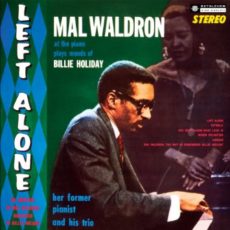
Waldron was Billie Holiday’s regular accompanist from 1957 until her death in 1959, and Introduced by Jackie McLean, he became the house pianist for Prestige Records. Other leaders he worked under at Prestige included Gene Ammons, Kenny Burrell, John Coltrane and Phil Woods. His most famous, Soul Eyes, written for Coltrane, became a widely recorded jazz standard. A prolific composer he has estimated composing more than 400 pieces of music during his time with Prestige.
He went on to perform with Abbey Lincoln, Max Roach, Eric Dolphy and Booker Little, and wrote for is own band, scores for modern ballet, and film scores with his score for The Cool World becoming one of the first attempts to stress improvisation rather than composition in a jazz-based film score. In 1963 Waldron having a major breakdown caused by a heroin overdose causing him to lose the ability to remember his name or play the piano, requiring shock treatments and a spinal tap to bring him back. He had to relearn his skills, in part by listening to his own records. Recovery was a slow process, taking over two years till all his faculties fully returned.
From the mid-1960s on, Waldron lived in Paris, Rome, Bologna and Cologne, before moving permanently to Munich. He scored full-length and short films, for television and Amiri Baraka’s theater production The Slave & Dutchman, and played with Ben Webster and Kenny Clarke. He toured and recorded throughout Europe and Japan, stopping in the U.S. playing solo piano but also with Joe Henderson, Herbie Lewis, Freddie Waits, Charlie Rouse, Calvin Hill and Horacee Arnold and Cameron Brown.
The ‘90s saw Mal recording several albums with vocalist Jeanne Lee. Two of his final recordings were duets with saxophonists David Murray and Archie Shepp. Diagnosed with cancer in 2002 he continued to perform until his death on December 2nd of that year in a hospital in Brussels, due to complications resulting from the cancer. He was 77.
Give The Gift Of Knowledge

More Posts: piano
Daily Dose Of Jazz…
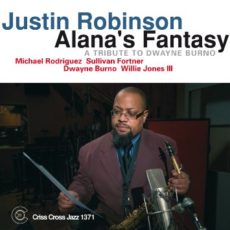
Justin Robinson was born August 14, 1968 in Manhattan, New York City and first began playing saxophone at the age of 13, while attending the High School of Music and Arts, formerly LaGuardia High School. His influences were Charlie Parker and Jackie McLean.
From 1984 to 1986 he was a part of the McDonald’s High School Jazz Band and at the age of 18 he joined with Philip Harper and Winard Harper actively helping in their formation of the Harper Brothers. By 1988 Betty Carter brought him into her band and from the early 1990s, he has played with Cecil Brooks III, Abbey Lincoln, Diana Ross, Little Jimmy Scott, Carnegie Hall Jazz Band, the Dizzy Gillespie All Star Band, Kate Higgins, Sam Newsome and especially Roy Hargrove, both in the Big Band as well as in the quintet.
After his 1991 recording debut with Justin Time on the Verve label, to the Bobby Watson, Eddie Henderson, Kenny Barron and Gary Bartz participated release of Challenge in 1998, on which he was accompanied by his childhood friend Stephen Scott. Always a thoughtful leader who takes his time to compose and record, his third project In The Spur Of The Moment was released in 2012.
Alto saxophonist Justin Robinson is currently touring with the quintet and big band of trumpeter Roy Hargrove.

More Posts: saxophone
Daily Dose Of Jazz…
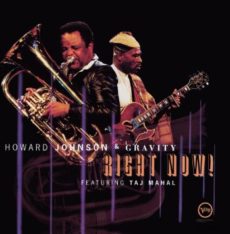
Howard Lewis Johnson was born August 7, 1941 in Montgomery, Alabama. In the 1960s he worked with Charles Mingus, Hank Crawford, Rahsaan Roland Kirk, Archie Shepp, and Hank Mobley on the album A Slice of the Top.
He began a long association with Gil Evans in 1966, arranger of a horn section that backed Taj Mahal on Mahal’s 1971 live album, The Real Thing, which featured three other tubists/multi-instrumentalists, Bob Stewart, Joseph Daley and Earl McIntyre. Howard played with The Band on their Rock of Ages live album, The Last Waltz and into the late 2000s with The Band drummer, Levon Helm’s Band. During the 1970s, he was the band conductor of the Saturday Night Live Band; he can be seen in several musical numbers, including playing bass saxophone in the King Tut sketch.
He has also led three tuba bands, collaborated with Tomasz Stanko, Substructure, Tuba Libre and GRAVITY, perhaps his best-known band. In 1981 he performed at the Woodstock Jazz Festival, held in celebration of the tenth anniversary of the Creative Music Studio.
He had a minor role in the 1983 film, Eddie and the Cruisers as Wendell’s replacement and also appeared in episodes of Matlock and Hill Street Blues. Johnson famously accompanied James Taylor in a performance of Jelly Man Kelly on Sesame Street in 1983, and also on tin whistle when Taylor sings to Oscar The Grouch.
Tubist, baritone saxophonist, arranger, conductor and bandleader Howard Johnson, who also plays bass clarinet, trumpet and other reed instruments, continues to perform, record and tour.
Dose A Day-Blues Away