

Daily Dose Of Jazz…
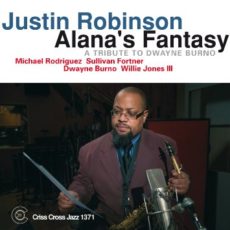
Justin Robinson was born August 14, 1968 in Manhattan, New York City and first began playing saxophone at the age of 13, while attending the High School of Music and Arts, formerly LaGuardia High School. His influences were Charlie Parker and Jackie McLean.
From 1984 to 1986 he was a part of the McDonald’s High School Jazz Band and at the age of 18 he joined with Philip Harper and Winard Harper actively helping in their formation of the Harper Brothers. By 1988 Betty Carter brought him into her band and from the early 1990s, he has played with Cecil Brooks III, Abbey Lincoln, Diana Ross, Little Jimmy Scott, Carnegie Hall Jazz Band, the Dizzy Gillespie All Star Band, Kate Higgins, Sam Newsome and especially Roy Hargrove, both in the Big Band as well as in the quintet.
After his 1991 recording debut with Justin Time on the Verve label, to the Bobby Watson, Eddie Henderson, Kenny Barron and Gary Bartz participated release of Challenge in 1998, on which he was accompanied by his childhood friend Stephen Scott. Always a thoughtful leader who takes his time to compose and record, his third project In The Spur Of The Moment was released in 2012.
Alto saxophonist Justin Robinson is currently touring with the quintet and big band of trumpeter Roy Hargrove.

More Posts: saxophone
Daily Dose Of Jazz…
Howard Lewis Johnson was born August 7, 1941 in Montgomery, Alabama. In the 1960s he worked with Charles Mingus, Hank Crawford, Rahsaan Roland Kirk, Archie Shepp, and Hank Mobley on the album A Slice of the Top.
He began a long association with Gil Evans in 1966, arranger of a horn section that backed Taj Mahal on Mahal’s 1971 live album, The Real Thing, which featured three other tubists/multi-instrumentalists, Bob Stewart, Joseph Daley and Earl McIntyre. Howard played with The Band on their Rock of Ages live album, The Last Waltz and into the late 2000s with The Band drummer, Levon Helm’s Band. During the 1970s, he was the band conductor of the Saturday Night Live Band; he can be seen in several musical numbers, including playing bass saxophone in the King Tut sketch.
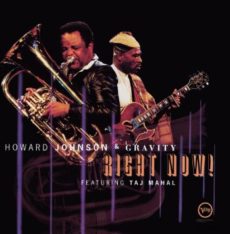
He has also led three tuba bands, collaborated with Tomasz Stanko, Substructure, Tuba Libre and GRAVITY, perhaps his best-known band. In 1981 he performed at the Woodstock Jazz Festival, held in celebration of the tenth anniversary of the Creative Music Studio.
He had a minor role in the 1983 film, Eddie and the Cruisers as Wendell’s replacement and also appeared in episodes of Matlock and Hill Street Blues. Johnson famously accompanied James Taylor in a performance of Jelly Man Kelly on Sesame Street in 1983, and also on tin whistle when Taylor sings to Oscar The Grouch.
Tubist, baritone saxophonist, arranger, conductor and bandleader Howard Johnson, who also plays bass clarinet, trumpet and other reed instruments, continues to perform, record and tour.

Dose A Day-Blues Away

Daily Dose Of Jazz…
Charles Edward Haden was born on August 6, 1937 in Shenandoah, Iowa into a musical family who performed on the Haden Family radio show. He made his professional debut as a singer on the radio show when he was just two years old. He continued singing with his family until he was 15 but a bulbar form of polio affecting his throat and facial muscles sidelined him but a year earlier he had become interested in jazz after hearing Charlie Parker and Stan Kenton in concert.
Recovering from his bout with polio, Charlie began concentrating on the bass and soon set his sights on moving to Los Angeles, California to pursue his dream of becoming a jazz musician and in 1957 he realized his dream turning down a full scholarship at Oberlin College, which had no established jazz program at the time and attended Westlake College of Music.] His first recordings were made that year with Paul Bley, with whom he worked until 1959. He also played with Art Pepper for four weeks in 1957, and from 1958 to 1959, with Hampton Hawes whom he met through his friendship with bassist Red Mitchell and for a time shared an apartment with the bassist Scott LaFaro.
In May 1959, he recorded his first album with the Ornette Coleman Quartet, the seminal The Shape of Jazz to Come. Later that year, the Ornette Coleman Quartet moved to New York City, secured a six-week residency at the Five Spot Café that would represent the beginnings of free or avant-garde jazz.
By 1960, Haden’s narcotics addiction forced him to leave Coleman’s band, go into rehabilitation in 1963 in California, met his first wife and moved to the Upper West Side of New York City. He resumed his career in 1964, working with John Handy, Denny Zeitlin’s trio, performed with Archie Shepp in California and Europe and freelanced with Henry “Red” Allen, Pee Wee Russell, Attila Zoller, Bobby Timmons, Tony Scott, the Thad Jones/Mel Lewis Orchestra, Roswell Rudd, and returned to Ornette Coleman’s group in 1967.
Charlie went on to work with Keith Jarrett’s trio and his American Quartet, organized the collective Old and New Dreams, which consisted of Don Cherry, Dewey Redman, and Ed Blackwell from Coleman’s band. He founded his first band, the Liberation Music Orchestra at the height of the Vietnam War, working with arranger Carla Bley, exploring free jazz and political music. The original lineup consisted of Haden and Bley and Gato Barbieri, Dewey Redman, Paul Motian, Don Cherry, Andrew Cyrille, Mike Mantler, Roswell Rudd, Bob Northern, Howard Johnson and Sam Brown.
Over the course of his half-century career he established the Jazz Studies Program at California Institute of the Arts in Valencia, been honored as Jazz Educator of the Year and as a leader has won several Grammy Awards, recorded forty-six albums as well as 134 albums as a sideman with Geri Allen, Ray Anderson, Ginger Baker, Bill Frisell, Kenny Barron, Beck, Paul Bley, Jane Ira Bloom, Michael Brecker, Henry Butler, Alice Coltrane, John Coltrane, Robert Downey Jr., Dizzy Gillespie, Jim Hall, Tom Harrell, Joe Henderson, Fred Hersch, Laurence Hobgood, Rickie Lee Jones, Lee Konitz, Brad Mehldau, David Liebman, Abbey Lincoln, Helen Merrill, Pat Metheny, Bheki Mseleku, Yoko Ono, Joe Pass, Enrico Pieranunzi, Joshua Redman, Gonzalo Rubalcaba, John Scofield, Wadada Leo Smith, Ringo Starr and Masahiko Togashi.
Double bassist, bandleader, composer, educator and NEA Jazz Master Charlie Haden, who revolutionized the harmonic concept of bass playing in jazz passed away in Los Angeles, California on July 11, 2014, at the age of 76 after suffering from effects of post-polio syndrome and complications from liver disease.
Take A Dose On The Road
More Posts: bass
Daily Dose Of Jazz…
Lenny Breau was born Leonard Harold Breau on August 5, 1941 in Auburn, Maine. His francophone parents were professional country and western musicians who started their son playing guitar at the age of eight. At twelve he started a small band with friends and by the age of fourteen he was the lead guitarist for his parents’ band, billed as Lone Pine Junior, playing Merle Travis and Chet Atkins instrumentals and occasionally singing. He made his first professional recordings in Westbrook, Maine at the age of 15 while working as a studio musician. Many of these recordings were released posthumously on Boy Wonder.
In 1957 the family moved to Winnipeg, Manitoba,, and their new touring band became the CKY Caravan. It was at one of these shows that he met sixteen year old Randy Bachman and they soon became friends, eventually Lenny began informally teaching the young guitarist. Two years later he left his parents after his father slapped him in the face for using jazz improvisations on stage. He then sought out local jazz musicians and met pianist Bob Erlendson, who began teaching him more of the foundations of jazz.
1962 saw Breau leaving for Toronto and soon created the jazz group Three with singer/actor Don Francks and bassist Eon Henstridge. They performed in Toronto, Ottawa, and New York City, their music was featured in the 1962 National Film Board documentary Toronto Jazz, recorded a live album at the Village Vanguard and appeared on the Jackie Gleason and Joey Bishop shows. Returning to Winnipeg he became a regular session guitarist recording for CBC Radio, CBC Television and contributed to CBC-TV’s Teenbeat, Music Hop, and his own Lenny Breau Show.
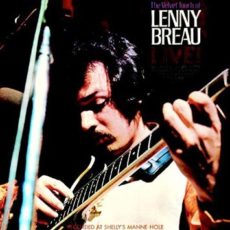
An ensuing friendship with Chet Atkins resulted in Lenny’s first two LP issues, Guitar Sounds from Lenny Breau and The Velvet Touch of Lenny Breau. Live! on RCA. Moving around over Canada and the United States he finally settled in Los Angeles, California in 1983. There he spent years performing, teaching, and writing for Guitar Player magazine. Unfortunately he had continual drug problems stemming from the mid-1960s, which he managed to get under control during the last years of his life. However, on August 12, 1984 his body was found in the swimming pool at his apartment complex in Los Angeles and the coroner reported that he had been strangled. Though his wife Jewel was the chief suspect but was never charged with murder and the case is still unsolved.
Several tributes were created in honor of his contributions to guitar playing and jazz. A documentary titled The Genius of Lenny Breau was produced in 1999 by his daughter Emily Hughes that included interviews with Chet Atkins, Ted Greene, Pat Metheny, George Benson, Leonard Cohen, and Bachman. In 2006 the book One Long Tune: The Life and Music of Lenny Breau written by Ron Forbes-Roberts was published by the University of North Texas Press. CBC Radio presented a documentary-soundscape on Lenny Breau entitled On the Trail of Lenny Breau in 2009.
Sponsored By
More Posts: guitar
Daily Dose Of Jazz…
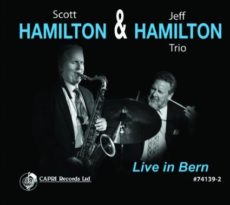
Jeff Hamilton was born on August 4, 1953 in Richmond, Indiana. He attended Indiana University. Early in his career, he played with the Tommy Dorsey Ghost Band, after which he briefly played with Lionel Hampton. He spent two years as a member of the Monty Alexander Trio starting in 1975, and was with Woody Herman’s Orchestra from 1977 to 1978, following which he became a member of the L.A. Four, with whom he made six albums. After this, he started recording regularly as a sideman for the Concord label.
From 1983 to 1987, he played with Ella Fitzgerald, Rosemary Clooney, and the Count Basie Orchestra. In the 1990s, Hamilton played gigs with The Clayton Brothers, toured the world with Oscar Peterson and the Ray Brown Trio.
Hamilton toured extensively with Diana Krall and played on several of her albums and one of her DVDs. Leading his own band Hamilton also leads his own trio, with bassist Christoph Luty and pianist Tamir Hendelman, they have recorded for Lake Street, Mons and Azica labels.
Once a co-owner of Bosphorus Cymbals, USA, he has since started his own cymbal company, Crescent Cymbals, with Michael Vosbein, Bill Norman, and drummer Stanton Moore and attracted the attention of Sabian who bought out Crescent, redistributing them through their Hand-Hammered series.
As a sideman he has worked with the George Robert All-Star Quartet, the Mike Jones Trio, Adam Schroeder, Holly Hofmann, Lalo Schifrin and Bud Shank among others. Drummer Jeff Hamilton currently co-leads the Clayton-Hamilton Jazz Orchestra with John and Jeff Clayton and continues to perform, record and tour with his trio.
Give The Gift Of Knowledge
More Posts: drums