

Daily Dose Of Jazz…
Dick Pearce was born April 19, 1951 in Forest Gate, London, England. Dick began playing cornet at the age of 12 in the Boys’ Brigade and joined Ewell village’s local brass band a year later. At 15 he became interested in jazz and attended a Sunday morning rehearsal band run by the dance bandleader Ken Macintosh. Soon after, he joined Bill Ashton’s National Youth Jazz Orchestra where he met many like-minded young musicians.
At 17 he spent three and a half extremely disillusioned years in the army (The Household Cavalry) supposedly as a bandsman. He’d played Haydn’s Trumpet Concerto for his audition and expected to receive musical tuition after signing on the dotted line, but for most of his service he found himself sitting on a horse playing bugle calls. Discharged from the army in April 1972, he began playing with some of the ‘freer’ bands of that time – led by Graham Collier, Dudu Pukwana, Pat Evans and Keith Tippet.
In the mid to late 70s he was drawn towards the harmonically structured improvisation of post-Bebop playing with jazz groups led by the likes of Don Rendell, Michael Garrick and Mike Westbrook, while also playing with his own generation of young jazz musicians.
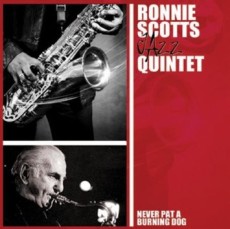
In 1980 Dick joined The Ronnie Scott Quintet, with whom he travelled all over the world for the following 14 years. The band included pianist John Critchinson, double bassist Ron Mathewson, drummer Martin Drew and Ronnie Scott on tenor sax. In 1990 the quintet became a sextet with the addition of Mornington Lockett on tenor sax.
In more recent years trumpeter Dick Pearce has been playing with Alan Barnes, Don Weller’s Tribute to Cannonball Adderley Band. The Don Weller Big Band. The Tim Richards Great Spirit, the John Williams New Perspectives. Stan and Clarke Tracey’s Ellingtonia, Pete Downes Trio with Dick Pearce and John Critchinson’s tribute to Ronnie Scott band.

Give The Gift Of Knowledge

More Posts: trumpet
Daily Dose Of Jazz…
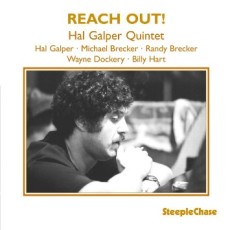
Harold “Hal” Galper was born April 18, 1938 in Salem, Massachusetts. He studied classical piano as a boy, but switched to jazz while studying at Berklee College of Music from 1955 to 1958. He hung out at Herb Pomeroy’s club, the Stable, hearing local Boston musicians such as Jaki Byard, Alan Dawson and Sam Rivers.
He started sitting in and became the house pianist at the Stable and later on, at Connelly’s and Lenny’s on the Turnpike. Eventually, Galper went on to work in Pomeroy’s band.
As his career progressed he worked with Chet Baker, Stan Getz and Nat Adderley and accompanied vocalists Joe Williams, Anita O’Day and Chris Connor. Between 1973-1975, Galper played in the Cannonball Adderley Quintet replacing George Duke.
Performing in New York and Chicago jazz clubs in the late 1970s, around this time, Hal recorded several times with guitarist John Scofield on the Enja label. The decade of the Eighties saw him as a member of the Phil Woods Quintet but left to pursue touring and recording with his own trio with drummer Steve Ellington and bassist Jeff Johnson.
As an educator Galper is internationally known, having theoretical and practical articles appear in six editions of Down Beat magazine. His scholarly article on the psychology of stage fright, originally published in the Jazz Educators Journal, has subsequently been reprinted in four other publications.
Pianist, composer, arranger, bandleader, educator and writer Hal Galper is currently on the faculty of Purchase College and the New School for Jazz and Contemporary Music.
Put A Dose In Your Pocket
More Posts: piano
Daily Dose Of Jazz…
Walter Roland Dickerson was born on April 16, 1928 in Philadelphia, Pennsylvania. He graduated from Morgan State University in 1953 and after two years in the Army he settled in California. There the vibraphonist started to gain attention by leading a group with pianist Andrew Hill and drummer Andrew Cyrille.
During the Sixties in New York City was where he gained some further attention. He recorded four albums for Prestige Records and in 1962 Down Beat named him the Best New Artist.
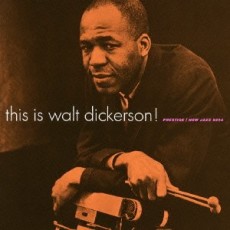
Dickerson recorded his debut album This Is Walt Dickerson in 1961 on the New Jazz label and would go on to record six more before the end of the decade for New Jazz, Audio Fidelity and MGM record labels. He worked with Elmo Hope, arranging his 1963 album Sounds From Rikers Island.
From 1965 to 1975 he took a break from jazz, but later he worked again with Andrew Hill and Sun Ra. Beginning in 1975 after his return to performing he recorded Tell Us Only The Beautiful Things and Walt Dickerson 1976 on the Whynot label. He then began recording ten albums for the Danish Steeplechase label and one for Soul Note in 1978.
Vibraphonist Walt Dickerson, who was most notably associated with the post-bop idiom, passed away on May 15, 2008 from a cardiac arrest in Willow Grove, Pennsylvania.
Jazz Is Global – Share
More Posts: vibraphone
Daily Dose Of Jazz…
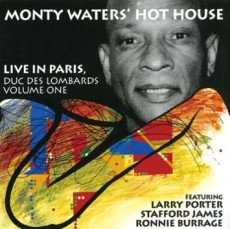
Monty Waters was born on April 14, 1938 in Modesto, California. He received his first musical training from his aunt and first played in the church. After college, he was a member of a rhythm & blues band and in the late 1950s he worked with musicians like B.B. King, Lightnin’ Hopkins, Little Richard and James Brown on tour.
In San Francisco Monty played with King Pleasure and initiated in the early 1960s a “Late Night Session” at Club Bop City. There he came into contact with musicians such as Miles Davis, John Coltrane, Art Blakey, Red Garland and Dexter Gordon, who visited this club after their concerts. In addition, he and Pharoah Sanders, Dewey Redman and and Donald Garrett formed a big band.
By 1969 Waters had made a move to New York City and toured with Jon Hendricks. During the 1970s he participated in the Loft Jazz scene and recorded as a sideman with Billy Higgins, Joe Lee Wilson, Sam Rivers, and Ronnie Boykins. Like many other jazz musicians, he eventually left the States in the 1980s for Paris, where he worked with Chet Baker, Johnny Griffin and Sanders again.
Following Mal Waldron and Marty Cook to Munich, he continued to work with musicians such as Embryo, Gotz Tanferding, Hannes Beckmann, Titus Waldenfels, Suchredin Chronov and Joe Malinga. Saxophonist, flautist and singer Monty Waters passed away on December 23, 2008 in Munich, Germany.
Inspire A Young Mind
Daily Dose Of Jazz…
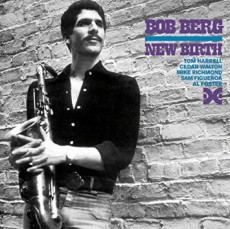
Robert Berg was born on April 7, 1951 in Brooklyn, New York. He started his musical education at the age of six when he began studying classical piano. He began playing the saxophone at the age of thirteen and went on to graduate from Juilliard. He was influenced heavily by the late 1964–67 period of John Coltrane’s music.
A student from the hard bop school, Bob played from 1973 to 1976 with Horace Silver and then from 1977 to 1983 with Cedar Walton. Berg became more widely known through his short period in the Miles Davis band but left the band in 1987 after recording only one album, You’re Under Arrest.
After leaving Davis’s band, Berg released a series of solo albums and performed and recorded frequently in a group co-led with guitarist Mike Stern. On these albums he played a more accessible style of music, mixing funk, jazz and even country music with many other diverse compositional elements to produce albums that were always musical. He often played at the 7th Avenue South NYC club.
He worked with Chick Corea, Steve Gadd and Eddie Gomez in a quartet. Bob’s tenor saxophone sound was a synthesis of rhythm and blues players such as Junior Walker and Arnett Cobb with the lyricism, intellectual freedom and soul of Wayne Shorter, Joe Henderson and Coltrane. Over the course of his short career he recorded a dozen albums as a leader and performed sideman duties on another 30 albums with Randy Brecker, Tom Coster, Kenny Drew, Moncef Genoud, Billy Higgins, Dizzy Gillespie, Sam Jones and Wolfgang Muthspiel.
Saxophonist Bob Berg, who was known for his extremely expressive playing and tone, passed away on December 5, 2002 as a result of a traffic accident. His car was struck by a cement truck that slid on the ice in East Hampton, New York while driving near his home with his wife Arja.
Give A Gift Of Jazz – Share
More Posts: saxophone