

Daily Dose Of Jazz…
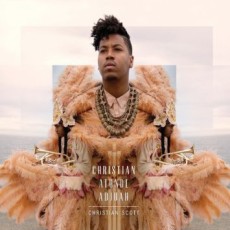
Christian Scott, also known as Christian Scott aTunde Adjuah was born March 31, 1983 in New Orleans, Louisiana. A twin to brother Kiel, at the age of 13 he was given the chance to play with his uncle, jazz alto saxophonist Donald Harrison. A year later he was accepted into the New Orleans Center of Creative Arts where he studied jazz under the guidance of program directors, Clyde Kerr, Jr. and Kent Jordan.
After graduating NOCCA, Christian received a scholarship to Berklee College of Music in Boston, Massachusetts, graduating in 2004. While matriculating his last year he was member of the Berklee Monterey Quartet and recorded as part of the Art:21 student cooperative quintet. He studied under the direction of Charlie Lewis, Dave Santoro, and Gary Burton. He majored in professional music with a concentration in film scoring.
Scott has worked across musical genres with Stefon Harris, David Sanchez, Donald Harrison, Karin Williams, Nnenna Freelon, Grace Kelly, Erin Boheme, X Clan, Prince, Mike Clark, David Benoit, Global Noize, Ledisi, Marcus Miller and Esperanza Spaulding, to name a few.
His debut album Rewind That on the Concord Record label garnered him a Grammy nomination and received the Edison Award in 2010 and 2012. Since 2002, he has released eight studio albums, and two live recordings. Trumpeter, composer and producer Christian Scott continues performing with his eight-piece ensemble his legacy in jazz.

Uplift Someone’s World

More Posts: trumpet
Daily Dose Of Jazz…
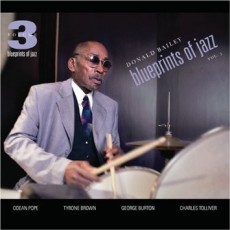
Donald Orlando Bailey was born on March 26, 1933 in Philadelphia, Pennsylvania into a musical family. His father Morriswas a drummer, his brother Morris Jr a saxophonist and his nephew Victor is a bassist.
Bailey got his big break in the jazz world and is probably best known as the drummer in the Jimmy Smith Trio from 1956 to 1964. He also performed and recorded with The Three Sounds on the Blue Note Records label.
Known in the jazz world as Duck Bailey, he performed with John Coltrane in their early Philly years. He worked as a sideman for Sarah Vaughan, Carmen McRae, Hampton Hawes, Sonny Rollins, Freddie Hubbard, Jimmy Rowles, Blue Mitchell, Red Mitchell, Roy Ayers, George Braith, Harold Land, Jack Wilson, Kenny Burrell, Grant Green, Buster Williams and Bobby Hutcherson among others.
In the mid 70s, he moved to Japan where he lived for six years and in 1978, released an album called So in Love for Trio Records. The session featured Hideo Ichikawa, Hideyuki Kikuchi, Yoshio Ikeda, Takaaki Nishikawa and Toshihiko Ogawa. This date featured Bailey playing harmonica, received rave reviews and is a sought after jazz collectible. His last project Blueprints of Jazz Vol.3 featuring Donald Bailey had him in the company of Charles Tolliver on trumpet, pianist George Burton, and tenor saxophonist Odean Pope issued in 2009.
Settling in Montclair, California, he performed around San Francisco Bay area until his late 70s. Drummer Donald Bailey, known as The King of Organ Trio Drummers, passed away in Montclair, California on October 15, 2013 at the age of 80.
Take A Dose On The Road
More Posts: drums
Daily Dose Of Jazz…
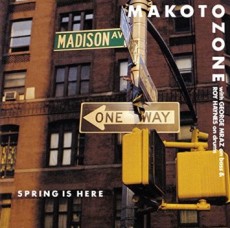
Makoto Ozone 小曽根真 was born on March 25, 1961 in Kobe, Japan. He began playing organ at two and by seven was an improviser. He appeared on Japanese television with his father from 1968 to 1970. Impressed with the playing of Oscar Peterson, at twelve he switched to piano. In 1980 he entered the Berklee College of Music.
Makoto later worked with vibraphonist Gary Burton, recording four albums with him. In 1983 he recorded as a leader his debut in 1983 before returning to his native Japan.
Ozone has collaborated with vocalist Kimiko Itoh, appearing as a duo at the Montreux Jazz Festival and produced her album Kimiko, winning the 2000 Swing Journal jazz disk grand prix for Japanese vocalist. He has recorded with Ellis Marsalis, Chick Corea, Christian McBride, Jeff “Tain” Watts, Randy Brecker, Paquito D’Rivera, Anna Maria Jopek, Jake Shimabukuro, Misuzu Kanno and Gayle Moran Corea, among others.
He has several recordings as a trio leader or co-leader with Burton that are now coveted imports. Pianist Makoto Ozone continues to perform, record and tour.
Give The Gift Of Knowledge
More Posts: piano
Daily Dose Of Jazz…
Sherman Irby was born and raised in Tuscaloosa, Alabama on March 24, 1968. He found his calling to music at age 12 and in high school he played saxophone and recorded with gospel immortal James Cleveland. Graduating from Clark Atlanta University with a B. A. in Music Education, in 1991, he joined Johnny O’Neal’s Atlanta-based quintet.
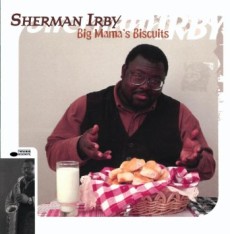
1994 saw Irby moving to New York City and immediately became a part of the jazz scene at Smalls jazz club. Catching the attention of Blue Note Records. He subsequently recorded his first two albums, Full Circle in 1996 and Big Mama’s Biscuits in 1998 on the label. He toured the U.S. and the Caribbean with the Boys Choir of Harlem in 1995, and was a member of the Jazz at Lincoln Center Orchestra from 1995 to 1997. During that tenure, he also recorded and toured with Marcus Roberts, Roy Hargrove and was part of Betty Carter’s Jazz Ahead Program.
After a four-year stint with Roy Hargrove, he focused on his own group, in addition to being a member of Elvin Jones’ ensemble and Papo Vazquez’s Pirates Troubadours. Since 2003, Irby has been the regional director for the Jazz Masters Workshop, mentoring young children, and a board member for the CubaNOLA Collective. Saxophonist and composer Sherman Irby formed Black Warrior Records and has released Black Warrior, Faith, Organ Starter and Live at the Otto Club under the new label. Post-bop alto saxophonist Sherman Irby has re-joined Jazz At Lincoln Center Orchestra with Wynton Marsalis and currently continues to perform with his quartet and his group Organomics.
Put A Dose In Your Pocket
More Posts: bandleader,composer,history,instrumental,jazz,music,saxophone
Daily Dose Of Jazz…
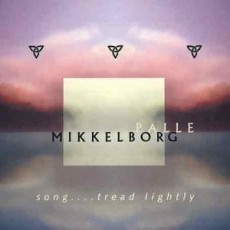
Palle Mikkelborg was born on March 6, 1941 in Copenhagen, Denmark. Self-taught on trumpet in his youth, he started playing professionally in 1960 and in 1963 joined the Danish Radio Jazz Group, leading it from 1967-1972.
Performing at the Newport Jazz Festival with a quintet helped solidify Palle as a dominant figure on the Danish and international progressive jazz scenes. He has recorded as a leader for Debut, Metronome, Sonet, Storyville, and ECM.
Releasing several solo records, Mikkelborg has also recorded with various co-founded groups, as well as performing sideman duties or arranger on numerous international records.
His most notable international collaborations include the Gil Evans Big Band, the George Russell Big Band, George Gruntz’s Concert Jazz Band, Abdullah Ibrahim, Dexter Gordon, Karin Krog, Gary Peacock, Niels-Henning Orsted Pedersen, Terje Rypdal, Thomas Clausen, Jan Garbarek and many others. With Miles Davis, he composed a suite and produced the 1989 album release Aura.
In 2001 he was awarded the Nordic Council Music Prize. Avant-garde and post-bop trumpeter, composer, arranger and producer Palle Mikkelborg has continued to perform, record and tour.
Put A Dose In Your Pocket
More Posts: trumpet