

Daily Dose Of Jazz…
Herbie Hancock was born Herbert Jeffrey Hancock on April 12, 1940 in Chicago, Illinois. Starting with a classical music education, he was considered a child prodigy, studied from age seven and played the first movement of Mozart’s Piano Concerto No. 5 with the Chicago Symphony at age eleven.
Through his teens he was influenced by the vocal group Hi-Lo’s, Herbie never had a jazz teacher, developing his ear and sense of harmony. Influenced by Clare Fischer, Bill Evans, Ravel and Gil Evans, his harmonic guru was Chris Anderson with whom he studied. In the Sixties he attended Grinnell College, moved to Chicago, began working with Donald Byrd and Coleman Hawkins, studied at the Manhattan School of Music, quickly gained a reputation and played sessions with Oliver Nelson and Phil Woods.
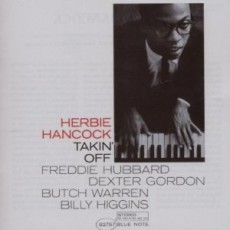
In 1962 Hancock recorded his first solo album Takin’ Off for Blue Note Records that contained the hit for both Hancock and Mongo Santamaria – Watermelon Man. More importantly it caught the ear of Miles Davis and landed him an introduction by Tony Williams and membership of the second great quintet in 1963. It was during the Davis years that Herbie found his voice and subsequently produced two of the decade’s most influential albums, Empyrean Isles and Maiden Voyage.
He has recorded a catalogue of nearly sixty albums as a leader dozens of sessions as a sideman, working with the likes of Wayne Shorter, Tony Williams, Grant Green, Bobby Hutcherson, Sam Rivers, Donald Byrd, George Coleman, Kenny Dorham, Hank Mobley, Lee Morgan and Freddie Hubbard among others. He has been the subject of five films, won an Oscar for “Round Midnight soundtrack, received 14 Grammy Awards, five Playboy Music Polls and was honored as a NEA Jazz Master in 2004 along with a host of other recognitions. He is currently occupies the Creative Chair for Jazz with the Los Angeles Philharmonic.
Hancock joined the University of California, Los Angeles faculty as a professor in the UCLA music department where he teaches jazz music. He has received a Kennedy Center Honors Award for achievement in the performing arts, won 14 Grammy Awards, 1 Oscar for the Original Soundtrack of ‘Round Midnight and has been honored as an NEA Jazz Master among numerous other accolades.
He is the 2014 Charles Eliot Norton Professor of Poetry at Harvard University. Holders of the chair deliver a series of six lectures on poetry, “The Norton Lectures”, poetry being “interpreted in the broadest sense, including all poetic expression in language, music, or fine arts.” His theme is “The Ethics of Jazz. Pianist Herbie Hancock continues to advance the jazz genre in new directions.
More Posts: piano

Daily Dose Of Jazz…
Ali Jackson Jr. was born on April 3, 1976 in Detroit, Michigan. His mother, a classical pianist, taught him piano and how to read music at age 4, his father, a professional bass player, taught him music theory and gave him drums lesson from rudiment books.
Attending Detroit’s prestigious Cass Technical High School, he went on to matriculate through The New School For Jazz and Contemporary Music and privately studying with Elvin Jones and Max Roach.
Ali has recorded two albums as a leader and as a sideman has performed and recorded with musicians including with Joshua Redman, Anat Cohen, Kurt Rosenwinkel, Wynton Marsalis, Jacky Terrasson, Craig Handy, James Carter, Dee Dee Bridgewater, Aretha Franklin, George Benson, Harry Connick Jr., KRS-1, Marcus Roberts, Cyrus Chestnut, Joshua Redman, Diana Krall and Eric Reed.
Ali Jackson is currently the drummer with the Lincoln Center Jazz Orchestra, performs with the Wynton Marsalis Quintet, Horns in the Hood, and leads the Ali Jackson Quartet. He is also the voice of “Duck Ellington,” a character in the Penguin book series Baby Loves Jazz and has hosted “Jammin’ with Jackson,” a series for young musicians at Jazz at Lincoln Center’s Dizzy Club Coca-Cola.
More Posts: drums

Daily Dose Of Jazz…
Terence Oliver Blanchard was born March 13, 1962 in New Orleans, Louisiana and began playing piano at the age of five and then the trumpet at age eight. He played trumpet recreationally alongside childhood friend Wynton Marsalis in summer music camps but showed no real proficiency on the instrument. While in high school, he began studying at the New Orleans Center for Creative Arts and then studied at Rutgers, toured with Lionel Hampton, joined Art Blakey and became the Messenger’s music director.
While playing with Blakey, Blanchard rose to prominence as a key figure in the 1980s Jazz Resurgence as a co-leader of a quintet with saxophonist Donald Harrison and pianist Mulgrew Miller, The Harrison/Blanchard group recorded five albums from 1984-1988 until Blanchard left to pursue a solo career in 1990 and recorded his self-titled debut for Columbia Records.
He scored and performed on every Spike Lee movie soundtracks, including his 4-hour HBO Hurricane Katrina documentary “When The Levees Broke: A Requiem In Four Acts” and the soundtrack for “Red Tails”. Composing for other directors, with over forty scores to his credit Blanchard is the most prolific jazz musician to ever compose for movies.
Terence has recorded eighteen albums, been nominated for twelve times and won five Grammy Awards, has won Soul Train Music Award, an Emmy and Golden Globe among others. On the short list his collaborations include Herbie Hancock, Diana Krall, Gary Bartz, Jane Monheit, Dianne Reeves, Christian McBride, Lewis Nash and McCoy Tyner.
Composer, educator and trumpeter Terence Blanchard is the artistic director of the Thelonious Monk Institute of Jazz at the University of Southern California. All the while, he has remained true to his jazz roots as a trumpeter and bandleader on the performance circuit.
More Posts: trumpet
Daily Dose Of Jazz…
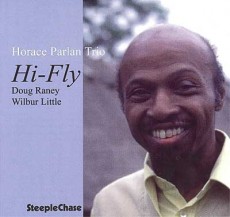
Wilbur Little was born on March 5, 1928 in Parmele, North Carolina and originally played piano but switched to bass after his military service. Steeped in the hard bop and post bop idioms, he moved to Washington, D.C. in 1949 and played with Sir Charles Thompson, Leo Parker, Margie Day and others. Little was also a member of a trio that supporting visiting jazz musicians like Miles Davis and John Coltrane.
Little’s wider recognition came when he joined J.J. Johnson’s trio from 1955 to 1958 and led to copious freelancing as a sideman with the Tommy Flanagan Trio, Sonny Stitt, Rahsaan Roland Kirk, Kenny Burrell, And Clark Terry.
Never leading his own sessions, Wilbur recorded albums with Elvin Jones, Archie Shepp, Bobby Jaspar, Tommy Flanagan, Randy Weston, Dave McKenna, Horace Parlan and Al Haig. In his latter years he worked with Charles Tolliver, Clifford Jordan and Barry Harris.
By 1976 he was in Japan with Duke Jordan, then moved to the Netherlands in 1977. He lived there for the rest of his life until his passing on May 4, 1987 in Amsterdam, Netherlands.
More Posts: bass
Daily Dose Of Jazz…
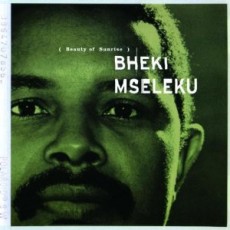
Bheki Mseleku was born Bhekumuzi Hyacinth Mseleku on March 3, 1955 in South Africa. Entirely self-taught, though his father was a musician and teacher, his religious belief denied musical access to his children. Growing up in Apartheid he was subjected to restricted healthcare and lost the upper joints of two fingers in a go-karting accident.
His musical career began in Johannesburg in 1975 as an electric organ player for the R&B band Spirits Rejoice. After performing at the Newport Jazz Festival in 1977, Mseleku settled in Botswana for a time, then moved to London in the late 1970s. He attempted to settle into the jazz scene in Stockholm from 1980 to 1983, but returned to London. It was not until 1987 that Bheki made his debut at Ronnie Scott’s Jazz Club, playing piano unaccompanied by other musicians, with a saxophone in his lap that a wider audience became familiar.
With the release and notoriety of his 1991 debut album Celebration, and subsequent nomination for a Mercury Music Prize that Verve Records signed him for several albums. The first of these featured Joe Henderson, Abbey Lincoln, and Elvin Jones.
Twelve years and five albums later Bheki recorded his final session “Home at Last” in 2003, having spent most of his last years in South Africa. He never found an outlet for his skills and established a new band in London that was very well received by fans. Over the course of his life Bheki Mseleku lived with diabetes and on September 9, 2008 the pianist, saxophonist, guitarist, composer and arranger passed away in his London flat at age 53.