

Daily Dose Of Jazz…
Donny McCaslin was born August 11, 1966 growing up in Santa Cruz, California. Inspired by his pianist/vibraphonist father, Donny began playing the saxophone at 12 and quickly progressing played in his father’s band. While in high school he toured the U.S., Japan and Europe with his own band and youth ensembles. He played the Monterey Jazz Festival for three years as a member of the Festival’s California All-Star Band.
Receiving a full scholarship to Berklee College of Music in 1984, it was during his matriculation that Donny came under the influence of Gary Burton, Herb Pomeroy, Billy Pierce, George Garzone and Joe Viola. He performed regularly around Boston and Cambridge with the True Colors Big Band and in 1987 joined Burton’s group and toured with him for four years.
Moving to New York in 1991 McCaslin replaced Michael Brecker in Steps Ahead, staying with them until ’94. He has played with the Gil Evans Orchestra, the George Gruntz Concert Jazz Band, Danilo Perez, Maria Schneider, and Santi DiBriano. In 2006 he joined the Dave Douglas Quintet.
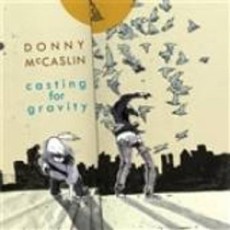
His first release as a leader came in 1998 with “Exile and Discovery” and he has continued performing, recording and issuing releases under his own name with his latest 2012 release “Casting For Gravity”.

More Posts: saxophone
Daily Dose Of Jazz…
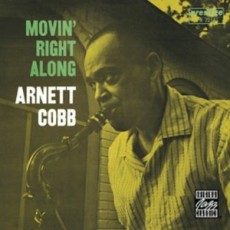
Arnett Cobb was born on August 10, 1918 in Houston, Texas. Taught to play piano by his grandmother, he went on to study violin before taking up the saxophone in high school. At fifteen he joined Louisiana bandleader Frank Davis, performing around Houston and throughout Louisiana during the summers. He continued his career in the mid-Thirties with the local bands of Chester Boone and Milt Larkin; the latter home to Illinois Jacquet, Wild Bill Davis and Eddie “Cleanhead” Vinson.
Arnett went on to replace Illinois in Lionel Hampton’s band in 1942 and is credited with the words and the music to “Smooth Sailing” which became a jazz standard in 1951, and sung by Ella Fitzgerald on her Lullabies of Birdland. After departing from Hampton’s band, Cobb formed his own seven-piece band, but suffering a serious illness in 1950, which necessitated spinal surgery, the group was disbanded.
Reforming the band upon recovery, in 1956 its success was again interrupted, this time by a car crash. This accident had long-term effects on his health, involving long hospital stays and making him permanently reliant on crutches. Nevertheless, Cobb worked as a soloist through the 1970s and 1980s in the U.S. and abroad, working with Jimmy Heath and Joe Henderson in Europe during the late Eighties.
Arnett Cobb, tenor saxophonist, passed away in his hometown in March 24, 1989 at the age of 70.
More Posts: saxophone
Daily Dose Of Jazz…
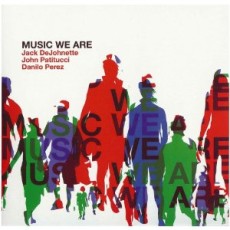
Jack DeJohnette was born August 9, 1942 in Chicago, Illinois and studied drums and piano. He first became known as a member of Charles Lloyd’s band, along with pianist Keith Jarrett. He played with Bill Evans in 1968 on the acclaimed Bill Evans at the Montreux Jazz Festival and from 1969 to 1972 played with Miles Davis.
The 70s saw Jack recording for Milestone/Prestige and ECM appearing widely on ECM also as a sideman. Since then he has recorded for MCA, Blue Note and Kindred Rhythm. He led several groups since the early-1970s, including Compost, a jazz-rock group that produced two albums; then went on to lead sessions that produced the albums “Directions”, “New Directions” and “Special Edition”.
He has worked with a host of jazz lions to numerous to list but suffice it say they range from Eddie Gomez to Dave Holland to Arthur Blythe, David Murray and Chico Freeman. He is a dazzling improviser and a clear stylistic successor of Roy Haynes, and two of the greatest drummers of the 1960s, Tony Williams and Elvin Jones.
Since 2003, Jack has been part of Trio Beyond with organist Larry Goldings and guitarist John Scofield that paid tribute to The Tony Williams Lifetime Trio and he also appears as a member of the Bruce Hornsby Trio. He has been nominated for several Grammy Awards and in 2009 DeJohnette received the Grammy for Best New Age Album “Peace Time”. He has been awarded an NEA Jazz Masters Fellowship for his significant lifetime contributions to the enrichment of jazz and the further growth of the art form.
Jack DeJohnette successfully incorporates elements of free jazz and world music while maintaining the deep grooves of jazz and R&B drummers. His exceptional experience of time and style, combined with astounding improvisational ingenuity, make him one of the most highly regarded and in-demand drummers. He also occasionally appears on piano, on his own recordings and has built a catalogue too immense to cite as he continues to perform, record and tour.
More Posts: drums
Daily Dose Of Jazz…
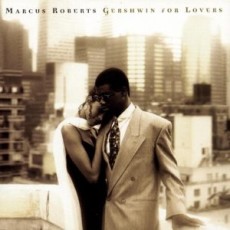
Marcus Roberts, born on August 7, 1963 in Jacksonville, Florida achieved fame as a stride pianist committed to celebrating classic standards and jazz traditions. Blind since his youth, he attended the Florida School for the Deaf and the Blind in St. Augustine, also the alma mater of Ray Charles.
Playing piano at an early age, he studied the instrument with world-renown pianist Leonidas Lipovetsky while attending Florida State University. In 1985, he got his big break when Wynton Marsalis chose him as his new sideman. He became a close friend and disciple of Marsalis, and collaborated with him on many projects during the ensuing years.
With Marsalis’ support and soon after joining him, Roberts began cutting his own records. His albums tend to be homage to past jazz giants. However, his ability and technique as a pianist have always been highly regarded and his music has added to the vocabulary of modern jazz piano and the piano trio.
Roberts has provided the soundtrack to the 1999 film Guinevere serves as Assistant Professor of Jazz Studies in the music program at Florida State University and is a Steinway Artist. He has amassed a catalogue of nearly two-dozen albums as a leader with several more as a sideman.
He excels as an improviser and interpreter in his solo performances and creates interesting and daring arrangements as a large band leader, but his chamber work will endure as his true contribution to American music.
More Posts: piano
Daily Dose Of Jazz…
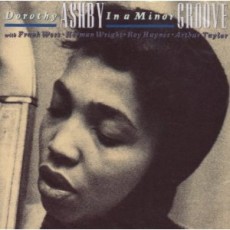
Dorothy Ashby was born Dorothy Jeanne Thompson on August 6, 1932 in Detroit, Michigan growing up around music where her father, guitarist Wiley Thompson, often brought home fellow jazz musicians. As a young girl, Dorothy would provide support and background to their music by playing the piano. She attended Cass Technical High with fellow students Donald Byrd, Gerald Wilson and Kenny Burrell. While in high school she played a number of instruments including the saxophone and string bass before coming upon the harp.
Attending Wayne State University in Detroit, Ashby studied piano and music education; graduated and began playing piano around the Detroit jazz scene. By 1952 she had made the harp her main instrument, and at first her fellow jazz musicians were resistant to the idea of adding the harp into jazz performances. Overcoming their initial resistance and perception of it being an instrument of classical music and also somewhat ethereal in sound, she built support for the jazz harp by organizing free shows and playing at dances and weddings with her trio.
She recorded with Ed Thigpen, Richard Davis, Jimmy Cobb, Frank Wess and others in the late 1950s and early 1960s and had her own radio show in Detroit. Ashby played with Louis Armstrong and Woody Herman, was included in Down Beat magazine’s Best Jazz Performances, and produced Black theater in Detroit by starting a theatrical group with her husband John Ashby providing a training ground for actors like Ernie Hudson,
By the late 1960s, the harpist settled in California breaking into the studio recording system with the help of the soul singer Bill Withers who recommended her to Stevie Wonder playing on the former’s +’Justments and the latter’s “If It’s Magic” in the Seventies. As a result, Dorothy played studio sessions for Dionne Warwick, Diana Ross, Earth, Wind & Fire, and Barry Manilow. She was featured in the song “Come Live With Me” on the soundtrack for the 1967 movie Valley of the Dolls.
Along with Alice Coltrane, Ashby extended the popularization of jazz harp past a novelty, showing how the instrument can be utilized seamlessly as much a bebop instrument as the saxophone. Her skill and creativity is recognized today and her musical legacy is enduring as numerous hip-hop musicians have sampled her music.
Dorothy Ashby, harpist and composer, passed away from cancer on April 13, 1986 in Santa Monica, California.
More Posts: harp