

Daily Dose Of Jazz…
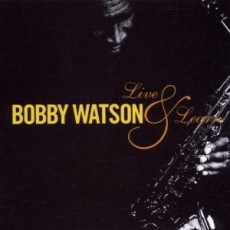
Bobby Watson was born in Lawrence, Kansas on August 23, 1953 but grew up in Kansas City, Kansas. He attended the University of Miami along with fellow students Pat Metheny, Jaco Pastorius and Bruce Hornsby. After graduating in 1975, he moved to New York City and joined Art Blakey’s Jazz Messengers. He performed with the Jazz Messengers from 1977 to 1981, eventually becoming the musical director for the group. He also founded the 29th Street saxophone Quartet with alto saxophonist Ed Jackson, tenor saxophonist Rich Rothenberg, and baritone saxophonist Jim Hartog.
Following his tenure as a Jazz Messenger, Watson became a much-sought after musician, working along the way with many notable musicians, including: drummers Max Roach and Louis Hayes, fellow saxophonists George Coleman and Branford Marsalis, multi-instrumentalist Sam Rivers and his trumpeter brother Wynton. In addition Bobby supported vocalists including Joe Williams, Dianne Reeves, Lou Rawls, Betty Carter and Carmen Lundy as well as being a sideman for Carlos Santana, Rufus & Chaka Khan, Bob Belden and John Hicks.
Watson along with Curtis Lundy and Victor Lewis started “Horizon” an acoustic quintet; led the a tribute band to Johnny Hodges called the “High Court of Swing”; and the “Tailor-Made Big Band”. He composed a song for the soundtrack of Deniro’s “A Bronx Tale”; has been an adjunct professor at William Patterson University and the Manhattan School of Music; and is currently involved with the Thelonious Monk Institute’s “Jazz in America” high school outreach program.
Watson was selected as the first William D. and Mary Grant/Missouri, Distinguished Professorship in Jazz Studies. The past six years he has served as the director of jazz studies at the University of Missouri-Kansas City Conservatory of Music and the alto saxophonist, composer, producer and educator still manages to balance recording of 26 albums as a leader, hundreds of co=led or sideman recordings, along with live engagements around the world with his teaching responsibilities. Watson’s ensembles at UMKC have garnered several awards and national recognition.
Bobby Watson, post-bop jazz alto saxophonist, composer, producer, and educator, now has 26 recordings as a leader. He appears on nearly 100 other recordings as either co-leader or in a supporting role and has recorded more than 100 original compositions and his long-time publisher.
More Posts: saxophone
Daily Dose Of Jazz…
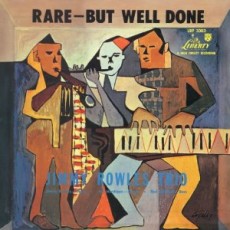
Jimmy Rowles was born James G. Rowles on August 19, 1918 in Spokane, Washington and studied at Gonzaga College. After moving to Los Angeles in 1942, he joined Lester Young’s group and also worked with Benny Goodman, Woody Herman, Les Brown, Tommy Dorsey, Tony Bennett and as a studio musician.
In the 1950s and 1960s, he frequently played behind Billie Holiday and Peggy Lee and in 1973, Rowles settled in New York City, where he performed and/or recorded with Zoot Sims and Stan Getz among others. He joined Ella Fitzgerald for nearly three years in 1981 succeeding Paul Smith as her accompanist first performing with her at the Mocambo nightclub in L.A.’s Hollywood district in late 1956. Jimmy appeared on several recording sessions with her in the 1960s and played on Fitzgerald’s final collaboration with Nelson Riddle, The Best Is Yet To Come in 1982.
In 1983, Jimmy worked with Diana Krall in Los Angeles, developing her playing abilities and encouraged her to add singing to her repertoire. He composed several jazz pieces, the best known being “The Peacocks”; accompanied jazz singer Jeri Brown in 1994 on the only album containing only his own compositions, A Timeless Place.
Pianist Jimmy Rowles, who released a number of albums under his own name and explored various idioms including swing and cool jazz, died from cardiovascular disease in Burbank, Los Angeles County, California, at the age of 78 on May 28, 1996.
More Posts: piano
Daily Dose Of Jazz…
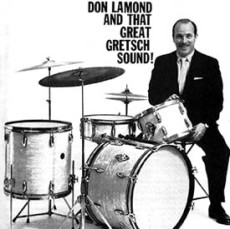
Don Lamond was born on August 18, 1920 in Oklahoma City, Oklahoma and attended the Peabody Conservatory in Philadelphia in the early ‘40s. He played with Sonny Durham and Boyd Raeburn at the outset of his career, and then took over Dave Tough’s spot in Woody Herman’s big band “First Herd” in 1945, remaining until the group disbanded at the end of 1946.
By 1947 he briefly freelanced with musicians including Charlie Parker, and then returned to duty under Herman in his Second Herd, where he remained until its 1949 dissolution. In the 1950s and 1960s Don found work as a session musician, recording in a wide variety of styles.
He performed and recorded with such jazz luminaries as Stan Getz, Zoot Sims, Johnny Smith, Benny Goodman, Ruby Braff, the Sauter-Finegan Orchestra, Sonny Stitt, Johnny Guarnieri, Jack Teagarden, Quincy Jones, George Russell and Bob Crosby among others.
Lamond recorded as a bandleader in 1962 with a tentet that included Doc Severinsen, played with George Wein’s Newport Festival band in the late ‘60s, and worked with Red Norvo, Maxine Sullivan and Bucky Pizzarelli in the Seventies. He put together his own swing group that recorded in 1977 and 1982, and recorded a quartet album with his wife Terry singing in 1981. Don Lamond, drummer, bandleader and sideman died on December 23, 2003 in Orlando, Florida at age 83.

More Posts: drums
Daily Dose of Jazz…
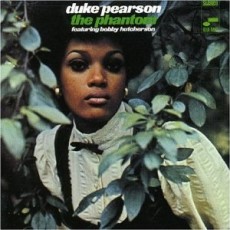
Duke Pearson was born Columbus Calvin Pearson, Jr. in Atlanta, Georgia on August 17, 1932. He first studied brass instruments at the early age of five, but dental issues forced him to pursue another instrument, the piano. His budding talent moved his uncle to give him the nickname Duke, a reference to Ellington. He attended Clark College while also playing trumpet in Atlanta area groups. In the early 50s he enlisted in the Army and continued to perform with different ensembles in Georgia and Florida prior to moving to New York in 1959.
In New York, Pearson gained the attention of trumpeter Donald Byrd, who saw him performing with the Art Farmer/Benny Golson Sextet. Shortly afterwards, Byrd asked him to join his newly formed band, the Donald Byrd-Pepper Adams Quintet. Pearson was also the accompanist for Nancy Wilson’s 1961 tour. During that same year, Pearson became ill before a Byrd-Adams show, and newcomer Herbie Hancock took the piano bench, eventually leading to Hancock’s permanent residency.
After the death of Ike Quebec in 1963, Pearson took over his position as A&R man for Blue Note. From that year until 1970, Pearson was a frequent session musician and producer for numerous Blue Note albums while also leading his own recording dates. This was odd, since Pearson also recorded with his co-led big band with Byrd for Atlantic Records; a stipulation he made sure was in his Atlantic contract. However, he was a big part in shaping the Blue Note label’s hard bop direction in the 1960s
Duke eventually retired from Blue Note, opting to teach at Clark College, tour with Carmen McRae and Joe Williams, and reforming his big band throughout the Seventies. Pianist and producer Duke Pearson passed away from complications due to multiple sclerosis on August 4, 1980 in his hometown of Atlanta.
More Posts: piano

Daily Dose Of Jazz…
Joe Puma was born on August 13, 1927 in the Bronx, New York. He became known professionally playing with Joe Roland in 1949. During the ‘50s he held down a position as a studio musician working with Louis Bellson, Artie Shaw, Eddie Bert, Herbie Mann, Mat Mathews, Chris Connor and Paul Quinichette. In 1957 he won the “New Star Award for Guitar” from Metronome Magazine.
He went on to record as a leader during this time and into the Sixties working with Morgana King, Bobby Hackett, Gary Burton and Carmen McRae and between 1972 and ’77 the guitarist led an ensemble with Chuck Wayne. He continued to perform and teach into the late 90s.
The typical Puma style was filled with clean melodic lines, perfect “comping” behind the other players. He had a humorous ad lib quality that showed up as “out of tempo” playing or quoting other melodies.
Guitarist Joe Puma left the world eight albums as a leader and numerous others as a sideman, passing away on May 31, 2000 in New York City a few months shy of his 73rd birthday.
More Posts: guitar