

Daily Dose Of Jazz…
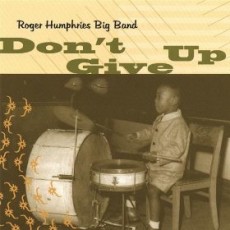
Roger Humphries was born January 30, 1944 in Pittsburgh, Pennsylvania and began playing drums at age four, and went professional at age 14. He led an ensemble at Carnegie Hall at age 16. Early in the 1960s, he began touring with jazz musicians; one of his more prominent gigs was in a trio with Stanley Turrentine and Shirley Scott in 1962.
In 1964, he played with Horace Silver on Song For My Father, following this Humphries drummed for Ray Charles. He led his own band “R. H. Factor” in the 1970s, and led ensembles under other names into the Nineties, recording under his own name in 1993, 2003 and 2011. He held teaching positions at the University of Pittsburgh and the Pittsburgh High School for the Creative and Performing Arts.
Humphries’s list of credits in jazz, R&B, and pop is extensive playing with Lee Morgan, Grant Green, Billy Taylor, Benny Green, Coleman Hawkins, Clark Terry, Dizzy Gillespie, Jack McDuff, Jon Faddis, Joe Williams, Herbie Mann, Gene Harris, Milt Jackson, Slide Hampton and the list goes on. Drummer and big band leader Roger Humphries continues to perform.
More Posts: drums
Daily Dose Of Jazz…
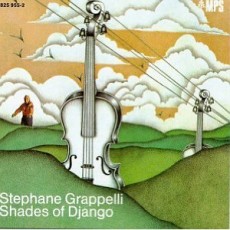
Stéphane Grappelli was born on January 26, 1908 in Paris, France. Losing both his parents he was accepted into Isadora Duncan’s dance school where he discovered his love for French impressionist music. His musical career began playing violin at age 12, attended the Conservatoire de Paris studying music theory and made his living busking on the streets of Paris and Montmartre.
While at the conservatory he worked as a silent film pianist and also playing the saxophone and accordion. Grappelli eventually gained fame in Paris as a violin virtuoso but piano was his other love. His early fame came playing with the Quintette du Hot Club de France with Django Reinhardt though the band disbanded in 1939 due to World War II. In 1940, a little known jazz pianist by the name of George Shearing made his debut as a sideman in Grappelli’s band.
After the war Stephane appeared on hundreds of recordings including sessions with Duke Ellington, Oscar Peterson, Michel Petrucciani, Claude Bolling, Jean-Luc Ponty, Stuff Smith, Toots Thielemans, Gary Burton, Joe Pass, Andre Previn and many, many others.
During the 1960s he played for cocktail hour at the Paris Hilton, recorded the title track of Pink Floyd’s “Wish You Were Here”, made a cameo appearance in “King of the Gypsies”, received the Grammy Lifetime Achievement Award in 1997 and was inducted into the Down Beat Jazz Hall of Fame.
Violinist Stephane Grappelli died in Paris after undergoing a hernia operation on December 1, 1997.
More Posts: violin
Daily Dose Of Jazz…
Marcus Printup was born on January 24, 1967 in Conyers, Georgia. His first musical experiences hearing the fiery gospel music his parents sang in church and didn’t discover jazz until he was a senior in high school.
He is a versatile musician who started playing trumpet in the fifth grade, played funk as a teenager, and while attending the University of North Florida on music scholarship, won the “International Trumpet Guild Jazz Trumpet Competition”, and was a member of a ten-piece group called “Soul Reason for the Blues”. In 1991 he met pianist Marcus Roberts, his mentor to this day, who introduced him to Wynton Marsalis, and was induction into the Jazz @ Lincoln Center Orchestra two years later.
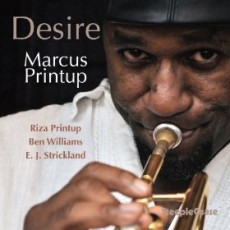
Marcus has performed and/or recorded with Betty Carter, Dianne Reeves, Eric Reed, Cyrus Chestnut, Wycliffe Gordon, Carl Allen, Marcus Roberts among many others, not to mention a few of his projects as a leader, Song for the Beautiful Woman, Hub Songs, The New Boogaloo, Bird of Paradise, London Lullaby and his most recent, Desire.
Printup’s screen debut was in the 1999 movie “Playing By Heart” and also recorded on the film’s soundtrack. He tours annually with the Lincoln Center Jazz Orchestra, spending one-third of his year touring world wide, and nourishes his educator side by teaching youth and experienced musicians and contributing to several camps annually.
More Posts: trumpet
Daily Dose Of Jazz…
Marilyn Mazur was born on January 18, 1955 of Polish and African American descent in New York but grew up on Denmark from the age of six. Primarily a self-taught percussionist and drummer, she got a degree in percussion at the Royal Danish Academy of Music.
From 1975, Mazur has worked as a percussionist with various groups, among others, the group Six Winds with Alex Riel. She has performed with such notables as Niels-Henning Orsted Pederson, Jan Garbarek, Miles Davis, Gil Evans, Wayne Shorter Jeanne Lee and Palle Mikkelborg to mention a few.
By 1989, Marilyn founded her band Future Song, a sextet with her husband Klavs Hovman. A second project, Percussion Paradise, brought together percussionists Benita Haastrup, Lisbeth Diers and Birgit Løkke.
Marilyn Mazur is also a composer, pianist, dancer and bandleader and has been selected by Down Beat in 1989, 1990 and 1995 as a “percussion talent deserving wider recognition”. In 2001, she was awarded the Jazzpar Prize, the world’s largest international jazz prize. She continues to record, perform and tour.
More Posts: bandleader,drums
Daily Dose Of Jazz…
Ira Gitler was born December 18, 1928 in Brooklyn, New York and grew up listening to swing bands in the late 1930s and 1940s, before discovering the new music of Charlie Parker and Dizzy Gillespie. In the early 1950s, he worked as a producer for many recording sessions of Prestige Records and is credited with coining the term “sheets of sound” in the late 1950s, to describe the playing of John Coltrane.
Ira was the New York editor of Down Beat magazine during the 1960s and has written for Metronome Magazine, Jazz Times, Jazz Improv, Modern Drummer, the New York Times, the San Francisco Chronicle, the Village Voice, Playboy, World Monitor and New York Magazine along with international publications Swing Journal in Japan, Music Jazz – Italy, Jazz Magazine, France.
Gitler was awarded a Guggenheim Fellowship in 1974, received a Lifetime Achievement Awards by the New Jersey Jazz Society in 2001, and by the Jazz Journalists Association in 2002.
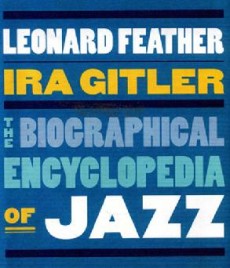
He is a jazz historian and journalist best known for “The Biographical Encyclopedia of Jazz, co-authored with Leonard Feather. He has written hundreds of liner notes for jazz recordings since the early 1950s and is the author of dozens of books about his two passions, jazz and ice hockey.