Daily Dose Of Jazz…
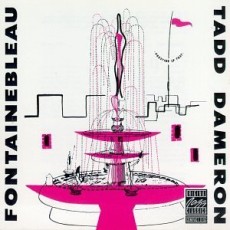
Cleveland, Ohio was the birthplace of Tadley Ewing Peake Dameron on February 21, 1917. Tadd as he was known in the jazz world became the definitive arranger/composer of the bop era writing such standards as “Good Bait,” “Our Delight,” “Hot House,” “Lady Bird,” and “If You Could See Me Now.” Not only did he write melody lines, he also wrote full arrangements. Though he never financially prospered, Dameron was an influential force from the mid-’40s till his death.
Dameron started out in the swing era touring with the Zack Whyte and Blanche Calloway bands, he wrote for Vido Musso in New York and most importantly, contributed arrangements for Harlan Leonard’s Kansas City Orchestra, some of which were recorded.
Soon he was writing charts for such bands as Jimmie Lunceford, Count Basie, Billy Eckstine, and Dizzy Gillespie (1945-1947) in addition to Sarah Vaughan. Always very modest about his own piano playing but he did gig with Babs Gonzales’ Three Bips & a Bop in 1947 and led a sextet featuring Fats Navarro at the Royal Roost during 1948-1949.
Dameron co-led a group with Davis at the 1949 Paris Jazz Festival, stayed in Europe for a few months (writing for Ted Heath), and then returned to New York. He wrote for Artie Shaw’s last orchestra that year, played and arranged R&B for Bull Moose Jackson (1951-1952) and in ‘53 led a nonet featuring Clifford Brown and Philly Joe Jones.
He also led bands that included Dexter Gordon, Sonny Rollins and Wardell Gray. Drug problems, however, started to get in the way of his music. After recording a couple of albums including 1958’s Mating Call with John Coltrane, drug addiction caused him to spend much of 1959-1961 in jail. After he was released, Dameron wrote for Sonny Stitt, Blue Mitchell, Milt Jackson, Benny Goodman, suffered several heart attacks and diagnosed with cancer from which he would eventually succumb to on March 8, 1965 in New York City.


Daily Dose Of Jazz…
Clyde Lombardi was born in February 18, 1922 in the Bronx borough of New York City. He had extensive classical training but by the time he was 20 he became a jazz musician. He became an advanced yet flexible bassist, quite valuable in the jazz world of the ’40s and ’50s, playing regularly with Red Norvo from 1942-1945.
Throughout the rest of the decade he would play with Joe Marsala and the Boyd Raeburn Orchestra in 1945, as well as both big bands and combos headed by Benny Goodman during 1945-1946 and his bebop fling of 1948-1949.
Clyde played and recorded with Charlie Ventura in 1946, Lennie Tristano, Wardell Gray, Stan Getz, Al Haig, Zoot Sims, Eddie Bert, Tal Farlow in 1953 and George Wallington among others.
Unfortunately for the jazz world he never got the opportunity to lead any albums of his own. He left jazz by 1959 re-emerging from time to time and working for CBS as a studio musician and recording with tenor Tony Graye. He passed away in New York City on January 1, 1978.

More Posts: bass
Daily Dose Of Jazz…
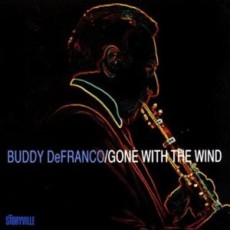
Buddy DeFranco was born Boniface Ferdinand Leonard DeFranco in Camden, New Jersey on February 17, 1923. By the age 14 he had won an amateur swing contest sponsored by Tommy Dorsey. Just four short years later he was working with the big bands of Gene Krupa in 1941 and Charlie Barnet in 1943. Those stints were followed with him playing off and on with Tommy Dorsey over the next few years.
Outside of a short-lived association with the Count Basie Septet in 1950, Buddy mainly lead his own bands from then on, playing and recording with Tal Farlow, Art Blakey, Kenny Drew and Sonny Clark, Art Tatum and Oscar Peterson as his sidemen, among others too numerous to name. He also played in some of Norman Granz’s Verve jam sessions and during the late 60’s DeFranco became the bandleader of the Glenn Miller Orchestra, an association that lasted until 1974. He has found more artistic success co-leading a quintet with Terry Gibbs off and on since the early 80’s and has recorded numerous albums.
Buddy DeFranco is considered one of the great clarinetists of all time and, until the rise of Eddie Daniels, he was indisputably the top clarinetist to emerge since 1940. It was DeFranco’s misfortune to be the best on an instrument that after the swing era dropped drastically in popularity and, unlike Benny Goodman and Artie Shaw, he has never been a household name for the general public and while most jazz clarinet players were unable to adapt to fading popularity, Buddy Defranco was one of the few bebop musicians who successfully continued to play clarinet exclusively until he passed away on December 24, 2014 in Panama City, Florida at age 91.
More Posts: clarinet
Daily Dose Of Jazz…
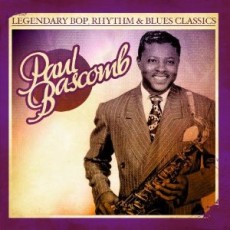
Paul Bascomb was born into a family with nine siblings on February 12, 1912 in Birmingham Alabama. From an early age he felt the urge to create music and by his late teens he was an accomplished clarinetist and tenor saxophonist. Attending Alabama State Teacher’s College he was a founding member of the Bama State Collegians, a respected regional swing band that stayed together from the mid-thirties on assuming leadership under Erskine Hawkins. Paul was a part of this band till the mid 40’s, save a stint with Count Basie’s band from 38-39. During this period he co-wrote the tune Tuxedo Junction with Hawkins but by 1945 left the band a co-led small combos with his brother Dud.
1946 saw Bascomb in New York recording with a small combo for Alert records. A year later he moved to the Jersey based Manor label recording a series of sides for them, went to the London label and recorded Pink Cadillac and in ’48 did a session with The Riffs who eventually became famous with King Pleasure.
In 1950 Paul relocated to the Midwest and began a long association with the Chicago and Detroit nightclubs where owners were allowing black and white musicians to play together. By 1952 he started recording extensively with United Records and later for Mercury as he ventured into the R&B world.
By the late fifties he demand changed and took a job with the city of Chicago. He returned to music in the late 70s, was inducted into the Alabama Jazz Hall of Fame in 1979, and played well into the 80s for well receiving European audiences. It was the last hurrah for tenor saxophonist Paul Bascomb, who passed away at 74 years old on December 2, 1986.
More Posts: saxophone
Daily Dose Of Jazz…
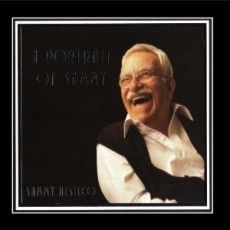
Sammy Nestico was born Samuel Lewis Nestico on February 6, 1924 in Pittsburgh, Pennsylvania. Studying and learning to play the trombone, he started his professional career in 1941 at age 17 as a staff arranger for ABC radio affiliate WCAE.
Over the course of his career he arranged for Count Basie from 1967-1984, for the US Air Force and Marine Bands for twenty years while in Washington, DC, and played trombone in Tommy Dorsey, Woody Herman, Gene Krupa and Charlie Barnet big bands.
A professor at the University of Georgia from 1998-99 Nestico taught commercial orchestration and conducting the Studio Orchestra, but was unable to find the necessary administrative support to remain there. He has also directed music programs at Los Angeles Pierce College, and the Westinghouse Memorial High School in Wilmerding, PA.
During his life in the television and film industry, Sammy has arranged and conducted projects for artists such as Bing Crosby, Sarah Vaughan, Frank Sinatra, Toni Tennille, Phil Collins, Barbra Streisand among others and orchestrated nearly seventy television programs such as Mission Impossible, Mannix, Charlie’s Angels and The Mod Squad.
He has written commercial jingles for numerous companies including Ford, Dodge, Anheuser-Busch and Mattel and has published nearly 600 numbers for school groups and professional big bands. A trombone player and a prolific, well-known composer and arranger of big band music, he is best known for his arrangements for the Count Basie orchestra. Sammy Nestico continues to compose, arrange, conduct and perform.