

Daily Dose Of Jazz…
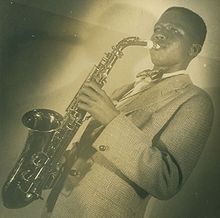
Pee Wee Moore was born Numa Smith Moore on March 5, 1928 in Raleigh, North Carolina. Attending Hampton Institute as a pre-med major, after one semester switched to music taking up the saxophone, joining the Royal Hamptonians and touring on a USO circuit. While asleep in the back seat driving back to New York, Pee Wee lost his left eye in a car accident. However this had no effect on his playing.
In the 30’s Moore played with the Jeter-Pillars Orchestra, recorded with Floyd Ray and sat alongside Dizzy Gillespie in the Les Hite big band from 1939 to 1942. His first recordings with Dizzy Gillespie’s ensemble occurred from 1946-47.
Throughout the fifties Moore played with Lucky Millinder, Louis Jordan, Illinois Jacquet, James Moody, Mary Lou Williams and Dizzy Gillespie, whom he recorded several albums with for Verve. He worked with pianist Bill Doggett in the mid-sixties.
Moore moved back to Raleigh to care for his ailing mother and recover from alcohol addiction. Earning a living as a handyman, he continued to play throughout the rest of his life at various venues in the Raleigh-Durham area. On April 13, 2009 jazz saxophonist Pee Wee Moore passed away at the age of 81.

More Posts: saxophone
Daily Dose Of Jazz…
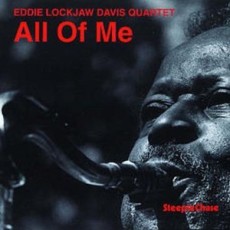
Edward Davis was born on March 2, 1922 in New York City. He was known to his friends, peers, jazz enthusiasts and aficionados by his nickname “Lockjaw” and became one of the pre-eminent jazz saxophonists of the 20th century.
In the early to mid-forties he played with Cootie Williams, Lucky Millinder, Andy Kirk, Louis Armstrong and Cont Basie. By 1946 he was leading his own band “Eddie Davis and His Beboppers” that housed Fats Navarro, Al Haig, Huey Long, Gene Ramey and Denzil Best.
In the 50’s he teamed with Sonny Stitt, from 1960 to ’62 he co-led a quintet with Johnny Griffin, and he and Griffin performed as part of the Kenny Clarke-Franz Boland Big Band. Davis recorded with Ella Fitzgerald, collaborated with Shirley Scott and played off and on with Count Basie’s Orchestra in the early 70’s.
In his later years he played with Harry “Sweets” Edison and remained busy as a soloist until his death on November 3, 1986 at the age of 64. Eddie “Lockjaw” Davis performed within the jazz genres swing, bop, hard bop, Latin and soul jazz.
More Posts: saxophone
Daily Dose Of Jazz…
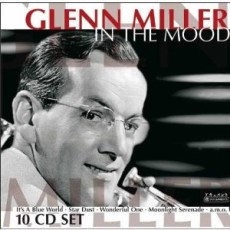
Glenn Miller was born Alton Glenn Miller on March 1, 1904 on a farm in Clarinda, Iowa. Though his early musical schooling was in Nebraska by 1915 his education continued in Missouri. Working to save money by milking cows, he bought his first trombone and played in the town orchestra. By high school his interest turned towards a new style of music called “dance band” and led a band with classmates. His unsuccessful foray into college caused him to concentrate on becoming a professional musician.
The mid-twenties saw Glenn touring with several bands including Red Nichols in Broadway show pits performing with band mates were Benny Goodman and Gene Krupa. In 1929 he was part of the band backing a recording of “If I Could Be With You One Hour Tonight” featuring Pee Wee Russell, Eddie Condon, Gene Krupa and Coleman Hawkins.
He went on to work with the Dorsey brothers and British bandleader Ray Noble, then transitioning into motion pictures for Paramount and 20th Century with such stars as Bing Crosby, George Burns and Gracie Allen, Ethel Merman, Bill “Bojangles” Robinson, Dorothy Dandridge and the Nicholas Brothers.
From 1938 to 1942 Miller amassed great fame with his songs “Tuxedo Junction”, “Moonlight Serenade”, “Little Brown Jug” and “Chattanooga Choo-Choo” breaking all sales and chart records. In 1942 Glenn joined the war effort joining first the Army and then the Army Air Force forming marching bands and orchestras and performing for soldiers. Sadly, on a flight from England to Paris on December 15, 1944, Glenn Miller’s plane went missing over the English Channel. His body was never recovered.
The jazz musician, arranger, composer and swing era bandleader was posthumously issued a postage stamp, three songs are in the Grammy Hall of Fame and in 2003 he received a Grammy Lifetime Achievement Award.

More Posts: trombone

Daily Dose Of Jazz…
Harlem was originally a wealthy white suburb of the New York City borough of Manhattan at the turn of the 20th century, but over-speculation led to a collapse of the housing boom and by 1904, fed by the Great Migration, thousands of Blacks began to reside in Harlem, taking advantage of inexpensive rents. By the 1920’s it became the major residential, cultural and business center for Black people. It was also the center of a flourishing entertainment business with black theaters and black artist performing for black audiences.
Originally a Dutch village formally organized in 1658 and named Haarlem after a Dutch town in the Netherlands and has been defined by a series of boom-or-bust cycles. Harlem was in vogue during the Roaring Twenties and the Harlem Renaissance and white socialites flocked north to hear Duke Ellington, Cab Calloway, Fats Waller, Chick Webb, Louis Armstrong and Bessie Smith. The premiere dance hall was the Savoy Ballroom with the big four clubs were The Cotton Club, Connie’s Inn, Small’s Paradise and Barron Wilkins, which was the first to open in 1915.
The Cotton Club, opened by gangster Owney Madden in 1922 moved downtown in ’36; Connie’s Inn opened in 1923 by George and Connie Immerman and Ed Smalls opened Small’s Paradise in 1925 and endured until 1986. All four catered to white audiences with lavishly staged shows featuring black performers such as James P. Johnson, Bill “ Bojangles” Robinson and Ethel Waters.
Swing and jazz were at its height and over the next several decades attracted the nightlife of both wealthy and working patrons to witness the greatest black musicians and performers in music and entertainment at a proliferation of theatres and clubs.
The most popular nightspots within the boundaries of the Hudson and East Rivers and from 100th to 155th Streets were the Alhambra Theatre, the Apollo Theatre, Bamboo Inn, Bamville Club, Band Box, Barron’s, Brittwood, Capitol Palace, Club Basha, Count Basie’s, Dickie Wells Shim Sham Club, Garden Of Joy, Golden Gate Ballroom, Harlem Club, Harlem Opera House, Heat Wave, Lafayette Theatre, Lenox Club, Leroy’s, Lido Ballroom, Lincoln Theatre, Luckey’s Rendezvous, Minton’s Playhouse, Monette’s Supper Club, Monroe’s Uptown House, Nest Club, Pod’s & Jerry’s, Renaissance Ballroom, Rendezvous Cabaret, Rhythm Club, Saratoga Club, Ubangi Club and Yeah Man.
Harlem, which has recently been given the name Manhattan North, has former President Bill Clinton to have a visible presence, has skyrocketed rental costs and townhouse sales , given much of 125th Street a makeover, attracting thousands of tourists and an influx of residents who at one time not too long ago would never have crossed Central Park North or come down into the valley from Columbia University.
More Posts: club,dance,history,instrumental,jazz,music,vocal
Daily Dose Of Jazz…
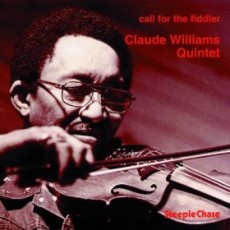
Claude “Fiddler” Williams, born on February 22, 1908 in Muskogee, Oklahoma, by the age of 10 had learned to play guitar, mandolin, banjo and cello and was inspired to learn the violin after hearing Joe Venuti play. He played around Oklahoma with bassist Oscar Pettiford and by 1927 had his first professional gig with Terence Holder’s territory band that soon became known as the Clouds of Joy led by Andy Kirk after Holder’s ouster.
Claude enjoyed a great deal of success due to the performing and composing talents of Mary Lou Williams. Their short-lived relationship ended due to health issues but during the thirties he worked with Alphonse Trent, George E. Lee, Chick Stevens, Nat King Cole and his brother Eddie.
In 1936 Claude became the first guitarist to record with Count Basie and throughout the 30’s and 40’s worked Chicago, Cleveland and Flint with the Four Shades of Rhythm. Throughout the 50’s he worked with Jay McShann, Eddie “Cleanhead” Vinson and Hank Jones.
Settling in Kansas City in 1953 he spent most of the next 20 years leading his own groups. By the 70’s a gig with McShann led to his first recordings in three decades and his second career was born. Over the next two decades he toured with McShann, worked as a feature soloist at jazz festivals, Parisian musical Black & Blue, a New York date with Roland Hanna and Grady Tate, played Carnegie Hall and Lincoln Center, and President Bill Clinton’s first inauguration. In 1997 Williams was the first inductee of the Oklahoma Jazz Hall Of Fame.
Claude “Fiddler” Williams, the venerable elder statesman of jazz, who outlasted virtually all his contemporaries and achieved his greatest successes at an advanced age and was the last surviving jazz musician to be recorded before 1930, passed away at the age of 96 of pneumonia in Kansas City on April 26, 2004.
More Posts: violin