

Daily Dose Of Jazz…
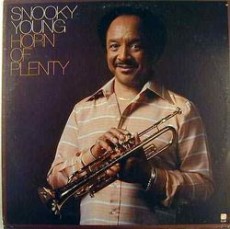
Snooky Young was born Eugene Young in Dayton, Ohio on February 3, 1919. Taking up the trumpet at the age of five, he didn’t begin making a name for himself until he joined the Jimmie Lunceford band as lead trumpeter in 1939, a relationship that lasted for three years.
He played a total of eight years over three stints with Count Basie, Lionel Hampton and was an original member of the Thad Jones/Mel Lewis Big Band. However, his longest engagement was as a studio trumpeter with NBC’s Tonight Show Band from 1967 to 1992 when Johnny Carson’s departure broke up the band and the network replaced it with a new, smaller group.
Young only recorded three albums as a leader but was a sideman on nearly three-dozen albums and he continued to perform in L.A. with several big bands and holds membership in the Clayton-Hamilton Jazz Orchestra. Known for his mastery of the plunger mute, he is able to create a wide range of sounds. He can make his horn speak, shout, growl, and sigh with his mutes while always swinging irresistibly.
On October 17, 2008 he received the NEA Jazz Masters Award. Trumpeter and flugelhornist Snooky Young passed away on May 11, 2011 in Newport Beach, California at the age of 92.

More Posts: flugelhorn,trumpet
Daily Dose Of Jazz…
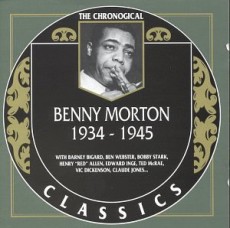
Benny Morton was born on January 31, 1907. Growing up in New York City, Benny was a graduate of the Jenkins Orphanage Band and was greatly influenced by church music as well as Dope Andrews, trombonist for Mamie Smith. By 1923, just 16 years old, he was gaining experience with the Clarence Holiday Orchestra and just three years later joined Fletcher Henderson. Swing was in and Benny moved on to spend six years with Don Redman and then three with Count Basie.
By 1938 he was recording with Clarence Holiday’s daughter Billie on My First Impression Of You and on The Sound Of Jazz. Morton went on to play with Teddy Wilson and Ed Hall in the 40’s and led his own band before playing in the Broadway pit for shows like Guys and Dolls and for Radio City Music Hall.
During the sixties and over the next two decades, the gentle and self-effacing trombonist was back in high jazz society with cornetist Wild Bill Davison and Bobby Hackett, The Saints and Sinners and the World’s Greatest Jazz Band.
One of the most sophisticated trombonists of the swing era, Benny Morton passed away on December 28, 1985.

More Posts: trombone
Daily Dose Of Jazz…
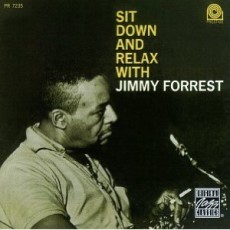
One of the many jazz musicians to come out of St. Louis, Missouri was Jimmy Robert Forrest Jr., born January 24, 1920. Working with pianist Eddie Johnson, Fate Marable and the Jeter-Pillars Orchestra while in high school, he went on the road with Dan Albert in 1938 and then the Jay McShann Orchestra from 1940 to 1942.
Forrest moved to New York and played with Andy Kirk and Duke Ellington before returning to St. Louis. His recording of “Night Train” with it’s hook and classic tenor solo reached the #1 spot on the Billboard R&B chart in 1952 and stayed for seven weeks. Gathering greater attention Jimmy recorded a series of jazz influenced R&B singles for United Records including two other hits “Hey Mrs. Jones” and “Bolo Blues”.
“Night Train” became the theme song for a nightly rhythm and blues program of the same name hosted by William A. “Rascal” McCaskill on KREL-AM in Houston market from 1954-1957 that virtually introduced white teenagers to what was called race music.
During the fifties he led his own combos and played with Miles Davis but Jimmy Forrest’s most important associations were with Harry “Sweets” Edison from ’58-’63, the Count Basie Orchestra from ’72-’77 and Al Grey with whom he co-led a quintet until his death.
Tenor saxophonist Jimmy Forrest, bandleader and sideman, died on August 26, 1980 in Grand Rapids, Michigan.

More Posts: saxophone

Daily Dose Of Jazz…
Born January 21, 1917, pianist Billy Maxted grew up in Racine, Wisconsin. He started out playing and arranging for the Red Nichols Big Band in 1937 and stayed with him for three years. After serving in the Navy he provided arrangements for Benny Goodman and Claude Thornhill and co-led a band with Ray Eberle from 1948 to 1948.
In the following years he worked with drummer and bandleader Ben Pollack, guitarist, composer and big band leader Teddy Powell and trombonist and bandleader Will Bradley.
Maxted moved to Long Island, NY and for much of his life he was a fixture at Nick’s in Greenwich Village. From 1955 to 1966 he recorded a dozen albums including Dixieland and Big Band hits. In 1961 he moved to Fort Lauderdale and that same year reached the Billboard “Bubbling Under The Top 100” chart with a swing version of “Satin Doll”.
He worked with Pee Wee Erwin, Bob Crosby and Red Nichols and over his career recorded for MGM< Brunswick, Cadence and Seeco labels. Not much was heard from him after his move to Florida and in relative obscurity Billy Maxted passed away on October 11, 2001 in Fort Lauderdale.
Daily Dose Of Jazz…
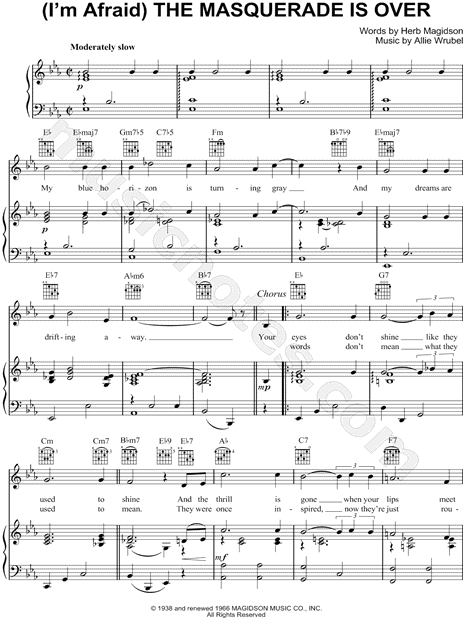
Allie Wrubel was born in Middletown, Connecticut on January 15, 1905. He attended Wesleyan and Columbia Universities prior to playing saxophone and clarinet for a variety of famous swing bands. His musical career began in Greenwich Village where he roomed with his close friend and actor, James Cagney.
1934 saw Allie’s move to Hollywood to work for Warner Brothers as a contract songwriter. He was a major contributor to a large number of movies including Busby Berkeley films before moving to Disney in 1947. He also contributed to films such as “Make Mine Music”, “Duel In The Sun”, “I Walk Alone”, “Melody Time”, “Tulsa”, “Midnight Lace” and “Never Steal Anything Small”.
He collaborated with many lyricists such as Abner Silver, Herb Magidson, Charles Newman, Mort Dixon, Ned Washington and Ray Gilbert, the latter collaboration penned Zip-A-Dee-Doo-Dah from the 1947 film Song Of The South, which won Gilbert and Wrubel an Oscar for Best Song that year. A few recognizable songs from his huge collection of compositions, some that have become staples in the jazz catalog – Gone With The Wind, As You Desire Me, Music Maestro Please, I’ll Buy That Dream, Mine Alone, How Long Has This Been Going On and The Masquerade Is Over.
After a long and successful career Allie Wrubel was inducted into the Songwriters Hall Of Fame in 1970, just three years before his death on December 13, 1973 in Twentynine Palms, California.