

Daily Dose Of Jazz…
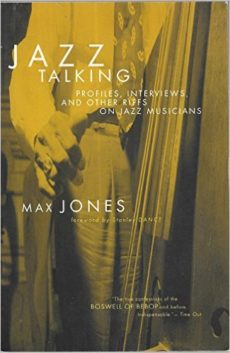
Ronald Maxwell Jones was born on February 28, 1917 in London, England and together with his brother Cliff, taught himself to play the saxophone, before the two of them founded the semi-professional Campus Club Dance Band in 1930. Dissolved in 1935 he tried to establish himself as a professional musician, becoming a member of a combo led by trumpeter Johnny Claes, with musicians who played in the style of Coleman Hawkins.
In 1942 and 1943, Max worked for the BBC radio program Radio Rhythm Club; and in 1942, together with authors Albert McCarthy and Charles Fox, founded the magazine Jazz Music, which became meritorious as it set out to reassert the pioneering role of the African-American, to emphasize the music’s social dimensions, and to attack the glossy commercialism of big-band swing.
Since 1944, Jones had a full-time job writing features for the Melody Maker in the column Collectors’ Corner. In the following years he gained more and more high recognition as a proven expert of New Orleans Jazz, swing, and mainstream jazz.
In 1971 Jones published a Louis Armstrong biography, Louis: The Louis Armstrong Story, together with John Chilton. He also wrote a number of liner notes, such as for the CD edition of the Kenny Clarke/Francy Boland Big Band, the Spirits of Rhythm, and wrote the preface for the Lee Collins, Mary Spriggs Collins, Frank Gillis, John W. Miner book Oh, Didn’t He Ramble: The Life Story of Lee Collins. A collection of his articles on musicians such as Coleman Hawkins, Johnny Hodges, Billie Holiday, and Mary Lou Williams was published as a book entitled Talking Jazz in 1987.
Jones was the first jazz musician to become a professional journalist and exclusively dealt with jazz in his publications. He was a model and a mentor for a younger generation of rock music critics and authors. Author, radio host, and journalist Max Jones passed away on August 1, 1993 in Chichester, England.

#preserving genius
More Posts: saxophone
Daily Dose Of Jazz…
Walter Johnson was born on February 18, 1904 in New York City, New York. He was influenced by Kaiser Marshall and became one of the top big band drummers of the 1920’s and 30’s swing era. He worked with Freddy Johnson in 1924, Bobby Brown, Elmer Snowden between 1925 to 1928, and Te Roy Williams in 1927.
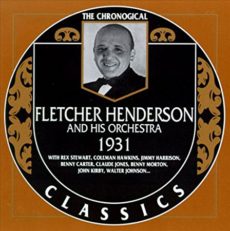
He became best-known for his playing with Fletcher Henderson’s Orchestra off and on from 1929 to 1942. After his third stint with Henderson ended, Johnson freelanced for the remainder of his career,Through the Thirties, he performed with other swing era big bands including Sam Wooding, LeRoy Smith, Lucky Millinder, Claude Hopkins, Edgar Hayes and Coleman Hawkins.
Though Walter sometimes worked outside of music as a bank guard, he could often be heard playing with Tab Smith during a period spanning a decade from 1944 to 1954. He would also appear with a variety of swing and mainstream combos into the Sixties. Though Drummer Walter Johnson never led his own record date, he did record frequently during his prime years, passed away on April 26, 1977 in New York City.
Sponsored By


#preserving genius
More Posts: drums
Daily Dose Of Jazz…
Walter Purl “Foots” Thomas was born on February 10, 1907 in Muskogee, Oklahoma, elder brother tos alto saxophonist and songwriter Joe Thomas. Moving to St. Louis, Missouri he played in Ed Allen’s Whispering Band of Gold in the early 1920s and in 1924 recorded with Fate Marable’s Society Orchestra.
1927 saw Foots, as he was affectionately known, in New York City, where he played with the New Orleans pianist and composer Jelly Roll Morton and Joe Steele. He then joined The Missourians in 1929, just before Cab Calloway took the band over. Among his arrangements was the 1931 hit song, Minnie the Moocher.
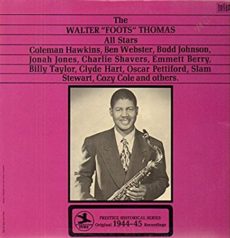
Leaving Calloway’s orchestra in 1943 he went to work with saxophonist and composer Don Redman. He went on to lead a 1944 recording session with sidemen including Coleman Hawkins, Hilton Jefferson, Eddie Barefield and Jonah Jones, as well as another session that year featuring Ben Webster, Budd Johnson, and Emmett Berry.
During the mid-1940s he taught at a studio on West 48th Street in New York City and among his students was the hard bop alto saxophonist Jackie McLean. In the 1950s he became a manager and booking agent; he worked for the Shaw Artists Corporation and for a time one of his clients was the trumpeter Dizzy Gillespie.
Tenor saxophonist, flautist and arranger Foots Thomas, who played in one of the most famous orchestras of the Swing era, passed away from cancer on August 26, 1981. He was posthumously inducted into the Oklahoma Jazz Hall of Fame in 1996.
Sponsored By

#preserving genius
Daily Dose Of Jazz…
Milt Raskin was born on January 27, 1916 in Boston, Massachusetts and played saxophone as a child before switching to piano at age 11. In the 1930s he attended the New England Conservatory of Music and worked on local Boston-area radio.
Moving to New York City, Milt played with Wingy Manone in 1937 at the Famous Door and with Gene Krupa in 1938-39. He then played with Teddy Powell and Alvino Rey before rejoining Krupa again for a short time. Following this stint, he joined the Tommy Dorsey Orchestra for two years in 1942, replacing Joe Bushkin.
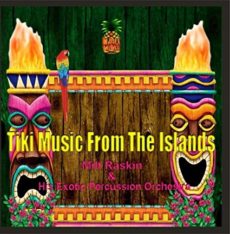
He relocated to Los Angeles, California in 1944, where he occasionally worked in jazz, recording with Artie Shaw, Billie Holiday and Georgie Auld, but concentrated on work as a studio musician and musical director. Much of his studio work from the 1940s on was uncredited, and he never led his own jazz recording session. He did, however, formed and led his Exotic Percussion Orchestra and released a few albums in the 1950s and Sixties.
Swing pianist, composer and arranger Milt Raskin passed away on October 16, 1977 in Manhattan, New York.
Sponsored By

www.whatissuitetabu.com
#preserving genius
More Posts: piano
Daily Dose Of Jazz…
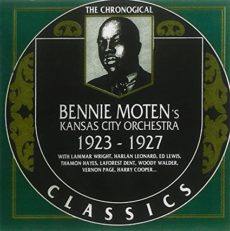
Ed Lewis was born on January 22, 1909 in Eagle City, Oklahoma. His early career saw him in Kansas City, Missouri playing with Jerry Westbrook as a baritone saxophonist, but in 1925 he switched to trumpet He played with Paul Banks and Laura Rucker before joining the Bennie Moten Orchestra, where he was the primary trumpet soloist from 1926-1932 until Hot Lips Page joined the outfit.
In the 1932 he worked with Thamon Hayes for two years followed by a three year stint with Harlan Leonard, the in 1937 played for a short time with Jay McShann. That same year Ed joined the Count Basie Orchestra, remaining until 1948 and though he recorded frequently with the orchestra, he almost never soloed.
In the 1950s Lewis led his own band in New York City for strictly local gigs, and worked for a period as a taxicab driver. He returned to play with The Countsmen in Europe in 1984, shortly before his death.
Harry “Sweets” Edison considered Lewis and Snooky Young the two greatest first trumpet players he ever played with. Trumpeter Ed Lewis, who never led his own recording session, passed away on September 18, 1985.

Give The Gift Of Knowledge
#preserving genius
More Posts: trumpet