

Daily Dose OF Jazz…
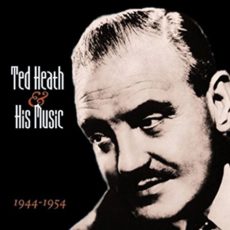
George Edward “Ted” Heath was born March 30, 1902 in Wandsworth, England. After playing tenor saxophone at the age of six, encouraged by his father and leader of the Wandsworth Town Brass Band, he later switched to trombone.
Earning a living for his family in the post-war years Ted formed a band along with his brother Harold and three other musicians, played to commuters outside London Bridge Station and outside the Queen’s Hall Gardens venue. It was here that he was spotted and asked to play with the Jack Hylton Band who had a residence there. Though not having the experience required he did not last long, his professional career began and he went on to pursue a career as a professional musician.
His first real band gig was in the 1920s touring Europe with the American band called the Southern Syncopation Orchestra, followed by the Metro-Gnomes, a small band fronted by Ennis Parkes, then again joined Hylton’s theatre band. Heath played with the Kit Cat Club band led by American Al Starita, and heard Bunny Berrigan, Tommy and Jimmy Dorsey, and Paul Whiteman when they toured Europe.
By 1928 he joined Bert Ambrose’s orchestra at London’s Mayfair Hotel and stayed until 1935 when he moved on to Sydney Lipton’s orchestra at the Grosvenor House. But it was Ambrose who taught Heath how to be a bandleader during a time that Heath became the most prominent trombone player in Britain, renowned for his perfect tone. He played on numerous recordings. During the late ’30s and early ’40s, he played as a sideman on several Benny Carter sessions.
In 1940, Heath joined Geraldo’s orchestra and played numerous concerts and broadcasts and became one of the “boys” in Geraldo’s vocal group, ‘Three Boys and a Girl’. His composition That Lovely Weekend with Dorothy Carless on vocal became an immediate wartime hit. The royalties from this song and another composition Gonna Love That Guy allowed Heath to form his own band.
On D-Day 1944, the Ted Heath & His Music band was officially formed and played on the BBC radio. He went on to provide music for film, performed dates with Lena Horne and Ella Fitzgerald, toured Scandinavia, were regular Poll Winners in the Melody Maker and the New Musical Express and performed twice for King George VI. He held Sunday Night Swing Sessions at the London Palladium from 1947 to 1955.
During the Fifties he toured the U.S. that contracted to play Nat King Cole, June Christy and the Four Freshmen and consisted of 43 concerts in 30 cities in 31 days climaxing in a Carnegie Hall. So successful was the tour that after so many encore calls at the Carnegie Hall performance that Nat King Cole had to come out on stage and ask people to leave. Ted would later successfully tour the US again and also toured Australia and Europe.
In addition to Cole, Heath established close personal and professional relationships with Woody Herman, Count Basie, Marlene Dietrich, Johnny Mathis and Tony Bennett. He worked with Sarah Vaughan, Mel Torme, Donna Hightower and others. His band members included Ronnie Scott, Stan Tracey, Kenny Baker, Duncan Campbell, Don Rendell, Tommy Whittle, Don Lusher, Wally Smith, Jack Parnell, Ronnie Verrell, Johnny Hawksworth and singers Dickie Valentine, Lita Roza and Dennis Lotis. in the ’50s gave the band more teenage appeal.
He commissioned over 800 original scores and arrangements from Tadd Dameron, George Shearing, Reg Owen, John Keating, Kenny Graham, Ken Moule, Robert Farnon, Woolf Phillips, Ron Roullier, Bill Russo, Johnny Douglas, Ron Goodwin and Ralph Dollimore.
Trombonist, composer and bandleader Ted Heath, who led the greatest post-war big band and recording over 100 albums, passed away on November 18, 1969 at the age of 67.
Sponsored By


#preserving genius
More Posts: trombone

Daily Dose Of Jazz…
Fred Anderson was born on March 22, 1929 in Monroe, Louisiana and learned to play the saxophone by himself when he was a teenager. Moving with his family to Evanston, Illinois in the 1940s he studied music formally at the Roy Knapp Conservatory in Chicago, Illinois and had a private teacher for a short time.
He was one of the founders of the Association for the Advancement of Creative Musicians (AACM) and an important member of the musical collective. In the early 1960s Fred formed his own group and performed his original compositions with drummer Vernon Thomas, bassist Bill Fletcher, and his partner for many years, trumpeter Billy Brimfield.
During this period he recorded several notable avant garde albums as a sideman with saxophonist Joseph Jarman, As If It Were the Seasons and Song For which included one of his composition Little Fox Run. By 1972 he put together the Fred Anderson Sextet, with trombonist George Lewis, reedist Douglas Ewart, bassist Felix Blackman, drummer Hamid Drake and Iqua Colson on vocals. Throughout the Seventies he toured Europe, recorded in Austria, and recorded his first record as leader, Another Place in Germany.
He opened the short-lived performance-workshop space Birdhouse in honor of Charlie Parker, and in 1983 took over ownership of the Velvet Lounge in Chicago, which quickly became a center for the city’s jazz and experimental music scenes. The club expanded and relocated in the summer of 2006. Before that, his eclectic Beehive bar in west Chicago was a draw where musicians from around the world drank beer and played, mostly for each other.
Though remaining active as a performer, Anderson rarely recorded for about a decade beginning in the mid-1980s but by the Nineties he resumed a more active recording schedule, both as a solo artist, and as a collaborator with younger performers. He mentored a host of young musicians not limited to Hamid Drake, Harrison Bankhead, David Boykin, Nicole Mitchell, Justin Dillard, Aaron Getsug, Josh Abrams, Fred Jackson, Jr., George Lewis, Karl E. H. Seigfried, Isaiah Sharkey, and Isaiah Spencer.
Chicago avant-garde tenor saxophonist Fred Anderson, who was rooted in the swing and hard bop idioms but incorporated innovations from free jazz, passed away on June 24, 2010.
Sponsored By

#preserving genius
More Posts: saxophone
Daily Dose Of Jazz…
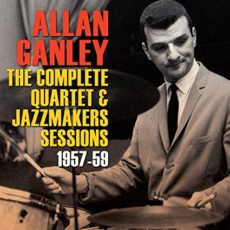
Allan Ganley was born on March 11, 1931 in Tolworth, Surrey, England and was a self-taught drummer. In the early 1950s Ganley played in the dance band led by Bert Ambrose. In 1953 he came to prominence as a member of Johnny Dankworth’s band, then the most popular modern jazz group in the UK. Throughout the 1950s, he worked with pianist Derek Smith, Dizzy Reece, clarinettist Vic Ash, Ronnie Scott and with visiting American musicians. Towards the end of the decade he was co-leader with Ronnie Ross of a small group known as the Jazzmakers.
By the early 1960s, Ganley was often performing with Tubby Hayes, with his small groups or occasionally assembling a big band. He was the house drummer at Ronnie Scott’s Jazz Club and played with numerous Americans including Dizzy Gillespie, Stan Getz, Jim Hall, Freddie Hubbard and Rahsaan Roland Kirk. By the early 1970s he took time out to study at Berklee College of Music in Boston, Massachusetts, then returned to the UK to form and lead a big band, which he maintained sporadically for ten years.
Throughout the Seventies and ’80s and Nineties, Allan appeared on many broadcasts and recording dates, playing jazz and effortlessly slipping from traditional to post-bop to big band to mainstream, all the while swinging with great subtlety. He accompanied pianists as different as Teddy Wilson and Al Haig and for singers from Carol Kidd to Blossom Dearie.
As an arranger, he provided charts for many leading British jazzmen and for the BBC Radio Big Band, thus enhancing the enormous yet understated contribution he made to the British jazz scene over the years. Drummer and arranger Allan Ganley passed away on March 29, 2008.
Sponsored By

Bronze Lens
#preserving genius
More Posts: drums
Daily Dose Of Jazz…
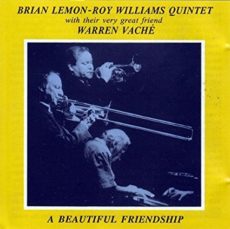
Roy Williams was born on March 7, 1937 in Bolton, Lancashire, England and began his career as a trombonist during the British trad jazz movement of the 1950s. He played with trumpeter Mike Peters and clarinetist Terry Lightfoot in the early Sixties, then joined trumpeter Alex Welsh’s Dixieland outfit in 1965, replacing Roy Crimmins. While with Welsh, he played with visiting American jazz players as Wild Bill Davison, Bud Freeman, and Ruby Braff.
Williams left Welsh in 1978 and joined Humphrey Lyttlelton’s band, staying with the latter for four years. In the ’80s he began working freelance and soon became a first call trombone playing with clarinetist Peanuts Hucko, tenor saxophonist Scott Hamilton, trumpeter Bent Persson and clarinetist John Barnes. He performed with The World’s Greatest Jazz Band.
Among Roy’s recordings are Gruesome Twosome on the Black Lion label, and Interplay for Sine Records, both with Barnes. In 1998 he co-led a swing-oriented quintet date with saxophonist Danny Moss titled Steamers! on the Nagel-Heyer label. Though not as active as he was up through the Nineties, trombonist Roy Williams won numerous jazz polls, toured Europe and the United States and remains a popular presence when he’s on the British mainstream jazz scene.

#preserving genius
More Posts: trombone
Daily Dose Of Jazz…
Eddie Jones was March 1, 1929 in Greenwood, Mississippi and grew up in Red Bank, New Jersey. In the early 1950s with Sarah Vaughan and Lester Young.
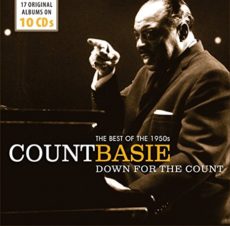
From 1951 to 1952 he taught music in South Carolina before becoming a member of Count Basie’s orchestra in 1953, a relationship that remained until 1962. During this period he recorded frequently with this ensemble, and also played with Basie in smaller ensembles, featuring Joe Newman, Frank Foster, Frank Wess, Thad Jones, Ernie Wilkins, Milt Jackson, Coleman Hawkins, Putte Wickman.
Jones quit music in 1962, took a job with IBM, then later became vice president of an insurance company. By the 1980s he returned to jazz and played on and off in swing jazz ensembles. He recorded a couple of dozen albums with Dorothy Ashby, Count Basie, Bob Brookmeyer, Jimmy Cleveland, Milt Jackson, Hank Jones, Frank Wess and Ernie Wilkins.
Double bassist Eddie Jones passed away May 31, 1997 in West Hartford, Connecticut.
Sponsored By
#preserving genius
More Posts: bass