


From Broadway To 52nd Street
The Fantasticks opened it season of 418 performances at the Sullivan Theatre on May 3, 1960. The musical starred Jerry Orbach, Rita Gardner, Kenneth Nelson and Tom Jones performing music composed and written by Harvey Schmidt and Tom Jones. Most notably from the show came one tune that would inevitably land in the jazz annals of music – Try To Remember.
The Story: The parents of the boy Matt, and the girl Louisa build a wall between their homes not because of any real animosity but on the assumption that the best way to kindle a romance is to appear to oppose it. They even hire El Gallo to stage a mock rape so Matt can rescue Louisa and seemingly be the hero. The kids discover the parent’s ploy, fall out and go separate ways. Eventually, they return to each other, disillusioned but mature.
Jazz History: In the late 60s, jazz began to feel the full impact of the rock revolution. Important jazz venues shut their doors, major labels abandoned jazz to pursue rock, and many jazz artists left the country for better opportunities abroad. Jazz record sales plummeted as rock sales soared, and younger audiences increasingly chose the Beatles, Jimi Hendrix, or the politically oriented folk music of Bob Dylan over jazz. New hybrids of rock and jazz developed as a result, some fueled by jazz players interested in rock and funk, others by rockers interested in jazz. A few late-60s jazz-rock acts like Blood, Sweat, and Tears and Chicago made inroads onto the pop charts, and some youth culture-oriented jazz artists like Charles Lloyd and Gary Burton scored with rock audiences. Numerous late-60s rockers, including Jimi Hendrix, Eric Clapton, Duane Allman, and many San Francisco bands, also began to extend their solos based on the modal improvisations of John Coltrane and other free jazz innovators.
Sponsored By

www.whatissuitetabu.com
Daily Dose Of Jazz…
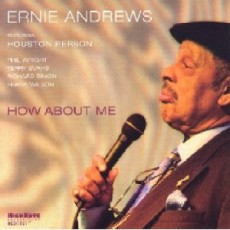
Ernie Andrews was born on December 25, 1927 in Philadelphia, Pennsylvania and spent his earliest years singing in his mother’s church. When he was becoming teen age his family move to Los Angeles, California where he studied drums and continued singing at Jefferson High School. His early influences included Ella Fitzgerald, Billy Eckstine, Al Hibbler, Johnny Mercer, Jimmy Rushing and “Big” Joe Turner.
Discovered by songwriter Joe Greene in 1947 when he won an amateur contest at Central Avenue’s Lincoln Theatre, Ernie was taken into the studio and recorded him at the ripe age of 17.The hit “Soothe Me” sold 300,000 copies and Andrews became a singer to be reckoned with. His next big hit came with Benny Carter called “Make Me A Present Of You” and by this time he was not only working at home but also touring playing clubs, after-hours rooms and concerts.
By 1959, Andrews had joined Harry James’ band, touring the U.S. and South America for nine years, which time he considers his most valuable learning experience. In 1967, he recorded the jazz classic “Big City” with Cannonball Adderley on Capital Records, rejoined James in 68, based himself in Baltimore in ’69, began a solo career and had another big hit with “Bridge Over Troubled Waters”. Her returned to Los Angeles in 1974 where he has resided for more than 50 years.
He has the ear to improvise and a rich resonant voice, and plays his vocal chords as a musician plays his horn. With his special strut, unique mannerisms and a performance that portrays the gamut of emotional experience, he consistently moves audiences to standing ovations. Vocalist Ernie Andrews continued to play clubs, concerts and jazz festivals throughout the world, often performing in Las Vegas, until his transition on February 21, 2022, at the age of 94.

More Posts: vocal
Daily Dose Of Jazz…
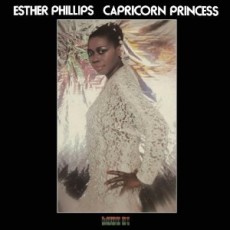
Esther Phillips was born Esther Mae Jones on December 23, 1935 in Galveston, Texas. He parents divorced when she was young and she shared her childhood between Houston and Los Angeles and brought up singing in church. At age fourteen she entered and won a local L.A. amateur talent contest that culminated in a recording with Johnny Otis for Modern Records and added her to his traveling revue, billed as Little Esther Phillips, a name she reportedly took from a gas station sign.
Her first hit record was “Double Crossing Blues” in 1950 for Savoy Records and after several hit records with Savoy that went to number one or hit the Billboard charts in the top ten, she was counted as one of the very few female artists that enjoyed such success in their debut year. She left Otis and Savoy for Federal Records but just a quickly as the hits came, they stopped, in part because she no longer worked with Otis and her increasing drug use that had her addicted by the middle of the decade.
By 1954, she was back home in Houston recuperating with her father, working small nightclubs around the South, punctuated by periodic hospital stays in Lexington, Kentucky, stemming from her addiction. In 1962, Kenny Rogers re-discovered her while singing at a Houston club and got her signed to his brother Lenox label, which assisted in her comeback. From Lenox she went to Atlantic Records, dropped “Little” from her name, and covered the Beatles’ “And I Love Him” and they flew her to the UK for her first overseas performance.
With the ushering in of 1972 she realized one of her biggest with her first album “From A Whisper To A Scream” for Creed Taylor’s Kudu Records with an account of drug use on the lead track in Gil Scott-Heron’s “Home Is Where The Hatred Is”. The song went on to be nominated for a Grammy Award but when Phillips lost to Aretha Franklin, the latter presented the trophy to Phillips, saying she should have won it instead.
While at Kudu she scored her biggest hit single with a disco-style update single of Dinah Washington’s “What A Difference A Day Makes” that reached the U.S. Top 20 and the UK Top 10. The subsequent album had her working with the Brecker Brothers, Joe Beck, David Sanborn, Steve Khan and Don Grolnick. She continued to record and perform throughout the 1970s and early 1980s, completing a total of seven albums on Kudu and four with Mercury Records.
At age 48, Esther Phillips died in Carson, California on August 7, 1984 from kidney and liver failure due to her on-going battle she waged with heroin dependency.
More Posts: vocal
From Broadway To 52nd Street
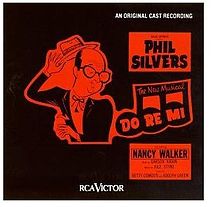
Do-Re-Mi opened at the St. James on December 26, 1960 and starred Phil Silvers, Nancy Walker and John Reardon. Jule Styne, Betty Comden and Adolph Green composed the music and lyrics for the musical that ran 400 performances and gave the world the jazz standard Make Someone Happy.
The Story: A raucous satire on the music industry – with emphasis on the jukebox industry. Hubie Cram, a would-be big shot, induces three retired slot machine mobsters to muscle in on the jukebox racket. Though this does not make him the fawned upon tycoon he has always dreamed of becoming, Hubie does succeed in turning a waitress into a singing star.
Broadway History: The history of Black theater dates back to the turn of the century between 1890 and 1910 when the Black musical comedy was booming with the development of the Black musical theater. In 1903 composer Bert Williams and George Walker wrote “In Dahomey” and is considered the first all Black show on Broadway. The show returned a 400% profit to producers shattering the myth that Black shows were unprofitable. This was followed by a string of shows such as Shuffle Along, Showboat, How Come, The Chocolate Dandies, Africana and Keep Shufflin’. The rise of Black actors would make prominent stars of Ethel Waters, Pearl Bailey, Leslie Uggams, Bill Robinson, Josephine Baker, John Bubbles, Diahann Carroll, Ruby Dee and Sammy Davis Jr.
Over the following decades such shows as Porgy and Bess would come to Broadway along with Purlie, Raisin, Ain’t Misbehavin’, Golden Boy, Dreamgirls that would ultimately culminate in the establishment of the August Wilson Theatre, continuing the legacy of nearly a century of Black theater and inclusion in the Broadway lexicon.
Sponsored By
www.whatissuitetabu.com
From Broadway To 52nd Street
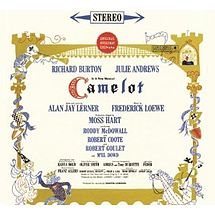
Camelot opened at the Majestic theatre on December 3, 1960 and ran for 873 performances that starred Richard Burton, Julie Andrews, Robert Goulet and Roddy McDowell. Alan Jay Lerner and Frederick Loewe composed the music that gave the world the jazz standard If Ever I Would Leave You.
The Story: The legend of King Arthur has been retold several times and it follows the exploits of his rise to power and his bringing his country under one monarch, falling in love with Guinevere and making her his queen, the illicit affair with Lancelot and the plot of Arthur’s destruction by his bastard son, to the fall of Camelot is set to music in this enjoyable portrayal of royal English life.
Jazz History: In the 1960s Afro-Cuban jazz grew as an extension of the movement that began in the 50s after bebop musicians such as Dizzy Gillespie and Billy Taylor started bands influenced Xavier Cugat, Tito Puente and Arturo Sandoval. The natural progression to Latin jazz combined the rhythms from Africa and Latin American countries that incorporated various instruments as conga, timbale, guiro and claves with jazz and classical harmonies. Though Afro-Cuban was after the bebop period, Brazilian jazz became extremely popular in the Sixties pioneered by Joao Gilberto, and Antonio Carlos Jobim. The rhythms of bossa nova, which were derived from samba, were first adapted to jazz by Charlie Byrd and Stan Getz.
Sponsored By
www.whatissuitetabu.com