

Daily Dose Of Jazz…
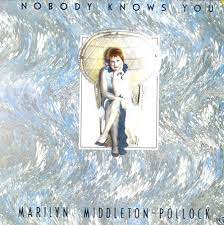
Marilyn Middleton Pollock, born October 25, 1947 in Chicago, Illinois began singing folk music professionally at the age of fifteen. Expanded her repertoire to include rock & roll and blues, she then turned to jazz.
By the end of the 1980s Marilyn had moved to England where she worked with Max Collie, touring with him internationally. Their album Nobody Knows You received the Music Retailers Association Award for Excellence in 1988. She appeared in the theater show A New Orleans Mardi Gras and then in her critically acclaimed solo shows Those Women of the Vaudeville Blues and Jazz Me Blues.
From 1994 she produced the series Vaudeville, Red Hot and Blue for BBC Radio 2 with her jazz band The Chicago Hoods. She toured Great Britain several times with her band.
Vocalist Marilyn Middleton Pollock continues to perform, tour and record.

More Posts: bandleader,instrumental,jazz,music,vocal
Daily Dose Of Jazz…
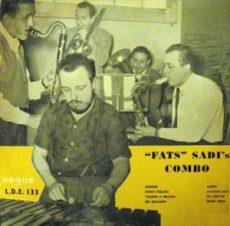
Sadi Pol Lallemand was born on October 23, 1927 in Andenne, Belgium. His first instrument was the xylophone, which he played in a circus in the 1930s. After World War II, he turned professional playing the vibraphone and performed with Bobby Jaspar in the Bob Shots, then with Don Byas.
Moving to Europe he lived in Paris, France from 1950 to 1961 where he played with Aimé Barelli, Django Reinhardt, and Martial Solal. In the Sixties, Fats moved to Brussels, Belgium and was a member of Kenny Clarke/Francy Boland Big Band.
He worked for RTBF, the TV channel of the French Community in Belgium. Sadi led both a quartet and nonet, and won the Belgian Golden Django for best French-speaking artist in 1996.
Vibraphonist, percussionist, vocalist and composer Fats Sadi, who chose the name “Sadi” because he disliked his last name, which means “the German” in French, transitioned on February 20, 2009 in Huy, Belgium.
More Posts: composer,history,instrumental,jazz,music,percussion,vibraphone,vocal
Daily Dose Of Jazz…
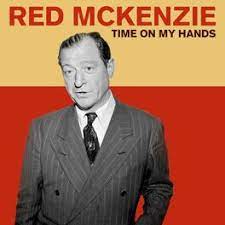
William ‘Red’ McKenzie was born on October 14, 1899 in St. Louis, Missouri. In 1923, he founded the Mound City Blue Blowers with Jack Bland and Dick Slevin. Later they were joined by guitarist Eddie Lang. The quartet also used the name Red McKenzie and the Candy Kids.
In 1929, the Blue Blowers recorded the songs One Hour and Hello Lola with Glenn Miller, Pee Wee Russell and Coleman Hawkins. They also recorded with Bunny Berigan, Jimmy Dorsey, and Muggsy Spanier. McKenzie sang with the Paul Whiteman orchestra and in the 1930s led the Spirits of Rhythm and the Farley-Riley band.
In 1931, he sang on Time on My Hands, Just Friends, and I’m Sorry Dear. McKenzie played in the Town Hall concerts of Eddie Condon, but retired in the 1940s.
On February 7, 1948 jazz vocalist and musician Red McKenzie, who played a comb-and-paper as an instrument, transitioned in New York City.
More Posts: comb & paper,history,instrumental,jazz,music,vocal
Daily Dose Of Jazz…
Raymond Matthews Brown Jr. was born August 13, 1949 in New York City, New York to Ella Fitzgerald’s half-sister Frances. Ella and her then husband, Ray Brown, adopted the baby and raised him as their own. During his childhood Nat King Cole, Louis Armstrong, Frank Sinatra and many others were regular visitors during his childhood.
After moving to California when he was 10, Ray discovered a passion for the drums and for singing. He attended Beverly Hills High School where he sang with school groups which toured local festivals and hospitals. His father arranged for him to study with jazz percussionists Bill Douglass and Chuck Flores. Despite his jazz roots he admits that his interest in performing rock music was an act of rebellion.
Moving to Seattle in 1971 he studied with drummer Bill Coleman Sr. and during this time he began writing songs in addition to playing drums and piano. By the late 1980s Brown was touring the Pacific Northwest, Canada, Alaska, Japan, Korea and Guam performing for the U.S. Department of Defense.
Ray recorded his debut album Slow Down for Love in 2001 on SRI Jazz, reaching the top 50 of the Gavin Report. He released his sophomore album, Committed From The Heart, two years later and he wrote and arranged all the songs on both albums. He also debuted on the Las Vegas Strip at the Riviera hotel and casino.
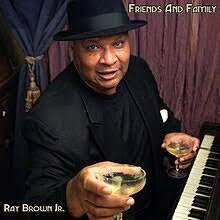
In 2007 he released the album Stand by Me, the following year a duets album Friends and Family, that included Jane Monheit, Melba Moore, James Moody, Maria Muldaur, Dr. John, Dionne Warwick, Freda Payne, Sophie B. Hawkins, Paul Williams, Dr. Lonnie Smith, Dave Somerville, Kim Hoyer, and Sally Kellerman.
He lent instrumental performances on some of the album tracks with artists David “Fathead” Newman and Terry Gibbs. He attended ceremonies honoring his mother, appearing in a BBC documentary about his mother, and the U.S. postage stamp.
Jazz and blues singer Ray Brown Jr., whose mother’s 1964 single Ringo Beat was inspired by his interest in rock music, continues to perform, tour, and record.
Daily Dose Of Jazz…
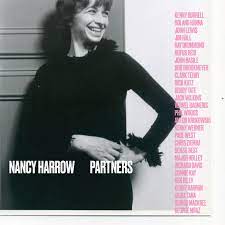
Nancy Harrow was born October 3, 1930 in New York City, New York and studied classical piano beginning at age seven, then decided to pursue careers in dancing and singing.
In 1961 Nancy released her debut album Wild Women Don’t Have The Blues for Candid Records. It featured Kenny Burrell, Buck Clayton, Dickie Wells, and Milt Hinton. Her sophpomore album for Atlantic Records two years later titled You Never Know featured John Lewis, Dick Katz, Phil Woods, Jim Hall, Richard Davis, and Connie Kay. She then left music to raise a family.
Since her return in 1975 she has worked with Katz and Woods, Clark Terry, Roland Hanna, and Bob Brookmeyer. She recorded albums based on The Lost Lady by Willa Cather, The Marble Faun by Nathaniel Hawthorne and Winter Dreams, based on the life of F. Scott Fitzgerald.
Two of Harrow’s songs have been adapted, one to a puppet show and one to The Cat Who Went to Heaven, based on a story by Elizabeth Coatsworth. The latter had short New York City runs at the Mercer Street Theater, the Asia Society, the Harlem School of the Arts, the Kennedy Center and the Brooklyn Academy of Music.
Singer and songwriter Nancy Harrow, who has recorded eighteen albums as a leader on a collaboration with John Lewis, continues to perform and record.
More Posts: composer,history,instrumental,jazz,music,piano,producer,vocal