

Daily Dose Of Jazz…
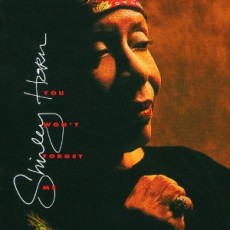
Shirley Valerie Horn was born on May 1, 1934 in Washington, D.C. and was encouraged by her grandmother to begin piano lessons at age four. At twelve she studied piano and composition at Howard University and later majored there in classical music. Unable to afford to attend, Shirley was forced to decline an offered a place at the Juilliard School. Forming her first jazz piano trio when she was twenty, her early piano influences were Errol Garner, Oscar Peterson and Ahmad Jamal that moved away from her classical background.
She then became enamored with the famous U Street jazz area of Washington, sneaking into jazz clubs before she was of legal age. She was most noted for her ability to accompany herself with nearly incomparable independence and ability on the piano while singing, the rich, lush, smoky contralto gave an unprecedented expression to every song she sang. Although she could swing as strongly as any straight-ahead jazz artist, Horn’s reputation rode on her exquisite ballad work.
She recorded with Stuff Smith in 1959, and on small labels into the Sixties. Horn first achieved fame in 1960, when Miles Davis discovered her and his public praise was a rare commodity. She eventually landed on Mercury and Impulse and over the course of her career she recorded some four-dozen albums both as leader and sideman.
Following the arrival of the Beatles, Horn scaled down performances to her native D.C. clubs, raised her daughter and worked full time in an office. Recording sporadically from 1965 through the late 80s, by the early Nineties her resurgence came with “Here’s To Life” and the albums began to flow, nearly one a year until 2003.
The small setting performer, singer and pianist Shirley Horn kept her same trio for twenty-five years. In the early 200s due to health issues she cut back her schedule, and battling diabetes and breast cancer passed away on October 20, 2005. She was nominated for a Grammy 9 times and won for “I Remember Miles”, performed for several White House invites, received an honorary Doctorate from Berklee College of Music and was given a NEA Jazz Master Award.
Daily Dose Of Jazz…
Kathy Brown was born April 18th in Mandeville, Jamaica and began playing the family piano at age 5. Initially self-taught in reading and playing by ear, she studied classical piano up to the sixth grade at the Royal School of Music in England. She took music as an elective in high school, college, while attaining her medical degree at the University of the West Indies and took classes in jazz piano after graduation.
Leading her bands Dr. Kathy Brown & Friends or Kathy Brown Band, she plays throughout Jamaica and has graced the stages of the Port Royal Music Festival, Ocho Rios Jazz Festival, Air Jamaica Jazz & Blues Festival, the Island Soul Festival in Toronto, Canada as well as performing in Suriname, Antigua and at the World Choir Games in Austria.
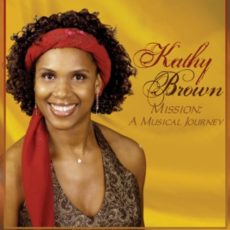
The pianist, composer, bandleader and recording artist, whose influences were Herbie Hancock, Joe Sample, Chick Corea, Chucho Valdes, Monty Alexander, Kenny Barron, and Michel Camilo, released her debut CD, Mission: A Musical Journey, which was nominated for Best Instrumental Album at the inaugural Jamaica Music Awards. Aside from performing as a jazz pianist and furthering her medical career, Dr. Kathy Brown is a vocalist and a member of the University Singers. When she puts on her educator hat she can be seen working with the East Queen Street Baptist and Nexus Performing Arts choirs.
More Posts: piano
Daily Dose Of Jazz…
Anita Gravine was born April 11, 1946 in Carbondale, Pennsylvania. An experienced but little-known singer, in the mid-’60s, she sang with the bands of Larry Elgart, Buddy Morrow, and Urbie Green. She made her solo debut with Dream Dancing on the Progressive label in the early ’80s.
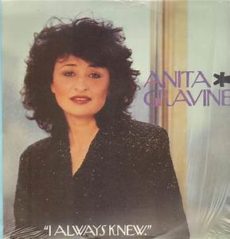
This was followed by her release of I Always Knew in 1985 for the now defunct Stash Records that displayed her appealing voice, solid sense of swing, and versatility. Gravine’s third project Welcome to My Dream, although not a critical success, continues to prove she can handle both ballad and up-tempo songs with ease of voice and rhythmic assurance.
She has worked with arranger and pianist Mike Abene, George Mraz, Billy Hart and Tom Harrell. She released Welcome To My Dream for Jazz Alliance in 1993. In 2010 Anita released the last of her four albums “Lights! Camera! Passion! Jazz And The Italian Cinema”, and she continues to perform and tour.
More Posts: vocal

Daily Dose Of Jazz…
Alberta Hunter was born on April 1, 1895 in Memphis, Tennessee to Laura Peterson, a maid in a Memphis brothel and Charles Hunter, a Pullman porter who she never knew. She attended Grant Elementary School, off Auction Street, which she called Auction School, in Memphis. Having had a difficult childhood, and not happy with her new stepfather and family she left for Chicago, Illinois, around the age of 11, in the hopes of becoming a paid singer. She had heard that it paid 10 dollars a week but instead of finding a job as a singer she had to earn money by working at a boarding house that paid six dollars a week as well as room and board.
Hunter began her singing career in a bordello and soon moved to clubs that appealed to men, black and white alike. By 1914 she was receiving lessons from jazz pianist, Tony Jackson, who helped her to expand her repertoire and compose her own songs. Singing around Chicago, one of her first notable experiences as an artist was at the Panama Club where she honed her craft before a cabaret crowd. Her big break came when she was booked at Dreamland Cafe, singing with King Oliver and his band.
She first toured Europe in 1917, performing before adoring and respectful audiences in Paris and London. Her career as singer and songwriter flourished in the 1920s and 1930s, and she appeared in clubs and on stage in musicals in both New York and London. The songs she wrote include the critically acclaimed Downhearted Blues in 1922. She recorded several records with Perry Bradford from 1922 to 1927 as well as sessions on Black Swan, Paramount, Gennett, OKeh, Victor and Columbia. While still working for Paramount, she also recorded for Harmograph Records under the pseudonym May Alix.
Alberta eventually moved to New York City. She performed with Bricktop and recorded with Louis Armstrong and Sidney Bechet. She headed the U.S.O.’s first black show, performing in Casablanca, Korea and other theaters of war during World War II and after, until her mother’s death in 1957. It was at this point that she left music for a career in healthcare, working at Roosevelt Island’s Goldwater Memorial Hospital for 20 years. The hospital forced Hunter to retire because it believed she was 70 years old but was actually 82 years old. Deciding to return to singing, she had a regular engagement at a Greenwich Village club, becoming an attraction there until her passing away on October 17, 1984.
Her life was documented in Alberta Hunter: My Castle’s Rockin’, a 1988 TV movie, narrated by the pianist Billy Taylor, and in Cookin’ at the Cookery, a biographical musical by Marion J. Caffey, in which Ernestine Jackson portrays her. Vocalist and composer Alberta Hunter was inducted to the Blues Hall of Fame in 2011, the Memphis Music Hall of Fame in 2015 and her comeback album, Amtrak Blues, was honored by the Blues Hall of Fame in 2009.
More Posts: vocal
Daily Dose Of Jazz…
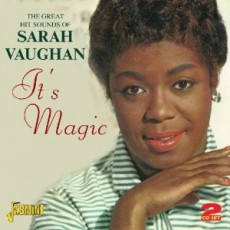
Sarah Lois Vaughan was born on March 27, 1924 in Newark, New Jersey and sang in church and learned to play piano as a child. Around age 18 she won the Apollo’s Amateur Night contest and in the spring of 1943 was called to open for Ella Fitzgerald. This engagement led to signing on with the Earl Hines band as his pianist, although she had some singing duties. An incubator for bebop Sarah played alongside Dizzy Gillespie, Charlie Parker, Bennie Green and Billy Eckstine.
By 1944 Eckstine left the Hines band to form his own and took Gillespie, Parker and Sarah with him giving her an opportunity to stretch her vocal prowess and her first recording session. The year spent with Eckstine proved rewarding as she honed her craft with Miles Davis, Lucky Thompson, Kenny Dorham, Art Blakey, Gene Ammons and Dexter Gordon among others.
Vaughan began her solo career in 1945 freelancing the 52nd Street clubs and record Lover Man on the Guild label. This would lead to recording sessions for Crown and Gotham labels, performing at Café Society and a subsequent Musicraft contract. Soon the hits If You Could See Me Now, Don’t Blame Me, I’ve Got A Crush On You, Everything I Have Is Yours and Body & Soul were released. She then signed with Columbia Records and her stardom was ensured.
Over an illustrious career Sarah Vaughan recorded over six dozen albums and live dates, has two recordings inducted into the Grammy Hall of Fame, was elected to the New Jersey Hall of Fame, has the lyrics to Send In The Clowns on the edge of the Newark Light Rail platforms, recognized as a NEA Jazz Master, received the George and Ira Gershwin Award for Lifetime Musical Achievement, recorded her final complete album Brazilian Romance in 1987 and briefly scatted on her final and only studio session with Ella Fitzgerald on Quincy Jones’ Back On The Block in 1989, a fitting end to a career that started with Ella.
Sarah Vaughan, nicknamed Sailor, Sassy and The Divine One and passed away due to complications from lung cancer on April 3, 1990. She was 66 years of age.
More Posts: vocal