

Daily Dose Of Jazz…
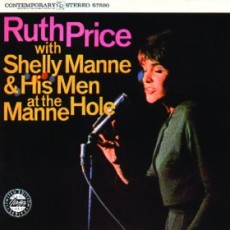
Ruth Price was born on April 27, 1938 in Phoenixville, Pennsylvania. Originally a dancer, she went to ballet school in 1952. One evening a friend took her to hear Lester Young and she was hooked and by 1954, when Charlie Ventura’s regular singer fell ill, after hearing her sing he approached her to fill the vacancy and a jazz vocalist was born. She went on to pursue work in Philadelphia, Pennsylvania and New York City as a vocalist and dancer.
Though her catalogue is relatively minimal, the vocalist is known for producing projects that are lasting. By 1955 she was in the studio recording her debut release My Name is Ruth Price: I Sing, followed by Ruth Price Sings with the Johnny Smith Quartet the next year and then with The Party’s Over in 1957.
In 1957 Ruth moved to Hollywood in 1957, and over the next several years performed recorded and toured with Mel Torme, Red Garland, John Coltrane, Philly Joe Jones, Dizzy Gillespie, Billy Taylor, Stan Getz, Sonny Stitt, Sonny Rollins, the Charles Mingus Quintet, Art Pepper, Victor Feldman, Russ Freeman and Hank Jones.
In 1961 Price recorded with Shelley Manne and His Men at the Manne Hole, recorded Live And Beautiful in ’63 and not another until 1983 with Lucky To Be Me and later toured with Harry James from 1964-1965. Her diverse repertoire includes many obscure, lesser-known gems from the Great American Songbook.
In the Nineties she never stepped far from the music and gained further renown not as a singer but as the owner of the prestigious Los Angeles nightspot The Jazz Bakery that opened in its doors in 1992 and hosted all the greats for nearly two decades until she closed them in 2009.
A talented singer whose wide expressive qualities do justice to any lyrics that she chooses to interpret made her a jazz poll winner. Highly respected for her knowledge and performances of those rare gems in American popular song, it was a natural transition to become an educator in recent years as an adjunct assistant professor at the University of California – Los Angeles in the Department of Ethnomusicology, and has taught at the Dick Grove School of Music. She continues to record and receive critical acclaim for her work.

Inspire A young Mind
More Posts: vocal
Hollywood On 52nd Street
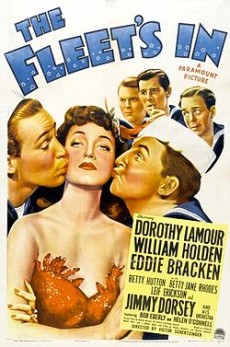
Tangerine and I Remember You are two jazz classics that came from the talents of Victor Schertzinger, who composed the music and Johnny Mercer, who wrote the lyrics. The songs was published in 1941 and was introduced in the 1942 movie, The Fleet’s In. The film starred Dorothy Lamour, William Holden, Eddie Bracken, singer Casey Daley and introduced Betty Hutton in her film debut. Jimmy Dorsey and his band are prominently featured in the movie.
The Story: Shy sailor Casey Kirby suddenly becomes known as a sea wolf when his picture is taken with a famous actress. His buddies then make a bet with some other sailors that Casey can defrost an icy nightclub singer known as the Countess.
Sponsored By

www.whatissuitetabu.com
Requisites
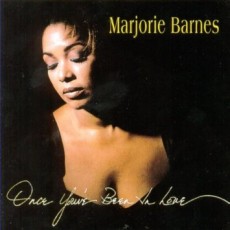
Once You’ve Been In Love by Marjorie Barnes was originally produced with twelve classic standards in the 1990s as a promotional piece to get gigs in Europe, it has since been made available to a wider audience. The vocalist was born and raised in New York City, has had starring roles on Broadway in Hair and Dreamgirls, sang with the Fifth Dimension for two years, and then made Europe her home – living in London, Paris, Vienna and Holland from 1978 to 2000. She moved back to the States working alongside Frank Sinatra, Sammy Davis Jr., Lena Horne, Billy Eckstine, Marcus Miller and Mel Lewis. In 2012 she returned to Europe making her home once again in Holland.
A rare find, temporarily unavailable on major purchase sites, however, there are a few available online from different sellers that can be snatched up.
Producer: Marjorie Barnes
Playing Time: 47.5 Minutes
Songs: Watch What Happens, Fascinating Rhythm, Once You’ve Been In Love, The Surrey With The Fringe On Top, He’s My Guy, Isn’t It A Pity, I’ve Got The World On A String, The Beauty And The Beast, A Little Tear, I Can’t Believe That You’re In Love With Me, No More Blues, Never Will I Marry

More Posts: collectible,vocal
Daily Dose Of Jazz…
Kendra Shank was born on April 23, 1958 in Woodland, California and was acting in plays at age 5, picked up the guitar at 13, and at 19 began her music career playing in Parisian subways and sidewalk cafés. After several years on the west coast folk and pop music circuit, a Billie Holiday recording inspired her to pursue jazz.
In 1989 Shank began studying with jazz vocalist Jay Clayton in Seattle, while keeping dual residency in Paris, France where she gigged in jazz clubs. Her jazz career blossomed quickly and in 1991 Bob Dorough hired her as vocalist-guitarist-percussionist for his west coast tour. She soon caught the attention of jazz legend Shirley Horn, who invited Kendra to perform as her guest at the Village Vanguard in New York and co-produced her critically acclaimed debut release Afterglow in 1994 featuring pianist Larry Willis and saxophonist Gary Bartz.
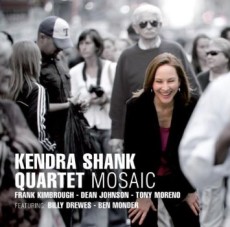
Kendra relocated to New York in 1997 and recorded Wish and Reflections for Jazz Focus Records, the latter debuted The Kendra Shank Quartet, her current working band. She followed these in 2007 with her groundbreaking A Spirit Free: Abbey Lincoln Songbook, and then with Mosaic in which she married her folk and jazz improvising talents.
Shank has been the Downbeat magazine’s top female vocalist for 1999, 2006 and 2007, has been featured on National Public Radio’s JazzSet and Piano Jazz with Marian McPartland, has taught clinics at the University of North Carolina-Asheville, The New School and the Brooklyn/Queens Conservatory of Music in New York City, and the Jazz in Marciac Festival in France.
Vocalist, guitarist and percussionist Kendra Shank continues express her talents through performance recording and touring.
Take A Dose On The Road
More Posts: guitar,percussion,vocal
Hollywood On 52nd Street
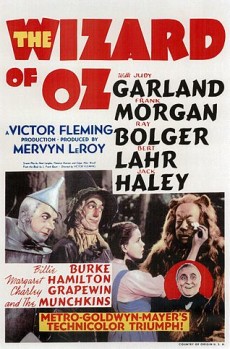
Over The Rainbow is a jazz classic taken from the 1939 American musical fantasy film The Wizard of Oz. It was the most commercially successful adaptation of the novel The Wonderful Wizard of Oz by L. Frank Baum. The film stars Judy Garland, Terry the Dog as Toto, Ray bolger, Jack Halsy, Bert Lahr, Frank Morgan, Billie Burke, Margaret Hamilton, Charley Grapewin, Clara Blandick, Pat Walshe as the leader of the flying monkeys and the Singer Midgets as the Munchkins.
The Story: Dorothy is bored and her aunt, uncle and farmhands are too busy to pay attention to her so she runs off. Meeting carny mystic Professor Marvel who tells her fortune and convinces her to return home. Arriving home during a tornado she is knocked unconscious and she imagines the house being blown up into the funnel and ends up landing in Oz atop a wicked witch. Traveling from Munchkin Land to the Emerald City to see the Wizard, Dorothy encounters a scarecrow, a tin man, a cowardly lion, flying monkeys, talking trees and poppy fields. She meets the Wizard, kills the wicked witch and discovers home is all about just believing.
Sponsored By
www.whatissuitetabu.com