

Hollywood On 52nd Street
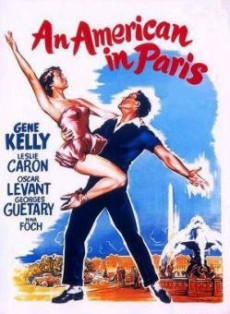
Stairway To Paradise was a tune composed by George Gershwin with lyrics by Ira Gershwin for the 1951 musical film An American in Paris. Gene Kelly, Leslie Caron, Oscar Levant, Georges Guétary and Nina Foch.
The Story: American World War II veteran Jerry Mulligan is now an exuberant expatriate in Paris trying to make a reputation as a painter. His friend and neighbor, Adam Cook s a struggling concert pianist who is a longtime associate of a French singer, Henri Baurel At the ground-floor bar, Henri tells Adam about his cultured girlfriend. A lonely society woman and heiress, Milo Roberts, finds Jerry displaying his art on the street and takes in an interest in him and his art. And the fun begins with dancing and singing.
Sponsored By

www.whatissuitetabu.com
Daily Dose Of Jazz…
Mark Murphy was born on March 14, 1932 in Syracuse, New York and raised in a musical family, his parents having met as members of the local Methodist Church choir. He grew up in the nearby small town of Fulton where his grandmother and then his aunt were the church organists. Opera was also popular in the house and he started piano lessons at the age of seven.
Murphy joined his brother’s jazz dance band as the singer when a teenager. His influences were Nat King Cole, June Christy, Anita O’Day, Ella Fitzgerald and Art Tatum. Graduating from Syracuse University in 1953, majoring in Music and Drama, university life included performing on campus and clubs playing piano and singing.
In 1954, Murphy moved to New York City working part-time as an actor and singer. He appeared in productions for the Gilbert and Sullivan Light Opera Company, musical TV version of Casey at the Bat and twice took second place at the Apollo Theater amateur contests.
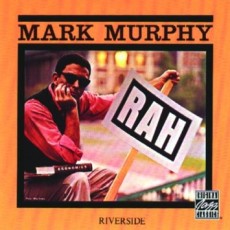
Mark’s debut recording was Meet Mark Murphy in 1956, followed closely by Let Yourself Go in ’57. In 1958 Murphy moved to Los Angeles and recorded for Capitol, but returned to New York in the early ’60s and recorded the album Rah! in 1961 for Riverside Records. By 1963, he hit the charts with his single of “Fly Me To The Moon” and was voted New Star of the Year in Down Beat Magazine’s Reader’s Poll.
The late 1960s saw Murphy moving to London, England where he worked primarily as an actor but continued to cultivate his jazz audiences in Europe. He returned to the States in 1972 and began recording an average of an album a year for more than fourteen years on the Muse label including a two volume Nat King Cole Songbook, Bop For Kerouac, Living Room, Beauty and the Beast and Stolen Moments, in which he peened lyrics to the Oliver Nelson tune. He received critical acclaim and numerous Grammy nominations.
In 1984 together with Viva Brasil he recorded the album Brazil Song (Cancões do Brasil) that featured original material by Antonio Carlos Jobim and Milton Nascimento. In 1987, Mark recorded Night Mood, an album of songs by Brazilian composer Ivan Lins, appeared on U.F.O.’s last two releases in which he has written and rapped lyrics on songs composed with the group and opened up further new audiences in the acid-jazz and hip-hop genres demonstrating jazz’s timelessness while transcending generations and styles.
Through the Nineties and into the new millennium he released Song For The Geese, Once to Every Heart, Love is What Stays and Never Let Me Go. Mark collaborated with Finish jazz band Five Corners Quintet and released a tribute EP to Shirley Horn titled Beautiful Friendship. He has guested on recordings with Madeline Eastman, Gill Manly,Guillaume de Chassy, Daniel Yvinec, Till Brönner, Pete and Conte Candoli and has amassed a catalogue of more than forty albums as a leader. Vocalist Mark Murphy has continued to tour internationally into his 80s, appearing at festivals, concerts, in jazz clubs and television until his passing on October 22, 2015 in Englewood, New Jersey.

Take A Dose On The Road
More Posts: vocal
Daily Dose Of Jazz…
Judy Niemack was born on March 11, 1954 in Pasadena, California and started singing in a church choir from age seven. She decided to turn professional at age 17, and soon after met Warne Marsh who encouraged her to explore jazz.
Judy studied at Pasadena City College and later at the New England Conservatory of Music followed by her matriculating through the Cleveland Institute of Music.
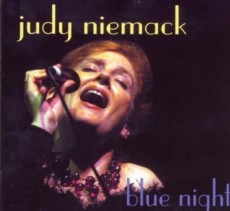
Niemack released her debut album By Heart in 1977 and has since recorded eleven albums under her own name. She has toured Europe and has worked with Toots Thielemans, James Moody, Lee Konitz, Clark Terry, Kenny Barron, Fred Hersch, Kenny Werner, Joe Lovano, Eddie Gomez and the Widespread Depression Jazz Orchestra.
As an educator vocalist Judy Niemack teaches music has authored two books titled “Jazz Vocal Standards”, an introduction to singing and vocal improvisation and “Hear It, Sing It” that explores modal jazz. She continues performing and recording.
Give A Gift Of Jazz – Share
More Posts: vocal
Hollywood On 52nd Street
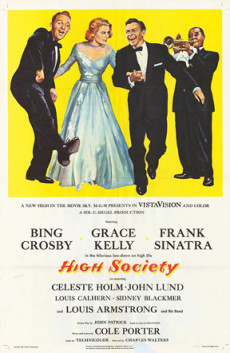
You’re Sensational was a tune written by Cole Porter for the 1956 film High Society starring Bing Crosby, Grace Kelly and Frank Sinatra, who introduced the song.
The Story: The highly successful jazz musician C.K. Dexter Haven (Crosby) was divorced from wealthy Newport, Rhode Island socialite Tracy Samantha Lord (Kelly) but remains in love with her. She, however, is about to get married to a bland gentleman of good standing, George Kittredge.
Spy Magazine, a fictional tabloid newspaper in possession of embarrassing information about Tracy’s father, sends reporter Mike Connor (Sinatra) and photographer Liz Imbrie to cover the nuptials. Tracy begins an elaborate charade as a private means of revenge, pretending that her Uncle Willy is her father Seth Lord and vice versa. Connor falls in love with Tracy. She must choose between three very different men in a course of self-discovery.
Sponsored By
www.whatissuitetabu.com
Daily Dose Of Jazz…
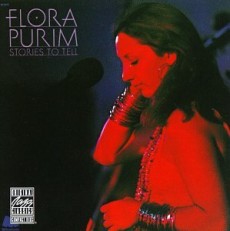
Flora Purim was born on March 6, 1942 in Rio de Janeiro to Jewish parents who were both classical musicians, her father a violinist and her mother a pianist. She discovered jazz when her mother played 78 vinyl rpms of Dinah Washington, Billie Holiday, Frank Sinatra, Bill Evans, Oscar Peterson, and Erroll Garner while her husband was out of the house.
Purim began her career in Brazil during the early 1960s. During this period, she made a recording of bossa nova standards by Carlos Lyra and Roberto Menescal titled Flora e M.P.M. Later in the decade she became lead singer for the Quarteto Novo, led by Hermeto Pascoal and Airto Moreira.
Flora mixed jazz with radical protest songs to defy the repressive Brazilian government of that time and a 1964 military coup led to censorship of song lyrics. Shortly before leaving Brazil she married Airto and arriving in New York in 1967, they became immersed in the emerging Electric Jazz. They toured Europe with Stanley Clarke, Stan Getz and Gil Evans. In 1972, alongside Clarke and Joe Farrell, they were, for the first two albums, members of Return To Forever. That year the band released their debut self-titled album Return To Forever, followed the same year as Light as a Feather.
In 1973, Purim released her first solo album in the United States, titled Butterfly Dreams. She was chosen by the Down Beat reader’s poll as one of the top five jazz singers. She worked with Carlos Santana and Mickey Hart and throughout the 1970s, Flora released a string of albums for the Milestone label, became involved with the Uruguayan band Opa, (which means “hi” in Uruguay), Purim collaborated in vocals in the band’s second album Magic Time, and in return, Opa played in “Corre Niña” on Flora’s album Nothing Will Be as It Was…Tomorrow .
In the 1980s Purim toured with Dizzy Gillespie’s United Nation Orchestra, culminating with Gillespie’s Grammy Award-winning album Dizzy Gillespie and the United Nation Orchestra – Live at the Royal Festival Hall, London. The Nineties saw her singing on the Grammy Award-winning album Planet Drum by Mickey Hart, the release of her own album and world tour, Speed of Light and a new band with contributions from Billy Cobham, George Duke, Alphonso Johnson, Giovanni Hidalgo and others.
Through the 1990s, Purim worked on a number of Latin projects, collaborated with P.M. Dawn on the album Red Hot + Rio. She has a huge catalogue of music that showcases her rare six-octave voice renders a vocal style influenced by Sarah Vaughan and Ella Fitzgerald, drifting from lyrics to wordlessness without ever losing touch with the melody and rhythm. She broadened her repertoire to include traditional mainstream jazz, bebop and doing numbers in 4/4 time instead of the traditional Brazilian 2/4 beat. She is a 4-time winner Down Beat’s Best Female Jazz Vocalist and 2-time Grammy nominee for Best Female Jazz Performance and has been named “Order of Rio Branco” by Brazil President Fernando Henrique Cardoso. She continues to perform, record and tour.
Take A Dose On The Road
More Posts: vocal