

Daily Dose Of Jazz…
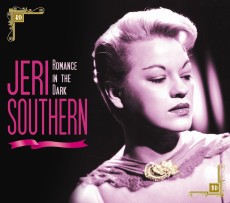
Jeri Southern was born Genevieve Hering on August 5, 1926 in Royal, Nebraska and began playing piano at age three. At age six she started formal study in classical piano and studying classical piano and voice at Sacred Heart in Omaha, Nebraska. It was during this period that her interest in jazz developed.
Southern began her career at the Blackstone Hotel in Omaha, then joined a United States Navy recruiting tour during WWII. In the late 1940s, she worked the Chicago club scene, once playing piano for Anita O’Day and where she became known for torch songs.
Signing with Decca Records in 1951, Jeri became known both for jazz and pop, rising to the height of her career during the decade. In 1955 her recording of “An Occasional Man”, reached #89 in the Billboard pop chart and in 1957 she had a Top 30 hit with “Fire Down Below”, that also hit #22 on the UK Singles Chart.
After her switch to Capitol Records, Southern found more success performing interpretations of Cole Porter with Billy May arrangements of some of the more humorous examples. She also sang in a few films
By the 1960s Jeri gave up the performing side of the music industry opting to teach instead, leaving a catalogue of more than two-dozen recordings. She would later move to Hollywood, California and work on film composing with Hugo Friedhofer. She wrote Interpreting Popular Music At The Keyboard during her final years.
Pianist and vocalist Jeri Southern passed away in Los Angeles, California of pneumonia on August 4,1991, at the age of 64.

Take A Dose On The Road
Hollywood On 52nd Street
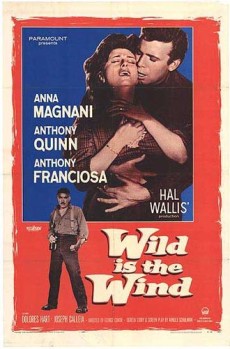
Wild Is The Windis a song written by Dimitri Tiomkin and Ned Washington for the 1957 film of the same name. The title song was was one of the five nominated songs at the 1958 Academy Awards and was originally performed by Johnny Mathis who also sang it at the Oscars. The movie starred Anna Magnani, Anthony Quinn and Tony Franciosa. The film was a remake of the 1947 Italian film Fury and was adapted from the a novel by Vittorio Nino.
The Story: Wild Is the Wind is about a rancher who marries his Italian sister-in-law after the death of his wife, but she falls in love with his young ranch hand.
Sponsored By

www.whatissuitetabu.com
More Posts: vocal
Hollywood On 52nd Street
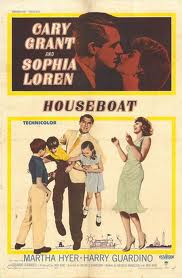
Almost In Your Arms is the love song from the 1958 romantic comedy Houseboat starring Cary Grant, Sophia Loren, Martha Hyer, Paul Peterson, Charles Herbert and Mimi Gibson. Jay Livingston and Ray Evans composed and wrote the music and lyrics.
The Story: Estranged husband Tom Winters returns home from Europe after his wife’s death and takes his three unwilling children to Washington DC where he works for the State Department. Unhappy, Robert runs away and is found by Cinzia Zaccardi, the daughter of a famous Italian conductor, who is also running away. Unbeknownst, Winters offers her a job as a maid and eventually she accepts. Sister-in-law offers Tom and the children her guest house which is destroyed by a train, the driver sells Winters his broken down houseboat, all move in and the fun begins. Eventually Tom and Cinzia get married and the rest is happily-ever-after.
Sponsored By
www.whatissuitetabu.com
More Posts: hollywood,instrumental,vocal
Daily Dose Of Jazz…
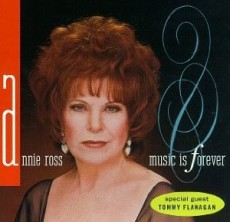
Annie Ross was born Annabelle McCauley Allan Short to vaudeville parents on July 25, 1930 in Mitcham, London, England and was raised in Los Angeles, California by her aunt, singer Ella Logan. When she was seven years old she sang the “Bonnie Banks of o’ Loch Lomond” in Our Gang Follies of 1938 and played Judy Garland’s sister in Presenting Lily Mars. By the age of 14 she wrote the song “Let’s Fly” which won a songwriting contest and was recorded by Johnny Mercer and the Pied Pipers. By the end of her tenth grade she left school, went to Europe, changed her surname to Ross and quickly started her singing career.
Best known as a member of the trio Lambert, Hendricks & Ross, Annie is one of the early practitioners of a singing style known as vocalese, that involves the setting of original lyrics to an instrumental jazz solo. Her 1952 treatment of saxophonist Wardell Gray’s “Twisted” is a classic example of vocalese.
During the Fifties she recorded her first album, Singin’ and Swingin’with the MJQ, followed by Annie By Candlelight, Sing A Song With Mulligan and A Gasser! with Zoot Sims. She recorded seven albums with Lambert, Hendricks & Ross between 1957 and 1962. Their first, Sing A Song Of Basie resulted in a success and the trio became an international hit. Ross left the group in 1962 and in 1964 opened her own nightclub, Annie’s Room, in London.
Ross is also an accomplished actress appearing in a number of films such as Superman III, Throw Momma From The Train, Wicker Man, and on stage Three Penny Opera and Side By Side By Sondheim.
Annie has been the recipient of the ASCAP Jazz Wall Of Fame, the NEA Jazz Masters Award and the MAC Award for Lifetime Achievement and performs regularly at The Metropolitan Room in New York City.
Give A Gift Of Jazz – Share
More Posts: vocal

Daily Dose Of Jazz…
Janis Siegel was born July 23, 1952 in Brooklyn, New York. She first recorded in 1965 with a group called Young Generation for Red Bird records. By ’72 when the original Manhattan Transfer disbanded, founder Tim Hauser revamped adding Siegel and went on to international fame singing jazz, jazz-fusion, pop, R&B and doo-wop.
Her first solo album, “Experiment in White”, was released in 1981 followed by her sophomore project “At Home” that garnered a nomination for a Grammy Award for Best Female Jazz Vocalist. Siegel’s ongoing tenure with the Manhattan Transfer has won her 10 Grammy Awards and inducted into the Vocal Group Hall of Fame in 2003.
In 1985, Siegel joined Jon Hendricks, Bobby McFerrin and Dianne Reeves in the group called Sing, Sing, Sing; has recorded eleven albums as a solo artist working with such jazz luminaries as Russell Malone, Joey DeFrancesco, Hank Crawford, Matt Wilson Victor Lewis and Michael Brecker among others. She has recorded twenty-eight albums as a member of The Manhattan Transfer.
Vocalist Janis Siegel is currently a member of Bobby McFerrin’s Voicestra, while simultaneously performing with The Manhattan Transfer and continuing a solo career.
Put A Dose In Your Pocket
More Posts: vocal