

Daily Dose Of Jazz…
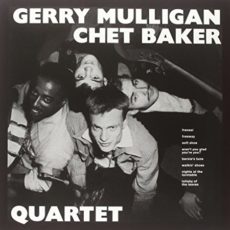
Bob Whitlock was born Von Varlynn Whitlock on January 21,1931 in Roosevelt, Utah. As a young musician in 1947 he accompanied Lena Horne and in 1949 was with Steve White. By the early 1950s he was in Charlie Barnet’s band then went on to join Gerry Mulligan. He introduced Mulligan to his friend Chet Baker and with Chico Hamilton made up the quartet.
In 1952 Bob worked in the bands of Art Pepper and Russ Freeman and that same year he played in the session at The Tradewinds Club with Harry Babasin, Dave Pell, Sonny Criss, Wardell Gray, Lawrence Marable and Chet Baker. The mid-1950s saw him working on the Stan Getz album, Getz and the Cool Sounds. In 1957 he played in a trio with Joe Albany and Warne Marsh on the album The Right Combination.
Whitlock led a quartet and taught music theory at the University of California. In 1961 he performed in Paris, he played and toured with George Shearing from1965 to 1956, then in 1966 he played with Joe Pass on the Simplicity sessions. After this recording session there are no further known recordings.
Bassist Bob Whitlock, who was a part of the West Coast jazz scene, passed away from a stroke at age 84 on June 30, 2015 in Long Beach, California.

Put A Dose In Your Pocket

#preserving genius
More Posts: bass
Daily Dose Of Jazz…
Bob Maize was born on January 15, 1945 in San Diego, California. He played piano from age seven and switched to bass at 13 and began playing professionally. After moving to San Francisco, California in 1963, he worked in the house bands of many jazz clubs in the city, including Soulville and Bop City.
He played with Sonny Stitt, Philly Joe Jones, Vince Guaraldi, Mose Allison, Herb Ellis, Monty Alexander, Anita O’Day, Emily Remler, and Jon Hendricks. He also did a stint in a rock band as a bass guitarist.
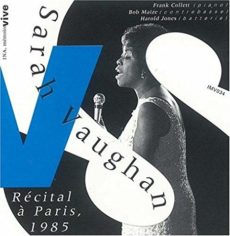
A move to Los Angeles, California in the 1970s saw him working with Scott Hamilton, Dave McKenna, and Tal Farlow. Following this, Maize worked with Horace Silver in 1983-84, recorded with Eiji Kitamura on the Concord label, for whom he recorded regularly as a sideman, and toured Japan with Sarah Vaughan in 1985. He continued to play as a sideman in West Coast clubs into the new millennium.
Double bassist Bob Maize, never led a recording session and passed away on November 20, 2004 in Los Angeles.
Give A Gift Of Jazz – Share
#preserving genius
More Posts: bass
Daily Dose Of Jazz…
William Parker was born January 10, 1952 in the Bronx, New York. He was not formally trained as a classical player, though he did study with Jimmy Garrison, Richard Davis, and Wilbur Ware and learned the tradition and is one of few jazz bassists who frequently plays arco.
Active on the free jazz scene since the early Seventies, Parker first came to public attention with pianist Cecil Taylor. The 1990s saw Parker’s prominence and public profile grow as an influential bassist in the New York City experimental jazz scene.
He has long been a member of saxophonist David S. Ware’s quartet, in Peter Brötzmann’s groups and has also played with various other groups that included Paul Murphy. He is a member of the cooperative Other Dimensions In Music and together with his wife, Patricia Nicholson Parker, organizes the annual Vision Festival in New York City.
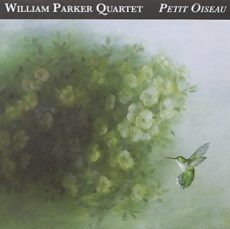
His Sound Unity album has been listed in the Top 10o and his Double Sunrise over Neptune made the Top 10 album pick list by Amazon, and his Petit Oiseau has been chosen as one of the best jazz disks of 2008 by The Wall Street Journal, the BBC’s Radio Three, The Village Voice and PopMatters.
In 2006, Parker was awarded the Resounding Vision Award from Nameless Sound. His first book, Who Owns Music?, assembles his political thoughts, poems, and musicological essays In June 2011, while his second book, Conversations, is a collection of interviews with notable free jazz musicians and forward thinkers, mainly from the African-American community.
Free jazz bassist William Parker continues to record and perform regularly at music festivals around the world.
Take A Dose On The Road
#preserving genius
More Posts: bass
Daily Dose Of Jazz…
Edward Bertram Garland was born January 9, 1895 in New Orleans, Louisiana. By 1910 he was playing bass drum with brass bands including Frankie Duson’s Eagle Band. He then took up tuba and string bass, doubling on the two instruments which filled similar roles in different types of bands.
He played with the Excelsior Brass Band, Manuel Perez’s Imperial Orchestra and then joined other early New Orleans bands playing in Chicago, Illinois and California, such as Lawrence Duhé and Freddie Keppard. In 1916 Garland joined King Oliver and went to California and during the Depression he led his own One-Eleven Jazz Band.
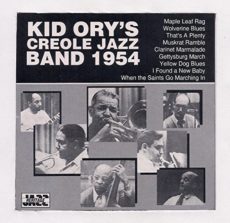
1944 saw Ed gaining notoriety as a member of a traditional New Orleans band that was a leader of the West Coast revival, put together for the CBS Radio series The Orson Welles Almanac. The all-star band also included Mutt Carey, Jimmie Noone (succeeded by Barney Bigard), Kid Ory, Bud Scott, Zutty Singleton and Buster Wilson. Renamed Kid Ory’s Creole Jazz Band, the group then made a significant series of recordings on the Crescent Records label.
Garland appeared in the 1959 film Imitation of Life, performing with Andrew Blakeney, Teddy Buckner, George Orendorf and Joe Darensbourg in the funeral sequence Trouble of the World featuring Mahalia Jackson.
String bassist Ed Garland, sometimes known as Montudie Garland, a nickname he much disliked, passed away in London, England on January 22, 1980.
Sponsored By

#preserving genius
More Posts: bass
Daily Dose Of Jazz…
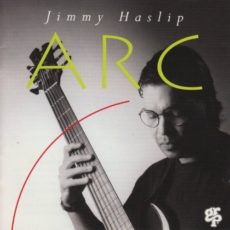
James Robert Haslip was born in the Bronx, New York on December 31, 1951 to Puerto Rican immigrants, Spanish being his first language and learned to speak English in kindergarten. His family moved to Huntington, New York when he was four years old. At age seven, he began playing drums and then moved onto other instruments such as trumpet and tuba until at age 15 when he started playing bass.
Considering himself self-taught though he took music lessons and went to a private music school, he originally went to a local music shop with his father and purchased a right-handed bass and learned to play it upside down, as he is left-handed. Surrounded by music as a young boy, from visiting nightclubs and concert venues, there was always music in the house as well. His older brother listened to classic jazz, his father to Latin and orchestra jazz and his aunt listening to sappy stuff like Jerry Vale and Johnny Mathis. In high school, Jimmy created his first band called Soul Mine with his high school classmates, playing soul music at school dances and parties.
By the early 1970s he toured alongside musicians, and moved to Los Angeles, California in 1976, playing with guitarists Tommy Bolin and Harvey Mandel. A founding member of the jazz fusion group the Yellowjackets, in 2012 he took a year hiatus that turned permanent and has gone on to produce independent projects as well as being involved with the charitable organization Union Station Foundation that serves the needs of the homeless. He has worked with Jeff Lorber, Eric Marienthal, Bruce Hornsby, Rita Coolidge, Gino Vannelli, Kiss, Tommy Bolin, Allan Holdsworth, Marilyn Scott, Chaka Khan, Al Jarreau, Donald Fagen, and Anita Baker.
A part of a combo with Allan Holdsworth, Alan Pasqua, and Chad Wackerman, he has also collaborated with Jing Chi with Robben Ford and Vinnie Colaiuta, and Modereko. Bass player and record producer Jimmy Haslip, who is an early user of the five-string electric bass, continues to produce and perform.
Inspire A Young Mind
More Posts: bass