

Daily Dose Of Jazz…
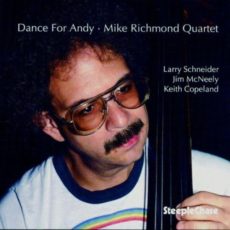
Mike Richmond was born on Feb. 26, 1948 in Philadelphia, Pennsylvania and started on guitar but picked up the bass in his early teens. He studied with Edward Arian from the Philadelphia Orchestra during his matriculation through Temple University from 1965 to 1970.
After taking lessons with Jimmy Garrison in the early 1970s Mike began performing with Chico Hamilton and Arnie Lawrence, also working and/or recording with Stan Getz, Jack DeJohnette, Horace Silver, Joe Henderson, Lee Konitz, Hubert Laws, Franco Ambrosetti, Dannie Richmond, Gil Evans, Art Farmer, Woody Herman, and George Gruntz.
In 1980, Richmond devoted time to learning the sitar, traveling to India to record and perform live with Ravi Shankar. He led Mingus Dynasty, replacing Mingus after his death from 1980–1985, and began teaching at New York University in 1988 and honored with Teacher of the Year in 1991 and 1994.
He has recorded ten albums as a leader and another 85 as a sideman, in addition to those mentioned above, with Bob Berg, Jerry Bergonzi, Keith Copeland, Kenny Barron, Ted Curson, Buddy DeFranco, Herb Geller, Chico Hamilton, Roland Hanna, Tom Harrell, Richie Havens, Daniel Humair, Vic Juris, Eric Kloss, Jimmy Knepper, Lee Konitz, Andy LaVerne, Arnie Lawrence, Hubert Laws, Jim McNeely, Mingus Dynasty, Jackie Paris, Bobby Paunetto, Dannie Richmond, Larry Schneider, Ravi Shankar, Ben Sidran, Marvin Stamm, John Stowell, Toshiko Akiyoshi – Lew Tabackin Big Band, Tom Varner, Naná Vasconcelos, Bennie Wallace, Bill Watrous and Eliot Zigmund
Bassist Mike Richmond won a Grammy Award for Miles & Quincy Live at Montreux, his book Modern Walking Bass Technique is used internationally and he continues to perform and record.
Sponsored By

www.whatissuitetabu.com

#preserving genius
More Posts: bass
Daily Dose Of Jazz…
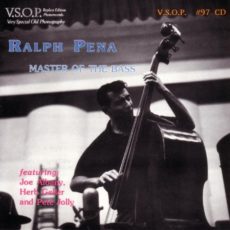
Ralph Pena was born February 24, 1927 in Jarbidge, Nevada and started out playing baritone saxophone and tuba before switching to the bass. At age 15 he began playing professionally with Jerry Austin from 1942 to 1944. He went to college in San Francisco and became a fixture in the West Coast jazz scene.
Among his many associations were Nick Esposito, Art Pepper, Vido Musso, Cal Tjader, Billy May, Barney Kessel, Stan Getz, Charlie Barnet, Shorty Rogers, Jimmy Giuffre, Buddy DeFranco, Bob Brookmeyer. In the 1960s, Pena worked with Ben Webster, George Shearing, Frank Sinatra, Joe Pass, Nancy Wilson, Ella Fitzgerald, Anita O’Day and many others. He recorded and released a couple of albums with Pete Jolly between 1958 and 1962.
Bassist Ralph Pena, who lead one record session, he did lead his own groups on an occasional basis before his early death at age 42 on May 20, 1969 in Mexico City, Mexico.
Sponsored By

#preserving genius
More Posts: bass
Daily Dose Of Jazz…
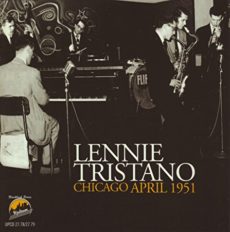
Buddy Jones was born Burgher Jones on February 17, 1924 in Hope, Arkansas and learned to play piano as a child. At the age of seventeen he went to study at the University of Missouri at Kansas City, where he met Charlie Parker. Under Parker’s influence, he opted for a career as a musician and studied bass during his time in the Navy.
After his discharge Buddy worked with Charlie Ventura in 1947 and then moved to Los Angeles, California where he played in smaller jazz bands. In 1949 he played with Joe Venuti as well as the Ina Ray Hutton Orchestra.
1950 saw Jones moving to New York City and working with Elliot Lawrence, whose arrangements were written by Al Cohn, among others . He also played with Buddy DeFranco, Zoot Sims, Gene Williams and the Lennie Tristano Quintet. Subsequently, he was employed as a student at CBS in New York from 1952 to 1964 , played on Jack Sterling’s morning radio show and studios with Peggy Lee and Frank Sinatra, as well as on tours with Harry James and Tommy Dorsey .
As a sideman Buddy performed on recording session led by Al Porcino, Stan Getz, Johnny Richards, Red Rodney, Jimmy Knepper, Porky Cohen, Don Lanphere, Gene Roland, Tiny Kahn, Joe Newman, Billy Byers, Osy Johnson, Manny Albam, Johnny Carrie, Thad Jones, Quincy Jones, Gerry Mulligan, Urbie Green, Bernie Glow, Conte Candoli, Ernie Royal, Hank Jones, Ernie Wilkins and many more.
Clint Eastwood enlisted his talents for the on the Charlie Parker biopic Bird in 1988, working alongside composer Lennie Niehaus as musical consultant. In 1996 he was inducted into the Arkansas Jazz Hall of Fame. Bassist Buddy Jones, never led a recording session and passed away on June 9, 2000 in Carmel Valley, California.
Sponsored By
#preserving genius
More Posts: bass
Daily Dose Of Jazz…
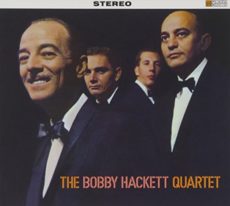
Bob Carter was born Robert Kahakalau on February 11, 1922 in New Haven, Connecticut and learned to lay the bass and guitar from his father, a vaudeville performer of Hawaiian heritage. He played in local orchestras from 1937 to 1940, toured from 1940 to 1942 and worked with his own trio in Boston, Massachusetts in 1944.
By 1944 he was working in various groups on New York City’s 52nd Street with Tony Scott, Dizzy Gillespie, Charlie Parker, Stuff Smith and Charlie Shavers among others. Following time spent playing bebop with Allen Eager and Max Roach in 1946, he worked with Charlie Ventura from 1947 to 1949 and again in 1953-54. Between the Ventura stints he played with Benny Goodman in 1949-50.
In 1953, he also worked with jazz guitarist Johnny Smith and appeared on the albums Jazz at NBC and The Johnny Smith Quintet Featuring Stan Getz.
After his second stint with Ventura he studied composition with Wesley LaViolette and later that decade his arrangements were used by Red Norvo, Bob Harrington, and Shelly Manne. He spent two years in Hawaii beginning in 1957, then returned to New York in 1959, where he played with Bobby Hackett. In the early 1960s, he worked in Germany in the Kurt Edelhagen Orchestra. He did little playing after the end of the Sixties decade.
Bassist and arranger Bob Carter passed away in Honolulu, Hawaii on August 1, 1993 at the age of 71.
Sponsored By
#preserving genius
More Posts: bass
Daily Dose Of Jazz…
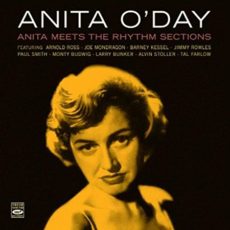
Joe Mondragon was born on February 2, 1920 in Antonito, Colorado. An autodidact on bass, he began working professionally in Los Angeles, California before serving in the Army during World War II. After his discharge he joined Woody Herman’s First Herd in 1946.
Over the next two decades, Mondragon became one of the more popular studio bassists for jazz recording on the West Coast, appearing on albums by June Christy, Buddy Rich, Buddy DeFranco, Marty Paich, Claude Williamson, Bob Cooper, Harry Sweets Edison, Gerry Mulligan, Art Pepper, and recording the Duke Ellington Songbook with Ella Fitzgerald in 1956. He also played on soundtracks for films such as The Wild One and Pete Kelly’s Blues.
Though Joe never recorded as a leader, he did however, record 45 albums as a sideman with Georgie Auld, Chet Baker, Louis Bellson, Buddy Bregman, Hoagy Carmichael, Herb Ellis, Jimmy Giuffre, Woody Herman, Harry James, Stan Kenton, Barney Kessel, Henry Mancini, Shelly Manne, Carmen McRae, Jack Montrose, Gerry Mulligan, Oliver Nelson, Art Pepper, Shorty Rogers, Pete Rugolo, Lalo Schifrin, Bud Shank and others.
Bassist Joe Mondragon passed away in July 1987 in Ohkay Owingeh, New Mexico.
Sponsored By
#preserving genius
More Posts: bass