

Daily Dose Of Jazz…
Norman Louis Bates was born on August 26, 1927 in Boise, Idaho. His mother was an organist and he was a younger brother of bassist Bob Bates. He played in Jimmy Dorsey’s band for a year in 1945, then with Raymond Scott and Carmen Cavallaro shortly thereafter.
By 1948 he was part of the Dave Brubeck Trio, and the following year performed with Paul Desmond. Norman recorded with Jack Sheedy’s Dixieland Jazz Band in 1950.
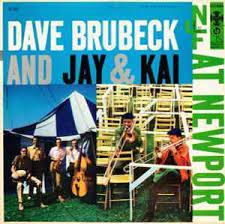
After spending four years in the Air Force, Bates played with Wally Rose’s Dixieland Band in 1955 and then replaced his brother Bob in Brubeck’s quartet, playing on multiple albums from Dave Brubeck and Jay & Kai at Newport (1956) onwards. He also recorded with Desmond’s group again in 1956. In 1957 he left Brubeck, and led a trio in San Francisco, California.
Double bassist Norman Bates transitioned on January 29, 2004.
Bestow upon an inquiring mind a dose of a Boise bassist to motivate the perusal of the genius of jazz musicians worldwide whose gifts contribute to the canon…

More Posts: bass,history,instrumental,jazz,music
The Quarantined Jazz Voyager
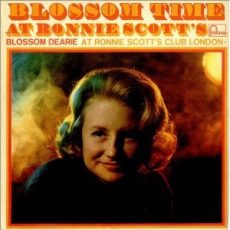
As the Jazz Voyager continues to social distance and wears his mask inside stores when grocery shopping and following doctor office protocol, he is still finding time to listen to great jazz. This week coming off the shelves is an album titled Blossom Time at Ronnie Scott’s by pianist and vocalist Blossom Dearie and is a live recording at Ronnie Scott’s Jazz Club in Soho, London, England in 1966. This was her first live album and was released on the British record label, Fontana. The liner notes were written by Jimmy Parsons.
Her personal favorite recording, the swinging trio will intoxicate you with this set of songs just as if you were there in the intimate space listening. Her girlish, soft voice is her signature as she executes each song with style. This is the first of four albums she will record on the Fontana label.
Track List | 39:23
- On Broadway (Barry Mann, Cynthia Weil, Jerry Leiber, Mike Stoller) ~ 3:55
- (Ah, the Apple Trees) When the World Was Young (Michel Philippe-Gérard, Angele Vannier, Johnny Mercer) ~ 4:20
- When in Rome (Cy Coleman, Carolyn Leigh) ~ 4:45
- The Shadow of Your Smile (Johnny Mandel, Paul Francis Webster) ~ 4:13
- Ev’rything I’ve Got (Richard Rodgers, Lorenz Hart) ~ 4:29
- Once Upon a Summertime (Eddie Barclay, Michel Legrand, Eddy Marnay, Johnny Mercer) ~ 3:51
- I’m Hip (Dave Frishberg, Bob Dorough) ~ 2:48
- Mad About the Boy (Noël Coward) ~ 5:05
- The Shape of Things (Sheldon Harnick) ~ 2:42
- Satin Doll” (Duke Ellington, Johnny Mercer, Billy Strayhorn) ~ 5:15
- Blossom Dearie ~ piano, vocals
- Jeff Clyne ~ double bass
- Johnny Butts ~ drums

More Posts: adventure,album,bass,club,drums,festival,genius,jazz,museum,music,piano,preserving,restaurant,travel
Daily Dose Of Jazz…
Johnny Lindsay was born John Lindsay on August 23, 1894 in New Orleans, Louisiana and learned both instruments while young. He played trombone in a military band and in ensembles late in the 1910s. While living in his hometown he played with John Robichaux and Armand J. Piron’s Olympia Orchestra.
Lindsay was Piron’s trombonist on recordings made in New York City in 1923 and 1924 and was a member of Dewey Jackson’s riverboat band. Relocating to Chicago, Illinois he played with Willie Hightower, Carroll Dickerson, Lil Hardin, and Jelly Roll Morton’s Red Hot Peppers. Most of his Chicago playing in Chicago was subsequently on bass rather than trombone.
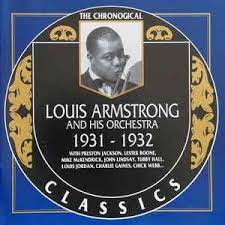
Later in his career Johnny toured nationally with Louis Armstrong in the early 1930s, and then with Richard M. Jones, Jimmie Noone, Punch Miller, Johnny Dodds, Chippie Hill, Georgia White, Harlem Hamfats, and Baby Dodds.
Double-bassist and trombonist Johnny Lindsey, who was active on the New Orleans and Chicago jazz scenes and was sometimes listed as John Lindsey, transitioned on July 3, 1950.
Daily Dose Of Jazz…
Addison Gerald Farmer was born on August 21, 1928 in Council Bluffs, Iowa and was born an hour after his twin brother Art, reportedly at 2201 Fourth Avenue. Their parents divorced when the boys were four, and their steelworker father was killed in a work accident not long afterward. He moved with his grandfather, grandmother, mother, brother and sister to Phoenix, Arizona when he was still four.
Addison and his brother moved to Los Angeles, California in 1945 and attended the music-oriented Jefferson High School. There they gained music instruction and met other developing musicians such as Sonny Criss, Ernie Andrews, Big Jay McNeely and Ed Thigpen. The brothers earned money by working in a cold-storage warehouse and by playing professionally.
Taking bass lessons from Frederick Zimmermann, he went on to study at Juilliard and the Manhattan School of Music. By late 1945, Farmer was with Johnny Alston and His Orchestra recording for the Bihari Brothers’ Modern Music label, and shortly after on the Blue Moon label. He later recorded with Teddy Edwards’s band. Farmer played in several groups with his brother, including in ensembles led by Benny Golson, Gigi Gryce, Mose Allison, Jay McShann, Charlie Parker, and Miles Davis.
Bassist Addison Farmer, who recorded extensively for Prestige Records, transitioned from sudden unexpected death syndrome on February 20, 1963, in New York City at the age of 34.
More Posts: bass,history,instrumental,jazz,music
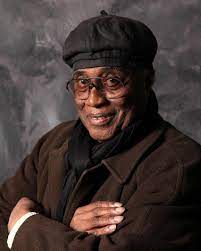
Three Wishes
Pannonica asked Richard Davis what his three wishes would be if they could be granted and he replied with:
- “Freedom for everybody.”
- “Mastery of the bass.”
- “It’s my hobby really to own a horse. These are the three basic things in my life.”
*Excerpt from Three Wishes: An Intimate Look at Jazz Greats ~ Compiled and Photographed by Pannonica de Koenigswarter
More Posts: baroness,bass,history,instrumental,jazz,music,pannonica,three,wishes