

Daily Dose Of Jazz…
James David Hughart was born July 28, 1936 in Minneapolis, Minnesota to Fritz and Annette Hughart, the father being bassist with the Minneapolis Symphony and San Diego Symphony. He began studying the bass as a child.
Starting his music career working as a musician in 1953, four years later he received a B.A, degree in Music Composition & Theory, Bass from the University of Minnesota. Following graduation, Hughart was drafted into the Army and for two years, traveled throughout Europe performing with the Seventh Army Symphony Orchestra. After his discharge he joined Ella Fitzgerald’s touring band following a recommendation from Ray Brown. During his three years with Fitzgerald, he started his extensive recording career.
A move to Los Angeles, California in 1964 put him imposition to become a very active session musician. He studied electric bass under the veteran session musician Carol Kaye.
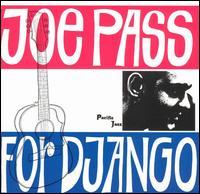
He performed as a regular sideman for guitarist Joe Pass and singer Tom Waits. He has participated in over 200 record albums, 300 motion picture scores, and many television shows. Jim has recorded with many artists including Frank Sinatra, Peggy Lee, Frank Rosolino, Paul Smith, Barney Kessel, Milt Jackson and Natalie Cole, as well as Diana Ross, Joni Mitchell, Joan Baez, and Barry Manilow,
Double bassist Jim Hughart continues to work locally and resides in Los Angeles.

More Posts: bass,history,instrumental,jazz,music
Daily Dose Of Jazz…
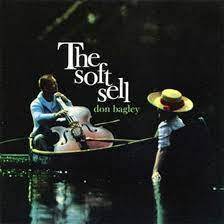
Donald Neff Bagley was born on July 18, 1927 in Salt Lake City, Utah and received formal training on the double bass. He went on to study in Los Angeles, California and played in 1945 with Shorty Sherock and Wingy Manone, and in 1948 with Dick Pierce.
During the early Fifties from 1950 to 1953, and sporadically thereafter, Bagley played with Stan Kenton. HIs time with Kenton, A Study for Bass by Bill Russo and Bags by Bill Holman were written to feature Bagley’s playing. By 1954 he was fronting his own ensembles. His session work between 1950 and 1952, Don worked extensively with Nat King Cole, Maynard Ferguson, and Dexter Gordon. He played in Europe with Zoot Sims, Lars Gullin, Frank Rosolino, and Åke Persson. He would go on to work with Les Brown, Jimmie Rowles, Shelly Manne, Pete Fountain and Phil Woods. In 1957 and 1958, he recorded three albums under his own name.
The Sixties saw him playing with Ben Webster and Julie London. Into the 1970s and 1980s he worked with Burt Bacharach while composing and arranging for film and television, including the scores to Mama’s Dirty Girls, The Manhandlers, The Swinging Barmaids, The Student Body, Young Lady Chatterley and Sacred Ground.
Double bassist, composer and arranger Don Bagley transitioned of natural causes on July 26, 2012 at the age of 85.
More Posts: arranger,bandleader,bass,composer,history,instrumental,jazz,music
Daily Dose Of Jazz…
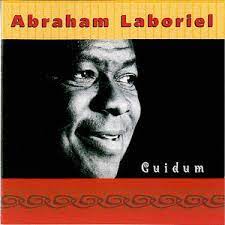
Abraham Laboriel López was born on July 17, 1947 in Mexico City, Mexco into a talented family with a rock singer brother and a sister who is a singer, film and television actress. A classically trained guitarist, he switched to bass guitar while studying at the Berklee College of Music, graduating in 1972.
It was during this time that he learned the importance of versatility as a musician. Henry Mancini encouraged Laboriel to move to Los Angeles, California, to pursue a recording career, which he did in 1976. Though he struggled to find work for two years, he found his first gig on a road tour with Olivia Newton-John. After a consequent European tour with Al Jarreau, he settled into a full-time studio career in Los Angeles.
He would go on to work and record with Al Jarreau, Billy Cobham, Freddie Hubbard, George Benson, Herbie Hancock, Lalo Schifrin, Gary Birton, Stan Getz, Larry Carlton, Lee Ritenour, Quincy Jones, Randy Crawford, Dave Grusin, and Umberto Tozzi as well as Stevie Wonder, Michael Jackson, Barbra Striesand, Madonna, Andre Crouch, Herb Alpert Minnie Riperton, Barry Manilow, and many others.
Abraham was a founding member of the bands Friendship and Koinonia. With the latter he recorded four albums. In addition he recorded several solo albums on which he recruited a cast of musicians that included Alex Acuña, Al Jarreau, Jim Keltner, Phillip Bailey, Ron Kenoly, his son Abe Laboriel Jr. on drums, and others.
In 2005, he was awarded an Honorary Doctorate of Music by the Berklee College of Music. Electric bassist Abraham Laboriel has played on over 4000 recording sessions, is ranked No. 42 on Bass Player magazine’s list of The 100 Greatest Bass Players of All Time, and continues to record and perform as a member of the band Open Hands with Justo Almario, Greg Mathieson, and Bill Maxwell.
More Posts: bandleader,bass,history,instrumental,jazz,music
The Quarantined Jazz Voyager
As the virus is continuing to evolve the Jazz Voyager is staying close to home, especially since the country has lifted the masking mandate and it appears that everything is “back to normal”, even though it is not yet. Supply chain is still limiting production and delivery of items. As you travel around your city, state, country, and internationally please continue to be careful and protect yourself and others.
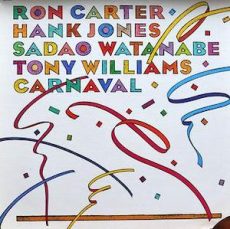
Carnaval is an album recorded Live Under The Sky in Denen Coliseum in Tokyo, Japan on July 30, 1978 by bassist Ron Carter, pianist Hank Jones, saxophonist Sadao Watanabe and drummer Tony Williams. The album was produced by Ed Michel and released five years later in 1983 on the Galaxy record label.
he art direction for the album was performed by Phil Carroll, the recording engineer was Jim Stern, mastered by George Horn, and the remix was done by Allen Sudduth.
Tracks | 43:18- Chelsea Bridge (Billy Strayhorn) ~ 10:12
- Manhã de Carnaval (Luiz Bonfá, Antônio Maria) ~ 9:01
- I’m Old Fashioned (Jerome Kern, Johnny Mercer) ~ 8:18
- Confirmation (Charlie Parker) ~ 6:40
- Moose the Mooche (Parker) ~ 8:05
- Ron Carter ~ bass
- Hank Jones ~ piano
- Sadao Watanabe ~ alto saxophone
- Tony Williams ~ drums

More Posts: adventure,album,bass,club,drums,genius,jazz,museum,music,piano,preserving,restaurant,saxophone,travel
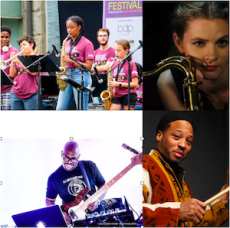
MONTCLAIR JAZZ FESTIVAL
LACKAWANNA BLOCK PARTY
FAMILY JAZZ DISCOVERY ZONE | 12:00 pm~5:00 pm
Get in the zone for an afternoon of family fun! Bring your wee be-boppers to the zone, a special place where kids and their families can gather to play, improvise, create, make new friends and of course, share our passion for jazz!
JAZZ HOUSE WORKSHOP STUDENT ENSEMBLES | 1:00 pm~4:00 pm
Keeping in the 13 year tradition of the Montclair Jazz Fest, student ensembles from the Jazz House Summer Workshop will take the Lackawanna Block Party stage throughout the afternoon starting at noon on Saturday. Directed by trumpeter and educator Ted Chubb, the award-winning workshop continues on the campus of Montclair State University for two sessions.
NICOLE GLOVER QUARTET | 4:00 pm~7:00 pm
Saxophonist and bandleader Nicole Glover grew up in Oregon, where she was introduced to the music through her father’s record collection and studied in programs dedicated to learning jazz and priming students for touring and performing, such as the award-winning American Music Program and Next Generation Jazz Orchestra. She moved to the East Coast to attend William Paterson University, where she studied with Mulgrew Miller, Harold Mabern and Rich Perry. Assuming permanent residence in NYC in 2015, soon establishING herself as a rising star.
WINARD HARPER + JELI POSSE | 4:00 pm~7:00 pm
Winard Harper was born in Baltimore in 1962 and started like most drummers by beating on cans just after learning to walk. A child prodigy, a five-year-old Winard would sometimes sit in and play his drums in older brother Danny’s rock n roll band after the family moved to Washington D.C. Winard and his younger brother Philip, a trumpeter, would busk in the streets of Georgetown and sit in at jam sessions around the city. For more than a year, Winard worked in a trio with pianist Reuben Brown and bassist Steve Novosel, veterans of the DC jazz scene.
DJ BROTHER MISTER | 7:00 pm~10:00 pm
Dance with DJ Brother Mister who will be capping off the summer series. Join us for an old school funk + soul party featuring DJ Brother Mister aka 7x Grammy winner Christian McBride.
~ Rain Date: August 13, 2022
~ No Tickets Required | Suggested Donation: $10
~ Beach and Lawn Chairs: Welcomed
~ Pop-Up Tents: Prohibited
More Posts: adventure,album,bass,club,drums,genius,jazz,museum,music,piano,preserving,restaurant,saxophone,travel