
Daily Dose Of Jazz…
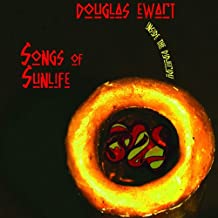
Douglas Ewart was born on September 13, 1946 in Kingston, Jamaica and emigrated to the United States in 1963. Settling in Chicago, Illinois he became associated with the Association for the Advancement of Creative Musicians (AACM) in 1967, studying with Joseph Jarman and Roscoe Mitchell. He served as that organization’s president from 1979 to 1986.
Douglas recorded eight albums as a leader and has performed or recorded fifteen with J. D. Parran, Muhal Richard Abrams, Art Ensemble of Chicago, Anthony Braxton, Alvin Curran, Anthony Davis, Robert Dick, Von Freeman, Joseph Jarman, Amina Claudine Myers, Roscoe Mitchell, James Newton, Rufus Reid, Wadada Leo Smith, Cecil Taylor, Richard Teitelbaum, Henry Threadgill, Hamid Drake, Don Byron, Malachi Favors Maghostut, Muhal Richard Abrams, Spencer Barefield, Tani Tabbal, Jean-Luc Cappozzo, Joëlle Léandre, Bernard Santacruz, Michael Zerang, Chico Freeman, Dennis González, Yusef Lateef, Adam Rudolph,
In 1992 he collaborated with Canadian artist Stan Douglas on the video installation Hors-champs which was featured at Documenta 9 in Kassel, Germany. The installation features Ewart in improvisation of Albert Ayler’s Spirits Rejoice with musicians George Lewis, Kent Carter, and Oliver Johnson.
Douglas Ewart has lived in Minneapolis, Minnesota since 1990 and plays sopranino and alto saxophones, clarinets, bassoon, flute, bamboo flutes, panpipes, and didgeridoo; as well as Rastafarian hand drums.

More Posts: bamboo flute,bassoon,clarinet,didgeridoo,flute,hand drums,history,instrumental,jazz,music,panpipe,saxophone
Daily Dose Of Jazz…
Errol Leslie Buddle was born on April 29, 1928 and raised in Adelaide, Australia. He first learned the banjo and mandolin and began learning jazz after listening to a Bobby Limb performance in 1944. He attended the Elder Conservatorium of Music as well as the Sydney Conservatorium of Music.
Influenced by the sound of the bassoon in Igor Stravinsky’s The Rite of Spring and The Firebird, he began playing the instrument. Over the course of his career, Buddle played fourteen reed instruments and several others. Moving to Melbourne in 1946 he began playing the radio circuit.
Relocating to Sydney by 1951 and performed weekly at the nightclub Chequers’. Another move to Windsor, Ontario in 1952 had him joining the Windsor Symphony Orchestra.
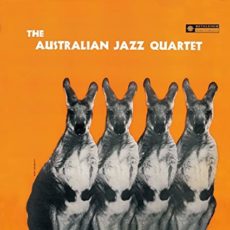
Often performing in Detroit, Michigan, he met and collaborated with Elvin Jones and Johnnie Davis. Errol performed at the jazz club Klein’s and eventually led what later became the Errol Buddle Quartet. He also founded The Australian Jazz Quartet with Jack Brokensha, Bryce Rohde and Dick Healey. The group served as the backing band to several musicians and later played throughout North America before touring Australia in 1958, then disbanded.
He also put together a quintet in various configurations with Bryce Rohde, piano; Dick Healy, flute and alto sax; Jack Brokensha, vibes; Jimmy Gannon, bass; and Frank Capp, drums. After 1958 he performed occasionally.
Bassoon and tenor saxophonist Errol Buddle, who over the course of his career played fourteen reed instruments and several others, passed away at his home in Potts Point, New South Wales on February 22, 2018, aged 89.
More Posts: bandleader,bassoon,history,instrumental,jazz,music,saxophone
Daily Dose Of Jazz…
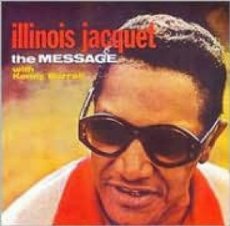
Jean-Baptiste Illinois Jacquet was born October 30, 1922 in Broussard, Louisiana to a Sioux mother and Creole father and bandleader. They moved to Houston, Texas when he was just an infant and grew up performing in his father’s band primarily on the alto saxophone.
At 15, Jacquet began playing with the Milton Larkin Orchestra, a Houston-area dance band. In 1939, he moved to Los Angeles, California where he met Nat King Cole and would sit in with the trio on occasion. In 1940, Cole introduced Jacquet to Lionel Hampton who hired him and asked him to switch to tenor.
In 1942, at age 19, Illinois soloed on the Hampton Orchestra’s recording of “Flying Home”, one of the very first times a honking tenor sax was heard on record. The song and solo became such a hit that every sax player who followed, notably Arnett Cobb, Dexter Gordon, Jimmy Forrest, Eddie “Lockjaw” Davis and Sonny Rollins, memorized them.
Quitting the Hampton band in 1943 and joined Cab Calloway’s Orchestra appearing with the band in Lena Horne’s movie Stormy Weather. Returning to California in 1944 he started a small band with his brother Russell and a young Charles Mingus.
It was at this time that Jacquet appeared in the Academy Award-nominated short film Jammin’ the Blues with Lester Young. He also appeared at the first Jazz at the Philharmonic concert and in 1946 he moved to New York City and joined Count Basie, replacing Young.
Through the 1960s and ‘70s he continued to perform mostly in Europe in small groups through the 1960s and 1970s, then led the Illinois Jacquet Big Band from 1981 until his death. He was the first jazz musician to be an artist-in-residence at Harvard University in 1983, played “C-Jam Blues” with President Clinton on the White House lawn during Clinton’s inaugural ball in 1993.
Illinois Jacquet, a skilled and melodic improviser, and a pioneer of the honking tenor saxophone that became the hallmark of early rock and roll, passed away of a heart attack in his home in Queens, New York on Thursday, July 22, 2004. He was 81 years of age.

Jazz Is Global – Share

Daily Dose Of Jazz…
Karen Borca was born September 5, 1948 in Green Bay, Wisconsin. The jazz bassoonist studied music at the University of Wisconsin where she met Cecil Taylor and became his teaching assistant during her senior year. She went on to play in his Cecil Taylor Unit.
By 1974 she was the teaching assistant to longtime Taylor sideman Jimmy Lyons, who Karen married and played with until his passing in 1986. She has continued to perform on the Lower East Side of New York City with musicians like William Parker, Marco Eneidi, Joel Futterman, Sonny Simmons, Alan Silva and Jackson Krall, while also leading her own band.
An accomplished sideman, she has recorded on albums with Joe Morris, Alna Silva, Paul Murphy, Bill Dixon and with Earth People. She has an impressive facility, playing with the litheness and imagination of a first-rate free jazz saxophonist. Bassoonist Karen Borca is one who has mastered an extremely difficult instrument and adapted it to free jazz that she continues to perform.
More Posts: bassoon