Daily Dose Of Jazz…
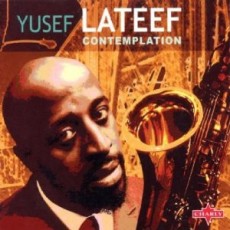
Yusef Lateef was born William Emanuel Huddleston on October 9, 1920 in Chattanooga, Tennessee and by the time he was five his family moved to Detroit. Throughout his early life Lateef came into contact with many Detroit-based jazz musicians who went on to gain prominence, including vibraphonist Milt Jackson, bassist Paul Chambers, drummer Elvin Jones and guitarist Kenny Burrell
Proficient on saxophone by graduation from high school at the age of 18, he launched his professional career and began touring with a number of swing bands. In 1949, he was touring with Dizzy Gillespie and his orchestra. In 1950, Lateef returned to Detroit and began his studies in composition and flute at Wayne State University. It was during this period that he converted to Islam.
Lateef began recording as a leader in 1957 for Savoy Records overlapping with Prestige Records subsidiary label New Jazz, collaborating with Wilbur Harden, Herman Wright, Frank Gant, and Hugh Lawson among others. By 1961, with the recording of Into Something and Eastern Sounds his dominant presence within a group context had emerged and his ‘Eastern’ influences are clearly audible in all of these recordings.
Along with trumpeter Don Cherry, Yusef can lay claim to being among the first exponents of the world music as sub-genres of jazz. He played on numerous albums, was a member of Cannonball Adderley’s Quintet during the early Sixties, was a major influence on John Coltrane, he began to incorporate contemporary soul and gospel phrasing into his music, founded his own label YAL Records and was commissioned by the WDR Radio Orchestra to compose the African American Epic Suite.
Lateef has written and published a number of books including two novellas and Yusef Lateef’s Flute Book of the Blues. He has received the Jazz Master Fellowship Award from the National Endowment for the Arts, and has had aired a special-documentary program for Lateef, titled A Portrait of Saxophonist Yusef Lateef In His Own Words and Music. He has recorded nearly six-dozen records as both a leader and sideman and continued to compose, perform, record and tour until his transition at age 93 on December 23, 2013 in Shutesbury, Massachusetts.
More Posts: bamboo flute,bassoon,koto,oboe,piano,saxophone,shehnai,shofar,vocal
Daily Dose Of Jazz…
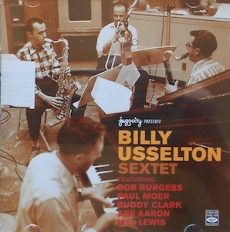
William “Billy” Usselton was born on July 2, 1926 in New Castle, Pennsylvania. He began playing professionally in high school with Bubbles Becker. Although his parents wanted him to attend college in Pennsylvania, he wanted to play for a living.
Usselton went on to play with Sonny Dunham in the 1940s before joining Ray Anthony in 1948–1949 and again in 1951–1952. Between those two gigs he joined Tommy Dorsey’s band and recommended Mel Lewis after Buddy Rich was fired. After his second stint with Anthony, he played with Bill Harris in Florida.
1954 saw Usselton joining Les Brown’s band, and played with him for decades. He played on nearly all of Brown’s records released on Coral Records and Capitol Records, and toured with him worldwide as part of Bob Hope’s United Service Organizations Tours.
His only album as a leader was the 1957 release His First Album, issued on Kapp Records. He married, moved to Chicago, Illinois where he was a jazz clinician for the Conn Corporation.
Reedist Billy Usselton, who played saxophone, clarinet and oboe, moved to Phoenix, Arizona and died on September 5, 1994 in Phoenix.
More Posts: bandleader,clarinet,history,instrumental,jazz,music,oboe,saxophone
Daily Dose Of Jazz…
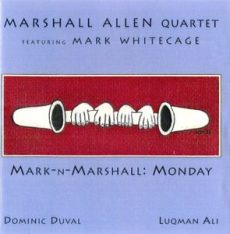
Marshall Belford Allen was born in Louisville, Kentucky on May 25, 1924. During World War II he enlisted in the 92nd Infantry Division and was stationed in France. He studied alto saxophone in Paris, France and played in Europe with Art Simmons and James Moody.
Best known for his mastery of explosive, jarring, chaotic sound effects on the alto saxophone, the opportunity came to create a long association with Sun Ra, with whom he performed almost exclusively from 1958 to Ra’s death in 1993. Marshall recorded with Paul Bley in 1964 and Olatunji during the mid-1960s.
Since Sun Ra death Allen has led the Arkestra and has recorded two albums. Allen often appeared in New York-area collaborations with bassist Henry Grimes, and participated in the Innerzone Orchestra with Francisco Mora Catlett, Carl Craig and others in an appreciation of Sun Ra’s music.
In 2022, the building at 5626 Morton Street known as the Arkestral Institute of Sun Ra was listed as a historic landmark in the Philadelphia Register of Historic Places. Free and avant-garde jazz alto saxophonist Marshall Allen, who also plays flute, oboe, piccolo, and EWI, at the age of 99 continues to live at the Institute, which has been his home since 1968.
More Posts: bandleader,ewi,flute,history,instrumental,jazz,music,oboe,piccolo,saxophone
Daily Dose Of Jazz…
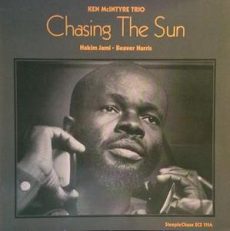
Makanda Ken McIntyre was born Kenneth Arthur McIntyreon on September 7, 1931 in Boston, Massachusetts to a father whoplayed mandolin. He started his musical life on the bugle when he was eight years old, followed by piano. In his teens he discovered the music of Charlie Parker and began playing saxophone at nineteen, then clarinet and flute two years later. Serving in the Army in 1953, for two years he played saxophone and piano in Japan.
Following his discharge Ken attended the Boston Conservatory where he studied with Gigi Gryce, Charlie Mariano, and Andy McGhee. In 1958 he received a degree in flute and composition with a master’s degree the next year in composition. He also received a doctorate (Ed.D.) in curriculum design from the University of Massachusetts Amherst in 1975.
1960 saw McIntyre recording as a leader with Eric Dolphy. The following year and for the next six he taught music in public schools. He took oboe lessons in New York before playing with Bill Dixon, Jaki Byard, and the Jazz Composer’s Orchestra. He went on to spend three years with pianist Cecil Taylor. During the 1970s he recorded with Nat Adderley and Beaver Harris and in the 1980s with Craig Harris and Charlie Haden.
In 1971, he founded the first African American Music program in the United States at the State University of New York College at Old Westbury, teaching for 24 years. He also taught at Wesleyan University, Smith College, Central State University, Fordham University, and The New School for Jazz and Contemporary Music.
In the early 1990s, while performing in Zimbabwe, a stranger handed him a piece of paper with the word “Makanda” written on it, which translates to many skins in the Ndebele language and many heads in Shona. He changed his name to Makanda Ken McIntyre. At the age of 69 on June 13, 2001 he transitioned from a heart attack in New York City.
More Posts: bass clarinet,bassoon,double bass,drums,flute,history,instrumental,jazz,music,oboe,piano,saxophone
Daily Dose Of Jazz…
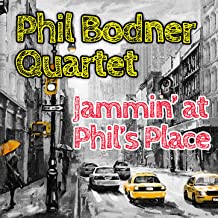
Philip L. Bodner was born June 13, 1917 in Waterbury, Connecticut and played in the Forties and 1950s as a sideman for studio recordings in New York City. He played on jazz sessions with Benny Goodman, with Miles Davis and Gil Evans in 1958.
Organizing The Brass Ring, a group modeled after Herb Alpert, in the mid-1960s they had popular success. Bodner also played with Oliver Nelson and J.J. Johnson during that decade. His associations in the 1970s included Oscar Peterson, Yusef Lateef, Peanuts Hucko, Wild Bill Davison, Ralph Sutton and he also played the signature piccolo part on the disco hit The Hustle by Van McCoy. Other work in the 1970s included playing with Ralph Sutton and Johnny Varro, working with Mingus Epitaph, and arranging Louie Bellson’s tribute to Duke Ellington’s Black, Brown and Beige.
The 1980s saw him working in a swing style with Marty Napoleon, Mel Lewis, George Duvivier, Maxine Sullivan, and Barbara Carroll. He released an album under his own name, Jammin’ at Phil’s Place, on Jazzmania Records in 1990, with Milt Hinton, Bobby Rosengarden, and Derek Smith as sidemen.
Multi-instrumentalist and studio musician Philip Bodner, active in jazz and popular music idioms. Best known as a reedist, he played clarinet, saxophone, oboe, English horn, piccolo, flute, conductor and arranger passed away on February 24, 2008 at age 90 in New York City.
More Posts: clarinet,english horn,flute,history,instrumental,jazz,music,oboe,piccolo,saxophone