


Requisites
Groovin’ ~ Idrees Sulieman, Per Goldschmidt, Horace Parlan, Mads Vinding, Billy Hart | By Eddie Carter
It happened like this; I’d recently been revisiting several SteepleChase albums in my library. One of those titles led me to this morning’s discussion. Groovin’ (SteepleChase Records SCS 1218) is a 1985 straight-ahead-blowing session. It was the third album Idrees Sulieman recorded for the Danish label and was made five days before his sixty-second birthday. I’ve enjoyed the trumpeter’s playing since hearing him on Tenor and Flute, The Cats, and The Hawk Flies High. Here, he’s working with Per Goldschmidt on baritone sax (tracks: A1, A3, B1, B3) and tenor sax (A2, B2), Horace Parlan on piano, Mads Vinding on bass, and Billy Hart on drums. My copy is the original 1986 Danish Stereo album.
Groovin’ High by Dizzy Gillespie starts the first side with the quintet’s collective melody at a relaxing beat. Idrees gets things going with a delightful solo. Per comes next with an effectively carefree reading. Horace’s following statement is as refreshing as a cool drink on a muggy day. Mads delivers an inspired interpretation next; Billy closes with an interesting exchange with the front line into the ending theme. Tell Me What’s Your Name is a pretty tune by Kathe Laursen that begins with a delicate melody by Sulieman, who Goldschmidt joins as it unfolds. The two horns work together to give warmth and tenderness in the song’s only solo, which draws to a conclusion in a gentle climax.
If I Only Knew, the first of two tunes by Idrees Sulieman, closes Side One. Billy’s brief introduction brings the song to life, segueing into the medium melody. Mads goes to work first, then Idrees shows off his gentle side. Horace states his case with graceful lines next; then Per delivers a warm, friendly and intimate finale leading to the theme’s restatement. Lipstick by Kathe Laursen continues the ensemble’s medium groove with a collective melody. Sulieman sets the stage on the first statement, then Parlan offers an equally significant reading. Sulieman shares a few thoughts with Hart in the finale preceding the closing chorus.
The ensemble takes a stroll to The Center of Copenhagen next. Idrees Sulieman’s second original begins with the group’s theme in unison. Idrees and Per provide the spotlight in an entertaining exchange, then Horace delivers a captivating closer ahead of the quintet’s reprise and exit. Per Goldschmidt’s Happy Ending finishes the album on a lively note with the group’s spirited melody. Sulieman takes off first with a lightning-fast interpretation, followed by Goldschmidt, who’s equally quick in the second reading. Hart has a vigorous conversation with the front line ahead of the reprise and the song’s climax.
Nils Winther produced Groovin’, and Ole Hansen was the recording engineer of this digital recording. The album has an excellent soundstage with exceptionally clear fidelity that brings the musicians to your listening room. The record is also incredibly quiet until the music starts. I happily recommend Groovin’ on your next record hunt if you’re in the mood for jazz to help you unwind after a busy day or week. It’s a hidden treasure with a stellar lineup; Idrees Sulieman, Per Goldschmidt, Horace Parlan, Mads Vinding and Billy Hart. Every tune is a pleasure to hear, and it’s a very enjoyable album I’m sure you’ll be glad to have in your library!
~ Tenor and Flute (Riverside RLP 12-240), The Cats (New Jazz NJLP 8217), The Hawk Flies High (Riverside RLP 12-233) – Source: Discogs.com ~ Groovin’ High – Source: JazzStandards.com ~ © 2023 by Edward Thomas Carter

More Posts: choice,classic,collectible,collector,history,instrumental,jazz,music,trumpet
Requisites
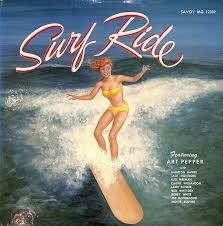
SURF RIDE | ART PEPPER
Saxophonist Art Pepper made his debut recording session of Surf Ride in Los Angeles, California on March 4, 1952, when he recorded tracks 4-6 on the album. Subsequent recording sessions took place on March 29, 1953 when he recorded tracks 1-3 and then on August 25, 1954 recording tracks 7-12. The three sessions resulted in the completion of the twelve takes that ultimately made it to the album.
The album was produced by Ozzie Cadena and originally released as a 12 inch LP on the Savoy label in 1956. The liner notes were written by Yasukuni Terashima and the cover offers a clear though slightly too wholesome California motif to be considered for an addition to the cheesy Fifties Batchelor Collection of “girls on covers “, though the redhead in bikini helps.
TRACKLIST | 37:25 All compositions by Art Pepper except where noted.-
- Tickle Toe (Lester Young) – 2:55
- Chili Pepper – 3:00
- Susie the Poodle – 3:14
- Brown Gold – 2:26
- Holiday Flight – 3:1
- Surf Ride – 2:54
- Straight Life – 2:52
- Cinnamon – 3:11
- Thyme Time – 3:30
- The Way You Look Tonight (Dorothy Fields, Jerome Kern) – 3:48
- Nutmeg – 3:15
- Art’s Oregano – 3:08
- Art Pepper – alto saxophone
- Jack Montrose – tenor saxophone (tracks 7-12)
- Russ Freeman (tracks 1-3), Hampton Hawes (tracks 4-6), Claude Williamson (tracks 7-12) – piano
- Monty Budwig (tracks 7-12), Joe Mondragon (tracks 4-6), Bob Whitlock (tracks 1-3) – bass
- Larry Bunker (tracks 4-12), Bobby White (tracks 1-3) – drums
More Posts: choice,classic,collectible,collector,history,instrumental,jazz,music,saxophone
Requisites
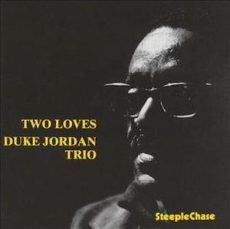
Two Loves is an album led by pianist Duke Jordan recorded on November 25th and December 2, 1973, at Sound Track in Copenhagen, Denmark. My Old Flame, Wait And See, and I’ll Remember April was recorded during the December session. The album was released the following year in 1974 on the Danish label, SteepleChase.
The producer was Nils Winther, the engineer was Ole Hansen, the liner notes were written by Roland Baggenæs and the photography, design, and cover was taken and created by Lissa Winther.
A bebopper of the first generation, this album is evidence of Jordan’s gentle touch, his simply constructed chords, and his preference for medium tempos.
Track List | 40:55 ~ 62:27 with CD Bonus Tracks-
- Subway Inn – 8:11
- My Old Flame (Sam Coslow, Arthur Johnston) – 8:45
- Blue Monk (Thelonious Monk) – 5:14
- Two Loves – 3:05
- Embraceable You (George Gershwin, Ira Gershwin) – 7:15
- Wait And See – 2:44
- I’ll Remember April (Gene de Paul, Patricia Johnston, Don Raye) – 5:34
- Lady Dingbat – 4:08
- Jordu – 5:19
- Duke Jordan – piano
- Mads Vinding – bass
- Ed Thigpen – drums
More Posts: choice,classic,collectible,collector,history,instrumental,jazz,music,piano
Requisites
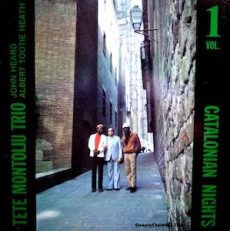
Catalonian Nights, Vol. 1 ~ Tete Montoliu Trio | By Eddie Carter
The Tete Montoliu Trio enters the spotlight with a 1980 live trio date, Catalonian Nights, Vol. 1 (SteepleChase Records SCS-1148). It came out a year later and is the first of three releases by the group from the Zeleste Club. Tete was born blind in Barcelona and learned braille music at age seven. His father was a professional musician, and his mother loved jazz, inspiring him to learn the piano. Montoliu attended the Barcelona Conservatori Superior de Música del Liceu at age thirteen. Tete met a few jazz musicians and learned about jam sessions while studying at the music college. He’s joined here by John Heard on bass and Albert Tootie Heath on drums. My copy is the original U.S. Stereo album.
D & E is from the pen of Milt Jackson and gets the set underway with the trio’s medium melody. Everyone has a lengthy canvas to work on, and Tete lets his fingers do the talking on the lead interpretation. John follows, walking his bass as if on a Sunday stroll, then Albert converses with Tete ahead of the close. Montoliu showcases his swinging style on Lady Bird by Tadd Dameron next, beginning with a solo introduction that grows into the ensemble’s spirited melody. Tete’s opening solo is off to an adventurous start; then Heath joins the pianist for a vigorous exchange leading to the theme’s reprise and robust ending.
Autumn In New York by Vernon Duke begins with a beautiful piano introduction that blossoms into a gorgeous ensemble theme. Tete begins the opening statement quietly, then picks up the pace to improvise freely into a satisfying summation. John delivers the following solo with exquisite sensitivity, preceding the closing chorus and tender climax. Kenny Dorham’s Blue Bossa takes off with the trio’s bossa-nova melody. Montoliu makes his entrance with an intriguing interpretation that delivers the goods. Heard speaks his piece next, then Tete and Heath share the finale leading to the melody’s reprise and exit. The trio wraps everything up in short order with The Theme.
Freddy Hansson and Josep Maria Rodon recorded this live performance, and Nils Winther produced it. Catalonian Nights, Vol. 1, is an excellent recording with a superb soundstage that makes listeners feel like they are in the club audience as the trio performs. I first heard The Tete Montoliu Trio on Gentle Ben with Ben Webster and was immediately impressed by his playing. Now that I’ve discovered this album, I’ll be on the lookout for Catalonian Nights, Vol. 2 and Vol. 3. If you’re in the mood for an excellent live album, I offer for your consideration Catalonian Nights, Vol. 1 by The Tete Montoliu Trio. It’s a great release that I highly recommend and a welcome addition to any library!
~ Catalonian Nights, Vol 2 (SteepleChase Records SCS 1241), Catalonian Nights, Vol. 3 (SteepleChase SCCD 31433), Gentle Ben (Ensayo ENY-301) – Source: Discogs.com ~ Autumn In New York – Source: JazzStandards.com ~ Blue Bossa, Lady Bird – Source: Wikipedia.org © 2023 by Edward Thomas Carter
More Posts: choice,classic,collectible,collector,history,instrumental,jazz,music,piano

Requisites
Listen Here ~ The Gene Harris Quartet | By Eddie Carter
After a long week, I wanted to hear something to help me unwind, so I picked out a wonderful 1989 album, Listen Here (Concord Jazz CJ-385), by The Gene Harris Quartet. I was introduced to pianist Gene Harris as a child when he was a member of The Three Sounds and grew up listening to their Blue Note albums. One of my favorites is Blue Hour, the group’s collaboration with Stanley Turrentine. The trio disbanded in the seventies, and Harris embarked on a successful solo career recording for Blue Note, JAM, and Concord Jazz. On this album, he’s working with Ron Escheté on guitar, Ray Brown on bass, and Jeff Hamilton on drums. My copy is the original U.S. Stereo release.
This Masquerade by Leon Russell opens the album with the quartet’s gentle introduction. Gene brings out the song’s beauty with a light touch during the delicately gorgeous melody and the song’s only solo. The group reconvenes for the closing chorus, and Ron takes the song out in a tender dissolve. Up next is Don’t Be That Way by Benny Goodman, Edgar Sampson, and Mitchell Parish. The foursome’s lively and spirited theme gets things off to a great start. Escheté is up first with a joyously infectious reading. Harris moves through the rhythm section like a musical twister on the following solo ahead of the closing chorus and exit.
The pace slows down for I’ve Got A Feeling I’m Falling by Billy Rose, Harry Link, and Thomas “Fats” Waller. The quartet begins this old favorite with an elegantly tender melody. Gene’s opening solo is a mix of lyrical beauty and nostalgia. Ron has a short statement that’s soft and tender before the leader’s return for the closing chorus. The title song, Listen Here, by Eddie Harris, opens with Brown’s introduction, joined by Escheté and Hamilton into Harris’ feisty melody. The pianist continues grooving on the lead solo, then Eschete cooks on the following statement. Brown wraps it up with a brief reading preceding Gene’s return for the vibrant finale.
Blues For Jezebel is named for Gene’s cat; from the infectious beat of Jeff’s introduction, she must have been quite a pet. The quartet begins with a smooth-flowing melody, then Ron indulges in some fun on the opening solo. Gene follows with a relaxing reading as enjoyable as a favorite pair of shoes into the ensemble’s closing chorus. Sweet and Lovely, by Gus Arnheim, Charles N. Daniels, and Harry Tobias, is an old thirties chestnut that receives a beautiful treatment from the ensemble. Harris starts the gracefully moving introduction and melody. Escheté applies a tender touch to the first solo. The leader follows with a sultry, soulful statement ahead of the closing chorus and slowly dissolves.
Lullabye by Chuck Mangione is not a children’s song. It’s a pretty tune that Gene introduces alone, segueing into an attractive ensemble melody that’ll have your toes tapping along. Gene takes a playful romp in the only interpretation, with the rhythm section complimenting him into a solo fade out by Ron and Ray. Irving Berlin’s The Song Is Ended is taken at a laid-back tempo, beginning with Gene’s introduction into the quartet’s leisurely melody. Escheté is up first with a carefree interpretation, including a brief walk by Brown before it concludes. Gene takes it up a notch with a rousing statement before the ensemble reprises the theme, and the pianist ends softly.
Concord Jazz’s founder, Carl E. Jefferson, produced Listen Here. Phil Edwards and Stuart Hirotsu were the recording engineers, and George Horn was the mastering engineer. The album’s sound quality is stunning, with an excellent soundstage that transports the listener to the studio as the quartet is recording. The pressing is flat and quiet until the music starts. Gene Harris used Ron Escheté whenever he could and always with great results. They recorded nine albums together on Concord Jazz and eleven overall. If you’re a fan of this talented pianist and only know him from The Three Sounds, I invite you to add Listen Here by The Gene Harris Quartet to your record shopping list. It’s a perfect choice to kick back and listen to after a long day or week or when your quiet moments are at a premium!
~ Don’t Be That Way, Sweet and Lovely – Source: JazzStandards.com ~ I’ve Got a Feeling I’m Falling; The Song Is Ended, This Masquerade – Source: Wikipedia.org © 2023 by Edward Thomas Carter
More Posts: choice,classic,collectible,collector,history,instrumental,jazz,music,piano