

Daily Dose Of Jazz…
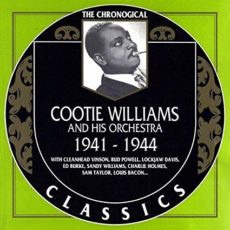
Charlie Holmes was born on January 27, 1910 near Boston, Massachusetts. He began playing alto saxophone at age 16 and emulated the style of his childhood friend, Johnny Hodges. He began playing professionally a week later and after moving to New York City he worked for a variety of groups, including Luis Russell in 1928.
Between 1929 and 1930 he recorded with Red Allen and is best known for composing Sugar Hill Function. He would work with Russell again a few times and in 1932 joined the Mills Blue Rhythm Band. He was a member of John Kirby’s Sextet, Cootie Williams’ Orchestra, and Louis Armstrong’s band for much of the next two decades. He left music in 1951 and did not return for twenty years, only to work in Clyde Bernhardt’s Harlem Blues & Jazz Band and later played for the Swedish band Kustbandet.
Never taking on the role of a leader in any recording or group, swing era saxophonist Charlie Holmes, who also played clarinet and oboe for the Boston Civic Symphony Orchestra, passed away on September 19, 1985 in Stoughton, Massachusetts.

More Posts: bandleader,clarinet,history,instrumental,jazz,music,oboe,saxophone
Daily Dose Of Jazz…
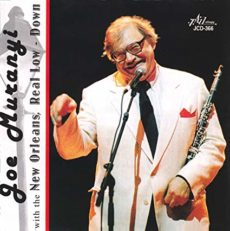
Joseph P. Muranyi was born in Martins Ferry, Ohio on January 14, 1928 and studied with Lennie Tristano, however, he was primarily interested in early jazz styles such as Dixieland and swing. After playing in a United States Army Air Forces band, he moved to New York City in the 1950s and attended the Manhattan School of Music and Columbia University.
During the 1950s he played under Eddie Condon, collaborating with Jimmy McPartland, Max Kaminsky, Yank Lawson, Bobby Hackett, and Red Allen. During that decade he also played with the Red Onion Jazz Band, Danny Barker, and Wingy Manone.
1963 saw him playing with The Village Stompers, a Dixieland band that reached the pop charts with its song Washington Square. From 1967 to 1971 he was the clarinetist with the Louis Armstrong All-Stars. After initially struggling to pronounce Muranyi’s Hungarian family name, Armstrong introduced him on stage as “Joe Ma Rainey”, to Muranyi’s own amusement. Following this stint, he played with Roy Eldridge, World’s Greatest Jazz Band, Cozy Cole, Lionel Hampton, Herman Autrey, Wild Bill Davison, Zutty Singleton, and others.
He worked extensively as a record producer and wrote liner notes for hundreds of albums. Clarinetist, producer, writer and critic Joe Muranyi, who was also an enthusiastic vocalist and played both soprano and tenor saxophone, passed away in Manhattan, New York on April 20, 2012.
Daily Dose Of Jazz…
Dick Charlesworth was born Richard Anthony Charlesworth on January 8, 1932 and brought up in Sheffield. He attended King Edward VII School and at age 16 he became a clerk in the Ministry of Labour and in due course was transferred to London. He bought a clarinet and started playing jazz as a hobby in 1952-53.
Entirely self-taught, Dick became good enough to play saxophone and clarinet in a dance band and performed with jazz bands in south London including Jim Weller’s Jazzmen. While still working his day job, 1956 saw him form his first group, Dick Charlesworth’s Jazzmen and winning the South London Jazz Band Championship in 1957. The group was signed by the Melodisc label, recorded an EP in 1957 and produced an album for Doug Dobell’s 77 Records.
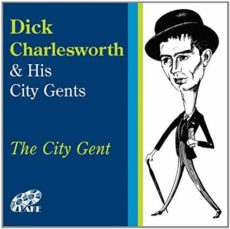
Leaving the Civil Service in 1959 he became a professional musician. He signed a recording contract with EMI and his group was remarketed as Dick Charlesworth’s City Gents. Light jazz was popular in the British charts and Charlesworth’s group sported pinstripes and bowler hats and had a motto, while we live, let us enjoy life. Their only chart single was Billy Boy, which reached 43 in the UK Singles Chart in 1961.
The City Gents appeared on television, worked the cruise ship circuit, disbanded the group, then settled in Spain and ran a music bar before returning to England in 1977. He went on to be active in the London jazz scene until early in the new millennium. He worked with many artists including Keith Smith, Rod Mason, Alan Littlejohn and Denny Wright. He appeared on the BBC Radio series, Jazz Score, a quiz show which encouraged its participants to relate anecdotes about their lives in jazz.
In his later years, Charlesworth lived in Thames Ditton, Surrey, and played a residency at the George and Dragon pub every Tuesday and at various other local pubs. English jazz clarinetist, saxophonist, and bandleader Dick Charlesworth passed away following a heart attack on April 15, 2008, at the age of 76.
More Posts: bandleader,clarinet,history,instrumental,jazz,music,saxophone
Daily Dose Of Jazz…
Harold “Geezil” Minerve was born in Havana, Cuba on January 3, 1922, and raised in Florida and began playing music at age 12. He played with drummer Jeff Gibson and vocalist Ida Cox early in his career, then worked as a freelance musician in New Orleans, Louisiana. Following stints with Clarence Love and Ernie Fields, Minerve served in the Army from 1943–46, then returned to play with Fields for a short time.
He worked with Buddy Johnson from 1949~1957, then with Mercer Ellington in 1960, Ray Charles from 1962 to 1964, and then worked as musical director for Arthur Prysock. In 1971 he joined the Duke Ellington Orchestra, filling Johnny Hodges’s spot after Hodges’s death. Minerve remained with the Ellington Orchestra until 1974, then returned to play with Mercer Ellington with the Duke Ellington Orchestra.
Following the success of the Broadway hit Sophisticated Lady when he played with the orchestra on stage and the touring company, Harold left for a brief time, playing with Ruth Brown’s Black and Blue Review in Paris, returning to Ellington in the Eighties. He did further freelance work later in the 1970s.
He would go on to work freelance in and around New York. Alto saxophonist, flutist, and clarinetist Harold Minerve passed away on June 4, 1992.

More Posts: clarinet,flute,history,instrumental,jazz,music,saxophone
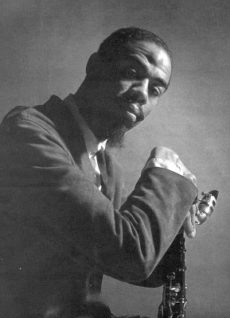
Three Wishes
Responding to her question of three wishes Eric Dolphy gave Nica only two answers:
- “To continue playing music all my life.”
- “A home and a car in New York. That’s all.”
*Excerpt from Three Wishes: An Intimate Look at Jazz Greats – Complied and Photographed by Pannonica de Koenigswarter

More Posts: baroness,clarinet,flute,history,instrumental,jazz,musician,pannonica,saxophone,three,wishes