

Daily Dose Of Jazz…
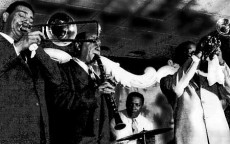
George Dorman “Scoops” Carry was born on January 23, 1915 in Chicago, Illinois. His mother a music teacher, his brother Ed a Chicago based bandleader and guitarist put Scoops in good company during his childhood. Starting on horn at the age of eight, he later went on to study at the Chicago College of Music and Iowa University.
He worked with Cassino Simpson, the Midnight Revellers and Boyd Atkin’s Firecrackers in the late 1920s and 30s while still a teenager. In 1931 Carry played with Lucky Millinder in RKO theater palaces. Reuniting with his brother in 1932, the pair co-led an orchestra through the middle of the 1930s. Following this, Scoops played with Zutty Singleton, Fletcher Henderson and Roy Eldridge. By 1938 he was with Art Tatum, a year later with Horace Henderson and at the end of the decade he worked briefly with Darnell Howard before joining Earl Hines’s band in 1940.
Carry remained in Hines’s employ until 1946, working with him in both large and small ensemble settings. After his tenure with Hines, Carry left music and entered law school in 1947, eventually working in the office of the Illinois state attorney.
Scoops Carry, alto saxophonist and clarinetist during the swing era, passed away on August 4, 1970.
Daily Dose Of Jazz…
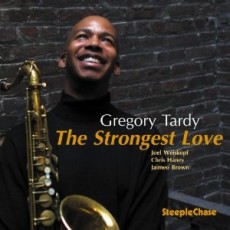
Gregory Tardy was born February 3, 1966 in New Orleans, Louisiana but was reared in Milwaukee, Wisconsin. His interest in music began studying classical clarinet. By high school he excelled in music, winning many awards and scholarships, studying with renowned clarinetists and preparing for a symphony career. Over time he was asked to play saxophone, filling missing gaps in various high school and college ensembles. But it was the prodding of his older brother that made him explore the music of John Coltrane, and decide to follow a jazz path.
Gregory’s passion for the saxophone took over his studies, he moved to St. Louis, played the jazz and blues scene, returned to New Orleans to further study, gigged with the Neville Brothers and ended up in bands led by Nicholas Payton, Jason and Ellis Marsalis. In 1992, Tardy recorded his first solo project “Crazy Love”, was picked up by Elvin Jones Jazz Machine, and moved to New York City.
His performance and recording lists a large array of prominence not limited to Tom Harrell, Dave Douglas, Wynton Marsalis, Jay McShann, Steve Coleman, Betty Carter, James Moody, Ravi Coltrane, Mark Turner, Dewey Redman, Chris Potter, Joe Lovano, Bill Frisell, Rashied Ali and John Patitucci. He has even brought his clarinet out of retirement playing with Andrew Hill, Steve Swallow, Stefan Harris and others.
Tardy continues to explore new territory while keeping in the tradition as he play his own music and perform in many great bands. As an educator he teaches private lessons and facilitates clinics around the world, but always speaking through his horn.
Daily Dose Of Jazz…
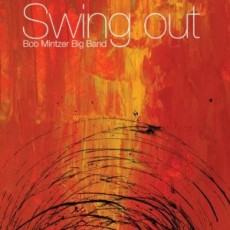
Bob Mintzer was born January 27, 1953 in New Rochelle, New York. After graduating from the Interlochen Arts Academy in 1970, he made his mark as a soloist, mainly on the tenor saxophone and bass clarinet but is also proficient on flute and the EWI (electronic wind instrument).
He is a member of the jazz-rock band the Yellowjackets but among jazz fans is even better known for his inspiring big band work since the early 1980s in the Word of Mouth Big Band and then as the leader of the Bob Mintzer Big Band. Before starting his own big band, Bob was a featured soloist and arranger with the Buddy Rich big band.
In 2008, Bob succeeded pianist Shelly Berg to hold the Bowen H. “Buzz” McCoy and Barbara M. McCoy Endowed Chair in Jazz Studies at the University of Southern California Thornton School of Music.
Mintzer has been nominated for thirteen Grammy Awards both for his solo work and big band recordings an his Homage to Count Basie won him a Grammy for the Best Large Ensemble in 2001. He has performed and/or recorded with a wide variety of artists ranging from Tito Puente, Buddy Rich, Thad Jones/Mel Lewis Big Band, James Taylor, The New York Philharmonic, National Symphony, American Saxophone Quartet, Art Blakey, Donald Fagan, Bobby McFerrin, Nancy Wilson, Kurt Elling, to Jaco Pastorius, Mike Manieri, and Randy Brecker.
Saxophonist, clarinetist, composer, arranger and bandleader Bob Mintzer continues to perform, tour and record as he explores funk and Latin domains with his big band.
Daily Dose Of Jazz…
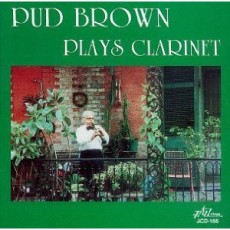
Pud Brown was born Albert Francis Brown on January 22, 1917 in Wilmington, Delaware but was raised in Shreveport, Louisiana. Brown was fluent on saxophone by age five, and toured throughout North America in a family band at the age of seven, playing the circus, nightclub and minstrel show circuits in the mid 1920s.
After moving to Chicago, Pud found work in Phil Lavant’s orchestra in 1938 and then in Lawrence Welk’s band. In 1941 he married, left music to run a motorcycle shop in Shreveport – a failed endeavor, relocated to Los Angeles and found work as a jazz musician.
Brown career exploded over the next several decades working with such jazz musicians as Les Brown, Coleman Hawkins, Doc Cheatham, Danny Barker, Kid Ory, Percy Humphrey and Louis Armstrong among others. He returned to New Orleans in 1975 and became a mainstay of the local scene playing with Clive Wilson’s Original Camelia Brass Band in the 1980s, holding a regular gig at the French Quarter’s Palm Court Jazz Cafe.
Pud Brown, clarinetist, reed player and active as an educator in local schools until his death, passed away on May 27, 1996 in Algiers, Louisiana.
Daily Dose Of Jazz…
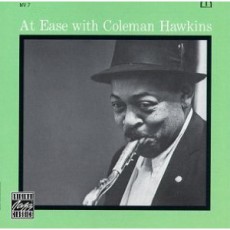
Coleman Randolph Hawkins was born on November 21, 1904 in St. Joseph, Missouri and named after his mother’s maiden name. He started out playing piano and cello prior to playing saxophone at age nine. By the time he turned 14, he was playing around eastern Kansas while attending Topeka High School and simultaneously studying harmony and composition for two years at Washburn College.
In 1921 Hawkins joined Mamie Smith’s Jazz Hounds, toured through 1923 and settled in New York City. Hawkins joined Fletcher Henderson’s Orchestra doubling on clarinet and bass saxophone and becoming a star soloist. He recorded with band mates Louis Armstrong and Henry “Red” Allen, a number of solo recordings with either piano or a pick-up band of Henderson musicians. In late 1934, he played with Jack Hylton’s band in London, toured Europe as a soloist until 1939 and worked with Django Reinhardt and Benny Carter in 1937 Paris.
Returning to the States he worked Kelly’s Stables, recorded two choruses of Body and Soul, his landmark recording of the Swing Era. Recorded as an afterthought at the session, it is notable in that Coleman ignores almost all of the melody, only the first four bars are stated in a recognizable fashion. In its exploration of harmonic structure it is considered by many to be the next evolutionary step in jazz recording from where Louis Armstrong’s “West End Blues” in 1928 left off.
Over the course of his long and prolific career Hawkins had an unsuccessful attempt at a big band, led a combo at Kelly’s Stables, played with Thelonious Monk, Oscar Pettiford, Miles Davis, Oscar Peterson, Herb Ellis, Ray Brown, Ben Webster, Max Roach, Howard McGhee, Sonny Rollins, John Coltrane, Roy Eldridge, J.J. Johnson, Fats Navarro and Duke Ellington among others, recorded a session with Dizzy Gillespie that is considered the first bebop recording and toured with Jazz at the Philharmonic. After 1948 Hawkins divided his time between New York and Europe, making numerous freelance recordings. In the 1960s, he appeared regularly at the Village Vanguard.
Tenor saxophonist Coleman Hawkins directly influenced many future bebop musicians such as Sonny Rollins and John Coltrane. In his later years he stopped recording, began drinking heavily and died of pneumonia on May 19, 1969 in New York.