

Daily Dose Of Jazz…
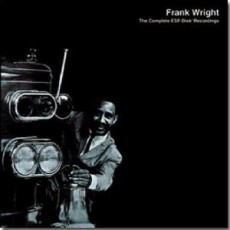
Frank Wright was born on July 9, 1935 in Grenada, Mississippi but grew up in Cleveland, Ohio. In his youth he started his musical career playing electric bass with Bobby “Blue” Bland, B. B. King and R&B bands in Memphis and Cleveland. But it was his meeting of Albert Ayler that he switched to the tenor saxophone, embraced the free jazz movement and moved to New York City in the mid-60s.
During this decade he played with some of the biggest names in avant-garde jazz including briefly with John Coltrane. He also made his first recordings as a leader for the ESP label but not finding an appreciative audience, Frank moved to Europe and spent the remainder of his life there.
Wright recorded for a few small labels, performed free jazz with expatriate American musicians and the European leaders of the avant-garde, and returned to the U.S. occasionally to perform with Cecil Taylor and the Art Ensemble of Chicago.
Tenor and soprano saxophonist and bass clarinetist Frank Wright, known for his frantic style, passed away on May 17, 1990.

Jazz Is Global – Share
Daily Dose Of Jazz…
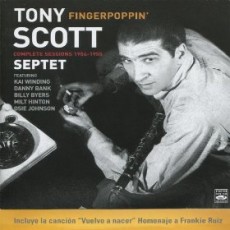
Tony Scott was born Anthony Joseph Sciacca June 17, 1921 in Morristown, New Jersey. He attended Julliard School in the early Forties and by the 50s was working with Sarah Vaughan, Billie Holiday and had a young Bill Evans as a sideman. Late in the decade he won on four occasions the Down Beat critics poll for clarinetist in 1955, 1957, 1958 and 1959 and was known for a more “cool” style than Buddy DeFranco.
For most of his career he was held in some esteem in New Age music circles because of his decades-long involvement in music linked to Asian cultures and to meditation. Despite this he remained relatively little known as the clarinet had been in eclipse in jazz since the emergence of bebop. In 1959 he left New York City and the United States touring South America, Europe, Africa and Southeast Asia. This led to his playing in a Hindu temple, spending time in Japan, and releasing Music for Zen Meditation and capturing Japan’s Down Beat poll for best clarinetist.
He settled in Italy in the 1980s, working with Italian jazz musicians such as Franco D’Andrea and Roman Mussolini, followed by an interest in electronica in his later years. Italian director Franco Maresco produced a documentary on the life of Tony Scott, released three years after his death on March 28, 2007. It was titled Tony Scott: The Story of How Italy Got Rid of the Greatest Jazz Clarinetists.
More Posts: clarinet
Daily Dose Of Jazz…
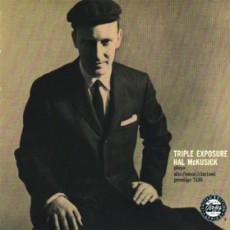
Hal McKusick was born on June 1, 1924 in Medford, Massachusetts. Hal moved with his family at age 3 to nearby Newton and at age 8, Hal’s mother bought him a clarinet as a Christmas present, insisting first on a vow of daily practice sessions and weekly lessons. With clarinet in hand, Hal practiced relentlessly and took lessons from schoolteacher Frank Tanner, who used him in the school band on clarinet and alto saxophone at age 9. Sight-reading came quickly to Hal, and by age 15, he was playing Boston’s burlesque house, the Old Howard Theater.
By the 40s and WWII McKusick was playing with Les Brown and moved through the decade playing with Boyd Raeburn and then Claude Thornhill. In the early 1950s he worked with Terry Gibbs and Don Elliott and in 1957 released his first album as a leader for Prestige titled Triple Exposure. As a sideman he sat in on recording sessions with groups led by George Russell and Jimmy Giuffre; worked with Bill Evans, Art Farmer, Paul Chambers, Connie Kaye, Lee Konitz and John Coltrane.
During the 60s he joined the CBS orchestra playing alongside the likes of Hank and Thad Jones, playing Carnegie Hall and Lincoln Center behind Judy Garland, Sarah Vaughan, Peggy Lee, Nat King Cole and Barbara Streisand. In the 70s he moved east to New York and throughout the 70s and 80s he produced weekend performances at Jazz At Moon in Easthampton that led to forming his nonet featuring Clark Terry, Art Farmer, Percy Heath, Jim Hall, Mike LeDonne, Hank Jones, Jim McNeely Jerry Dodgion and others.
Hal McKusick, alto saxophonist, clarinetist, flautist, composer and educator taught at the Ross School in East Hampton, New York and also restored and sold antiques, restored and built Shaker furniture both for Bloomingdales and private commissions. On April 11, 2012 he passed away of natural causes at the age of 87.
Jazz Is Global – Share
Daily Dose Of Jazz…
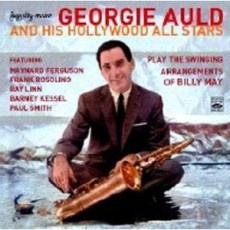
George Auld was born John Altwerger on May 19, 1919 in Toronto, Canada but lived in the U.S. from the late 1920s. He was most noteworthy for his tenor saxophone work Bunny Berigan, Artie Shaw, Benny Goodman, Erroll Garner, Dizzy Gillespie, Al Porcino, Billy Eckstine, Tiny Kahn, Frank Rosolino and many others.
Primarily a swing saxophonist, he did many big band stints in his career, and led several big bands, including Georgie Auld and His Orchestra and Georgie Auld and His Hollywood All Stars. Auld also played some rock´n roll working for Alan Freed in 1959.
George can be heard playing sax on the 1968 Ella Fitzgerald album “30 by Ella” and in 1977 he played a bandleader in “New York, New York” starring Liza Minelli and Robert DeNiro and also acted as a technical consultant for the film. The tenor saxophonist, clarinetist and bandleader George Auld died in Palm Springs, California at the age of 71 on January 8, 1990.
Give A Gift Of Jazz – Share
More Posts: bandleader,clarinet,saxophone
Daily Dose Of Jazz…
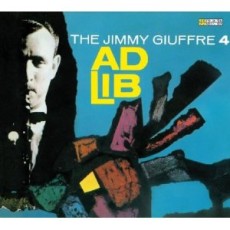
James Peter Giuffre was born on April 26, 1921 in Dallas, Texas. A graduate of Dallas Technical High School and North Texas Teachers College, he first became known as an arranger for Woody Herman. He would become a central figure in West Coast jazz and cool jazz, and was a member of Shorty Roger’s groups before going solo. Giuffre played clarinet, as well as tenor and baritone saxophones, but eventually focused on clarinet.
His first trio in 1957 consisted of Giuffre, guitarist Jim Hall and double bassist Ralph Pena, later replace by Jim Atlas. With minor hit with Giuffre’s “The Train and the River” featured on a television special The Sound of Jazz, he was matched with Pee Wee Russell for a leisurely jam session. When Atlas left the trio, Jimmy replaced him with valve trombonist Bob Brookmeyer. By 1961, Giuffre formed a new trio with Paul Bley and Steve Swallow and exploring free jazz hushed and quiet focus more resembling chamber music. The trio’s early ‘60s explorations of melody, harmony and rhythm are still as striking and radical as any in jazz.
Throughout the ‘60s Giuffre, Bley and Swallow eventually explored wholly improvised music, several years ahead of the free improvisation boom in Europe. By the early 1970s, Giuffre formed a new trio and utilized different instrumentation configurations as he ventured into electric and synthesizers. During this decade he headed the jazz ensemble at New York University, taught private lessons in saxophone and music composition. This continued through the ‘90s at the New England Conservatory of Music.
Jimmy Giuffre, who continually wrote creative and unusual arrangements and who was most notable for his development of forms of jazz which allowed for free interplay between the musicians, anticipating forms of free improvisation, passed away in Pittsfield, Massachusetts on April 24, 2008 of pneumonia, just two days shy of his 87th birthday.
Give A Gift Of Jazz – Share