

Requisites
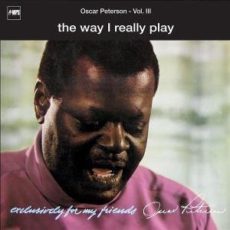
The Way I Really Play is a 1968 album by pianist Oscar Peterson. Recorded at the private studio of Hans Georg Brunner-Schwer in Villingen-Schwenningen, West Germany on November 12, 1967. The 44:50 minute sessions was produced by Brunner-Schwer.
Track Listing- Waltzing Is Hip (Ray Brown, Johnny Wayne) – 6:11
- Satin Doll (Duke Ellington, Johnny Mercer, Billy Strayhorn) – 10:05
- Love Is Here to Stay (George Gershwin, Ira Gershwin) – 4:54
- Sandy’s Blues (Oscar Peterson) – 9:34
- Alice In Wonderland (Sammy Fain, Bob Hilliard) – 4:46
- Noreen’s Nocturne (Oscar Peterson) – 9:20
- Oscar Peterson – piano
- Sam Jones – double bass
- Bobby Durham – drums
- Recording director and engineer – Hans Georg Brunner-Schwer
- Liner notes – Gene Lees
- Liner notes translated – Dr. B. Falk
- Cover photography – Sepp Werkmeister
- Reverse side photography – Sepp Werkmeister
- Graphic work – Hans B. Piltzer
- Action (Vol. 1)
- Girl Talk (Vol. 2)
- The Way I Really Play (Vol. 3)
- My Favorite Instrument (Vol. 4) solo piano
- Mellow Mood (Vol. 5)
- Travelin’ On (Vol. 6)
The Way I Really Play was also released as The Great Oscar Peterson on Prestige!
More Posts: choice,classic,collectible,collector,history,instrumental,jazz,music,piano
Requisites
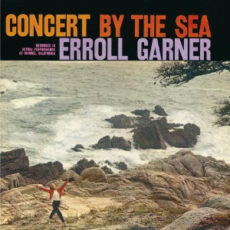
Concert by the Sea is a live album recorded by pianist Erroll Garner on September 19, 1955 in the gothic-revivalist styled assembly hall of Sunset School (now Sunset Arts Center) in Carmel-by-the-Sea, California.
The original U.S. album cover photograph, showing a model in mid-stride with outstretched arms, was shot by music and fashion photographer Art Kane.
There was no plan to record the concert officially. The release came about because Garner’s personal manager, Martha Glaser, spotted backstage that a tape recorder was running. The recording was being made by a recording engineer for the Armed Forces Radio Network, a jazz fan and scholar named Will Thornbury, strictly for the enjoyment of himself and his fellow servicemen. Glaser took the tape, put it into album form, then played it for Columbia’s jazz division head, George Avakian, who decided to release it on October 13, 1955.
It sold over a million dollars’ worth of retail copies by 1958, qualifying for gold record status by the definition of that time but has never been acknowledged as such by the RIAA.
Track Listing Side 1
- I’ll Remember April
- Teach Me Tonight
- Mambo Carmel
- Autumn Leaves
- It’s Alright With Me
- Red Top
- April In Paris
- They Can’t Take That Away From Me
- How Could You Do A Thing Like That To Me
- Where Or When
- Erroll’s Theme
- Erroll Garner ~ Piano
- Eddie Calhoun ~ Bass
- Denzil Best ~ Drums

More Posts: choice,classic,collectible,collector,history,instrumental,jazz,music,piano

Requisites
Devil May Care is the debut album released in 1961 by American jazz vocalist Teri Thornton featuring tracks recorded on December 23, 1960 and January 10, 1961 in New York City for the Riverside label.
>Norman Simmons was the arranger for the sessions that elapsed for 39 minutes and 19 seconds and was produced by Orrin Keepnews.
Track Listing- Lullaby Of The Leaves
- Devil May Care
- Detour Ahead
- The Song Is You
- My Old Flame
- What’s Your Story, Morning Glory
- Dancing In The Dark
- Left Alone
- Blue Champagne
- I Feel A Song Coming On
- What’s New
- Blue Skies
- Teri Thornton – vocals
- Clark Terry – flugelhorn, trumpet
- Britt Woodman – trombone
- Earle Warren – alto saxophone
- Seldon Powell – tenor saxophone
- Wynton Kelly – piano
- Freddie Green (tracks 1, 3, 5, 7, 9 & 12) – guitar
- Sam Herman (tracks 2, 4, 6, 8, 10 & 11) – guitar
- Sam Jones – bass
- Jimmy Cobb – drums
More Posts: choice,classic,collectible,collector,history,instrumental,jazz,music,vocal
Requisites
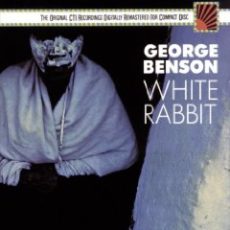
White Rabbit is the 1972 CTI Records album recorded by George Benson on November 23, 24 & 30, 1971. The title track is a cover of the famous Great Society/Jefferson Airplane song by Grace Slick. The album was produced by Creed Taylor, arranged by Don Sebesky and engineered by Rudy Van Gelder at his studios in Englewood, New Jersey. The album was designed by Bob Ciano and the photograph used on the cover was of a South African Pondo tribes woman was taken by Pete Turner in 1970.
This album was the recording debut of guitarist Earl Klugh featured on El Mar, was only seventeen years old then. White Rabbit was the first Grammy Award nomination to George Benson in 1972 for Best Jazz Performance by a Group.
Tracks
- White Rabbit ( Grace Slick)
- The From Summer of ‘42 (Michel Legrand)
- Little Train (from Bachianas Brasileiras No. 2) (Heitor Villa-Lobos)
- California Dreaming (John Phillips)
- El Mar (The Sea) (George Benson)
- George Benson – guitar
- Jay Berliner – Spanish guitar
- Earl Klugh – acoustic guitar (only on 5)
- Ron Carter – double bass, electric bass (on 1 and 3)
- Herbie Hancock – electric piano
- Billy Cobham – drums
- Airto Moreira – percussion, vocals
- Phil Kraus – vibes, percussion
- Gloria Agostini – harp
- Phil Bodner – flute, alto flute, oboe, English horn
- Hubert Laws – flute, alto flute, piccolo. (Flute solo on 1)
- George Marge – flute, alto flute, clarinet, oboe, English horn
- Romeo Penque – English horn, oboe, alto flute, clarinet, bass clarinet
- Jane Taylor – bassoon
- Wayne Andre – trombone, baritone horn
- Jim Buffington – French horn
- John Frosk – trumpet, flugelhorn. (Trumpet solo on 1 and 5)
- Alan Rubin – trumpet, flugelhorn
More Posts: choice,classic,collectible,collector,guitar,history,instrumental,jazz,music
Requisites
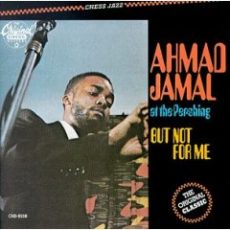
at the Pershing: BUT NOT FOR ME is a 1958 jazz album by pianist Ahmad Jamal. The tapes were made on January 16, 1958, at the Pershing Lounge of Chicago’s Pershing Hotel and each set played that night which was recorded by Malcolm Chisholm, recording engineer. A total of 43 tracks, of which 8 were selected by Jamal for the album. The LP was produced by Dave Usher and was released later that same year on Argo Records as LP-628. Though Jamal had previous releases on Argo, they had been from previously made masters. This, however, was his first release recorded for Argo and his first live recording.
Of the eight composition selected for the album comprised of standards, the 1936 composed Poinciana became the standout, not only for it’s length at eight minutes, seven seconds but also for his emotionally melodic playing.
In August 1958, Jet magazine referred to the album as “a nationwide hit”. The December 1958 Down Beat poll of music retailers showed that the album was the “#1 jazz bestseller“, selling an unprecedented 47,000 copies, it stayed on Billboard Magazine album charts for 107 weeks and eventually sold more than a million copies.
Track List- “But Not For Me” (George Gershwin, Ira Gershwin) – 3:32
- “The Surrey with the Fringe on Top” (Richard Rodgers, Oscar Hammerstein II) – 2:35
- “Moonlight In Vermont” (Karl Suessdorf, John Blackburn) – 3:09
- “Music, Music, Music” (Put Another Nickel In) (Bernie Baum, Stephen Weiss) – 2:56
- “No Greater Love” (Isham Jones, Marty Symes) – 3:26
- “Poinciana” (Buddy Bernier, Nat Simon) – 8:07
- “Woody N’ You” (Dizzy Gillespie) – 3:40
- “What’s New?” (Bob Haggart, Johnny Burke) – 4:11
- Ahmad Jamal – piano
- Israel Crosby – bass
- Vernel Fournier – drums
More Posts: choice,classic,collectible,collector,history,instrumental,jazz,music,piano