

Requisites
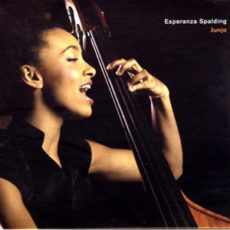
Junjo is the debut album by bassist and vocalist Esperanza Spalding and was recorded on April 6-7, 2005. It wasn’t released until April 2006 on the Spanish label Ayva Music.
The trio features pianist Aruán Ortiz, Francisco Mela on drums and then 22-year-old Spalding on upright bass, providing vocals, often wordless, on all but two tracks. Besides compositions by Jimmy Rowles, Egberto Gismonti and Chick Corea the trio plays originals.
Personnel- Esperanza Spalding – double bass, vocals
- Aruán Ortiz – piano
- Francisco Mela – drums
- “The Peacocks” (Jimmy Rowles) – 7:56
- “Loro” (Egberto Gismonti) – 5:06
- “Humpty Dumpty” (Chick Corea) – 5:51
- “Mompouana” (Aruán Ortiz) – 7:51
- “Perazuán” (Spalding, Ortiz) – 3:38
- “Junjo” (Spalding) – 5:13
- “Cantora de Yala” (G. Leguizamón, M. Castilla) – 4:55
- “Two Bad” (Spalding) – 6:59
- “Perazela” (Francisco Mela, Spalding) – 1:32

More Posts: bass,choice,classic,collectible,collector,history,instrumental,jazz,music,vocal
Requisites
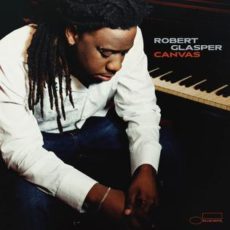
Canvas is an album by jazz pianist and composer Robert Glasper, released on the Blue Note label. The 2005 post bop album was his first for a major label and was produced by Eli Wolf.
Tracks All songs composed by Robert Glasper except “Riot,” composed by Herbie Hancock. Album recording length ~ 64:28 Rise and Shine – 7:37 Canvas – 9:57 Portrait of an Angel – 5:24 Enoch’s Meditation – 8:12 Centelude – 1:06 Jelly’s da Beener– 7:46 Chant – 8:17 Riot – 6:20 North Portland – 5:51 I Remember – 5:58 Personnel
More Posts: choice,classic,collectible,collector,history,instrumental,jazz,music,piano

Requisites
Sweet Love, Bitter is a 1967 album with the soundtrack composed and recorded by Mal Waldron on March 23, 1967 in New York City for the film of the same name. The cover design was created by Robert Flynn/Viceroy. The album was released by Impulse! Records.
Based on the novel Night Song by John Alfred Williams, the story was inspired by the life of jazz musician Charlie Parker. Starring Dick Gregory, Don Murray, Robert Hooks, Diane Varsi and Jeri Archer.
The film opens with Richie “Eagle” Stokes found dead in his bed before showing the journey of how he got there. He is a jazz musician, jaded by how society treats him and seeks to numb himself with drugs, liquor and women. He crosses paths with David Hillary, a white male and former professor, when they both find themselves at a pawn shop. Hillary is distraught by the loss of his wife in a car accident, convinced that he is the cause of her death. They bond over drinks only to be found by Keel Robinson , Stokes’ friend and former reverend. Robinson offers to provide Hillary with a room in exchange for working at the coffee he owns.
The personnel on the date included pianist Mal Waldron, trumpeter Dave Burns, alto and tenor saxophonist George Coleman, baritone saxophonist Charles Davis, bassists Ruchard Davis and George Duvivier and drummer Al Dreares. Thirteen songs comprised the album for a total of 31:28: Loser’s Lament (Theme From “Sweet Love, Bitter”) — 5:11 Della — 2:36 Hillary — 2:23 Espresso Time — 2:11 Keel — 2:40 Smokin’ — 2:06 Della’s Dream — 2:23 The Search — 1:21 Candy’s Ride — 1:18 Bread — 1:47 Eagle Flips Out — 2:14 Brindle’s Place — 3:07 Sleep Baby Sleep — 2:11
More Posts: choice,classic,collectible,collector,history,instrumental,jazz,music,piano
Requisites
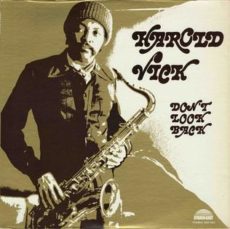
Don’t Look Back, recorded in November of 1974, is a session by tenor saxophonist Harold Vick for the Strata-East label. Creative Hands, Inc. designed the two-tone cover, reminiscent of early Blue Note covers, with photography by Jim Dun. It was recorded at Minot Sound Studios, White Plains, New York and produced by Vick. Track List | 35:48 All compositions by Harold Vick.
- Don’t Look Back – 5:59
- Melody for Bu – 7:21
- Senor Zamora – 5:38
- Stop and Cop – 6:34
- Lucille – 9:20
- Prayer – 0:56
- Harold Vick – tenor & soprano saxophone, flute, bass clarinet
- Virgil Jones – trumpet, flugelhorn (tracks 1-3)
- Kiane Zawadi – euphonium (tracks 1-3)
- Joe Bonner – electric piano, piano, percussion, tuba
- George Davis – guitar, flute (tracks 1-4)
- Sam Jones – bass (tracks 1-5)
- Billy Hart – drums, percussion (tracks 1-5)
- Jimmy Hopps – percussion (track 4)
More Posts: choice,classic,collectible,collector,history,instrumental,jazz,music,saxophone
Requisites
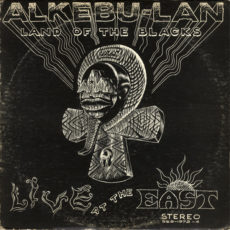
On August 29, 1971, percussionist James Mtume recorded this live free jazz session at The East in Brooklyn, New York titled Alkebu-Lan – Land Of The Blacks for the Strata-East record label. The artwork and cover design was by an unknown artist Clarence Eastman known as Wabembe. The back cover photography was taken by Je Jordan, the liner photography is by Ray Gibson and the engineer was Endesha O’Brien. This double album was released in 1972. The East, located in the Clinton Hill neighborhood, was notable for refusing to allow White people to pass its doors.
The Ensemble- Congas, Horns (Tonette), Producer – Mtume*
- Alto Saxophone, Soprano Saxophone – Gary Bartz
- Bass – Buster Williams
- Drums – Billy Hart, Ndugu*
- Piano – Stanley Cowell
- Tenor Saxophone, Flute – Carlos Garnett
- Violin – Leroy Jenkins
- Vocals – Andy Bey, Eddie Micheaux, Joe Lee Wilson
- Voice [Poetry] – Weusi Kuumba, Yusef Iman
-
- A1 – Invocation
- A2 – Baba Hengates
- B1 – Utamu
- B2 – Saud
- C1 – Alkebu-Lan
- C2 – No Words
- D1 – Separate Not Equal
- D2 – Sifa (The Prayer)
More Posts: choice,classic,collectible,collector,history,instrumental,jazz,music,percussion