

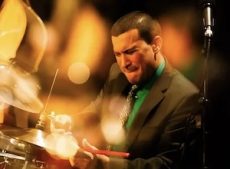
DAVE POTTER
“Pianist Marcus Roberts calls Dave Potter “one of the most talented young drummers on the scene today,” and the word that best sums up his playing is intensity. Potter got a late start, picking up the drum set in high school in Durham, North Carolina, where he was drawn to funk and fusion drummers like Billy Cobham and Dennis Chambers. Hearing Tony Williams’s early recordings with the Miles Davis Quintet changed everything, and with mentorship from trumpeter and educator Dr. Andrew Sioberg, he threw himself into practicing, listening, and transcribing.
That work earned him a scholarship to Florida State University, where he studied with Roberts and began a collaboration with Jason Marsalis that has lasted more than twenty years. After graduating, he was selected for the Louis Armstrong Quintet at the University of New Orleans until Hurricane Katrina cut that plan short. He later turned down a full scholarship to Juilliard to return to Florida State for his master’s degree under Roberts.
Potter was featured in the 2010 book The New Face of Jazz, which profiled the younger generation making an impact on the scene. Now based in Atlanta, he keeps a busy teaching and performing schedule and tours with the Jason Marsalis Vibes Quartet, Greg Tardy, Eric Reed, and Marcus Roberts. He also leads his own group, Retro Groove, whose third studio album builds on their self-titled debut with clever arrangements of ’80s hits by Whitney Houston, Rush, The Isley Brothers, Toto, and others, blended with swing and blues to win over jazz purists and pop fans alike.
Dave Potter: Band Leader & Drums
Rod Harris, Jr.: Guitar
Gary Motley: Piano
Tommy Sauter: Bass
Cover: $25.00
More Posts: adventure,bandleader,club,drums,jazz,music,preserving,travel

EAV TRIO WITH LARRY WILSON
Drummer and multi-instrumentalist Larry Wilson is one of the most dynamic and authentic jazz performers in Atlanta. A major part of the Churchill Grounds Family, Larry led the jam session at TEN ATL for over 8 years and was instrumental in keeping the Churchill Grounds brand alive. Larry will feature the house band from TEN ATL as well as special guests to commemorate their residency in East Atlanta.
Cover: $50.00

CINDY BLACKMAN SANTANA
Cindy Blackman Santana celebrates the release of her new album Coherence, a once-in-a-lifetime journey combining jazz, rock, fusion, & spirituality. As a virtuoso drummer, bandleader, musician, and the new face of NFL Monday Night Football, Cindy is a sound innovator with a passion for pushing creative boundaries and exploring movement and change. She is as known for the nuances and colors she brings to her beats and fills as she is for the sheer power of her soulful playing. “Some drummers act, some react. Some keep time, others create it. Cindy Blackman Santana is among the few who can,” writes Mike Zwerin of the International Herald Tribune.
Cindy has been creating magnificent musical time and space since the beginning of her career as a busking street performer in New York City in the ’80s through the present day, touring the globe and making albums at the top of her game—including the critically acclaimed Another Lifetime (2010). In addition to collaborating onstage and in-studio with her own group—also known as Another Lifetime—she has toured and recorded with artists including Pharoah Sanders, Cassandra Wilson, Bill Laswell, Joss Stone, Joe Henderson, Buckethead, Don Pullen, Hugh Masakela, and Angela Bofill.
From 1992 to 2007 and again in 2014 & 2015 she was the drummer in Lenny Kravitz’s band, performing through multiple world tours and hit albums. In 2010, she was part of the all-star line-up performing “Bitches Brew,” a tribute to Miles Davis’ seminal album staged at the San Francisco Jazz Festival and NYC Winter JazzFest.
The Band:
Cindy Blackman Santana ~ DrumsK
Aurelien Budynek ~ Guitar
Benny Rietveld ~ Bass
Zaccai Curtis ~ Keyboard
Special Guest Ravi Coltrane ~ Saxophone
Cover: $45.00 ~ $55.00 | $4.16 – $4.86 fees
Streaming: $15.00 + $2.05 fee
More Posts: adventure,bandleader,club,drums,genius,instrumental,jazz,music,preserving,travel
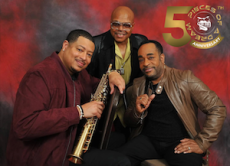
PIECES OF A DREAM
Celebrating their 50th anniversary this October, Pieces of a Dream has built an impressive legacy of innovation and eclecticism – talents that have kept them fresh and authentic in a jazz world that’s ever-changing. The story of Pieces Of A Dream, who has opened for such luminaries as Miles Davis, Count Basie and James Brown, is a tale of destiny and brotherhood. Dubbed a “tough act to follow” by the legendary Count Basie, the band will bring their trademark catchy riffs, infectious grooves and compelling vocals to Keystone Korner Baltimore!
The Band:
Curtis Harmon ~ drums
James Lloyd ~ keyboards
Tony Watson ~ saxophone
Elec Simon ~ percussion
Stacey Richardson ~ vocals
Carolyn Brewer ~ keyboards & vocals
John Hall ~ bass
Cover: $65.00 ~ $75.00 | $5.56 – $6.26 fees
Streaming: $15.00 + $2.05 fee
More Posts: adventure,bandleader,bass,club,drums,genius,instrumental,jazz,music,percussion,piano,preserving,saxophone,travel,vocal

WILLIE JONES III QUARTET FEATURING ERIC REED
Willie Jones III is one of the world’s most celebrated drummers in modern jazz. As a band leader, Willie Jones III has sold out a series of sets at Dizzy’s Club in New York City, Club 1905 in Portland, the Kirk Douglas Theatre in Los Angeles, Club Bebop in Buenos Aires, and Bimhuis in Amsterdam. The Los Angeles-born musician performed in the Roy Hargrove Quintet from 1998-2006. He was also one of two drummers in Hargrove’s powerhouse group RH Factor.
Jones has been featured on performances and tours with the Jazz at Lincoln Center Orchestra with Wynton Marsalis and as a drummer of choice for legendary artists including Sonny Rollins, Ernestine Anderson, Bobby Hutcherson, Cedar Walton, Frank Wess, Bill Charlap, Michael Brecker, Herbie Hancock, and Hank Jones. He released his eighth album as a leader in 2025, a collection of a new composition by Jones as well as his jazz arrangements of timeless songs from the R&B and popular music canon including Earth Wind & Fire’s “Can’t Hide Love,” Debarge’s “All This Love,” and Fats Domino’s “I’m Walkin’.”
Eric Scott Reed has been a vital force in jazz for over 25 years, excelling as a leader, composer, producer, educator, and sideman with legends like Freddie Hubbard and Wynton Marsalis. His recordings, such as The Adventurous Monk and Groovewise, showcase his innovative approach to jazz standards and original compositions.
The Quartet:
Willie Jones III ~ Drums
Eric Reed ~ Piano
Danton Boller ~ Bass
Stacy Dillard ~ Saxophone
Tickets: $35.00 ~ $45.00 | $3.46 – $4.16 fee
Streaming: $15.00 + $2.05 fee
More Posts: adventure,bandleader,club,drums,genius,instrumental,jazz,music,piano,preserving,travel