

Daily Dose Of Jazz…
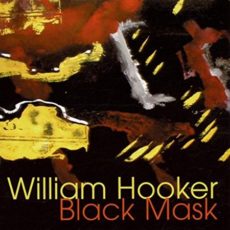
William Hooker was born on June 18, 1946 in New Britain, Connecticut. He began his music education singing in the church choir before receiving private drum lessons from the age of 10. He training continued as he played in the Nathan Hale Junior High, New Britain High School and Central Connecticut State College bands.
Starting off playing in rock and roll bands it wasn’t until he was sixteen that he got into jazz, learning standards from an older musician who taught him the essentials of leading a band. During his college years he listened to as many records and live performances as he could, gaining a wealth of knowledge. He also was a member of an organ trio as he matriculated through college and has since performed as a leader of many ensembles in San Francisco, California and New York City, leaning towards avant-garde, improvised and new music.
He has performed or recorded with Billy Bang, Thurston Moore, David Murray, David S. Ware, William Parker, Melvin Gibbs, Donald Miller, DJ Olive, Elliott Sharp, Malachi Thompson, Zeena Parkins, Lee Ranaldo, DJ Spooky, Rob Brown, Roy Campbell, Mark Hennen, Steven Bernstein, Roy Nathanson, Jason Hwang, Dave Soldier, Sabir Mateen, Glenn Spearman, Joseph Celli, Ellen Christi, Liudas Mockūnas, among many others.
Lauded by Downbeat, The Wire and the San Francisco Chronicle as an inspired and fluent drummer who gives long performances of consistent energy and is a kingpin of the free jazz world, drummer and composer William Hooker continues to perform, compose and record.
Sponsored By

www.whatissuitetabu.com

#preserving genius
More Posts: drums
Daily Dose Of Jazz…
Kenny Washington was born May 29, 1958 in Staten Island, New York and grew up in the Stapleton Projects, attending P.S. 14. He went on to study at the Fiorello H. LaGuardia High School of Music & Art and Performing Arts and privately with former Dizzy Gillespie drummer Rudy Collins. While still in his teens he worked with Lee Konitz, recording with the saxophonist’s nonet in 1977. He worked with Carter from 1978-9 and Griffin from 1980.
One of the many young hard-bop revivalists that arrived on the jazz scene in the late ’70s and early ‘80s, Kenny was in particular demand by much older musicians. He has worked with among others Ronnie Mathews, Betty Carter, Johnny Griffin, Dizzy Gillespie, Clark Terry, George Cables, Phil Woods, Benny Goodman, Lionel Hampton, Sonny Stitt, James Spaulding, Bill Charlap, Bobby Watson, Curtis Lundy, and Tommy Flanagan.
A prolific freelancer not related to bassist Peter Washington, he has compiled an enormous discography, performing on dozens of sessions by many of jazz’s most prominent figures. With a strong interest in jazz history, he has written liner notes for and/or helped prepare classic jazz re-releases by Art Blakey and Count Basie, among others.
Drummer Kenny Washington taught jazz drumming at the New School in New York City, worked as an announcer at the New Jersey jazz radio station WBGO and currently plays with Ahmad Jamal, replacing Idris Muhammad.
Sponsored By
Voices From The Community
#preserving genius
More Posts: drums
Daily Dose Of Jazz…
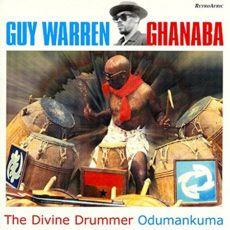
Guy Warren, also known as Kofi Ghanaba was born Warren Gamaliel Kpakpo Akwei in Accra, Ghana on May 4, 1923. Educated at the Government Boys’ School, his interest in music had him playing in the school band. After passing with distinction he enrolled as a student/founder at Ordorgonno Secondary School in 1940 and also joined the Accra Rhythmic Orchestra under Yeboah Mensah as a drummer.
He won a government teacher training scholarship to Achimota College, Accra, in 1941 with the intention of becoming a teacher at his father’s school. By 1943 Warren had enlisted in the Office of Strategic Services, a branch of the United States Army that dealt with overt and covert operations in World War II. Returning to Accra he went on to become a reporter and then held various journalistic positions before beginning to broadcast jazz programmes while working at the Gold Coast Broadcasting Service under the name Guy Warren, which he continued using for the next three decades.
Teaming up with E. T. Mensah and others they formed The Tempos, considered the greatest jazz band in Africa. In 1955 Guy left for Chicago, Illinois to join the Gene Esposito Band as co-leader, percussionist and arranger. With them he recorded his first album, Africa Speaks, America Answers on the Decca label in 1956. And confirmed his reputation as the musician who established the African presence in jazz. During his American stay, he met and worked with Duke Ellington, Max Roach, Charlie Parker, Louis Armstrong and many other leading jazz musicians.
By 1974 he had returned to Ghana, and changed his name to Ghanaba. In the 1990s, he played a role in the film Sankofa, Ghanaba continued to make music until his death. Drummer Guy Warren, pioneer of the African renaissance and author of I Have A Story To Tell that chronicled his sojourn in America, passed away on December 22, 2008.
Sponsored By

#preserving genius
Daily Dose Of Jazz…
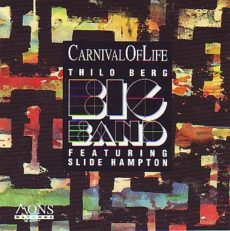
Thilo Berg was born April 23, 1959 in Dortmund, Germany and attracted attention in the 1980s, as a modern jazz drummer and big band leader. He has produced and organized more than 700 jazz, classical, R&B and soul events. Besides his own productions, he worked on large industry concerts as well as kick-off meetings and social events.
Berg completed studies as a classical percussionist with Herrmann Gschwendtner and held the position of solo timpanist and percussionist in the Southwest German Radio Symphony Orchestra and the German between 1981 and 2008. Having worked in various bands, in 1986 he formed his big band, performing with guest soloists such as Barbara Dennerlein, Ack van Rooyen, Jiggs Whigham, Barbara Morrison, Silvia Droste, Jim Snidero, Slide Hampton, Bob Mintzer, Art Farmer and Bill Ramsey.
Over seven year together they recorded three albums and the band saw coming through its ranks Till Brönner, Paul Heller, Peter Weniger, Ludwig Nuss, Mark Nightingale, Gerald Presencer, Martin Shaw, Hubert Nuss and Thilo Wagner.He also worked in smaller groups with Jack van Poll, Bobby Shew, Heiner Franz, John Gordon, Elaine Delmare and Curtis Fuller.
Drummer Thilo Berg founded the jazz and classical music label Mons Records in 1991, has worked as a music producer for Sony Music, BMG, Columbia and Universal, and continues to perform, record and produce.
Sponsored By
www.whatissuitetabu.com
#preserving genius
More Posts: drums
Daily Dose Of Jazz…
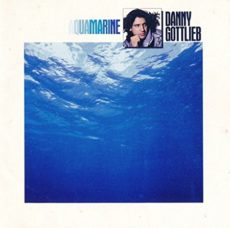
Daniel Richard Gottlieb was born in New York City on April 18, 1953. Taking lessons from Mel Lewis and Joe Morello, he graduated from the University of Miami in 1975. He became a member of the Gary Burton Quartet in 1976 with Pat Metheny, and then was one of the original members of The Pat Metheny Group from 1977–1983. Bassist Mark Egan, who was also in Metheny’s first group, teamed with Gottlieb and formed the band Elements. In 1984 he was a member of the Mahavishnu Orchestra led by guitarist John McLaughlin.
Gottlieb performed or recorded with dozens of musicians not limited to Bill Evans, Branford Marsalis, Jacqui Naylor, Chick Corea, Randy Brecker, Stan Getz, Clark Terry, Ernie Wilkins, Gerry Mulligan, Joanne Brackeen, Herbie Hancock, Hiram Bullock, Booker T and the MG’s, Hubert Laws, Lew Soloff, Jim Hall, Jimmy Haslip, Nnenna Freelon, John Scofield, Bobby McFerrin, Kenny Barron, Larry Coryell, Eddie Gómez, Mark Murphy, Miroslav Vitous, Naná Vasconcelos, Ali Ryerson, Nguyên Lê, Rufus Reid, Sting and Wayne Shorter, as well as the Carnegie Hall Jazz Orchestra, NDR Big Band, Trio, Vanguard Jazz Orchestra, Gil Evans Orchestra and WDR Big Band.
In 2004 he became the drummer for Gary Sinise’s Lt. Dan Band. He has performed on over 400 albums, earned nine Grammy Award nominations and four wins, is on the faculty of the University of North Florida as a full-time Professor of Jazz Studies. Drummer Danny Gottlieb has made over ten instructional DVDs, wrote the textbook The Evolution of Jazz Drumming, and continues to perform and record.

#preserving genius
More Posts: drums