

Daily Dose Of Jazz…
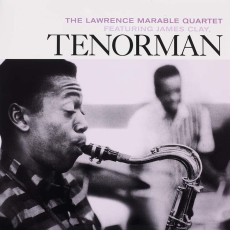
Larance Marable was born on May 21, 1929 in Los Angeles, California and was related to Mississippi riverboat bandleader Fate Marable. He first had a strong career as a bop musician in the 1950s working with the likes of Dexter Gordon and Charlie Parker among others.
In the 1960s Marable started to venture into the cool jazz idiom with musicians like Zoot Sims, George Shearing, Sonny Stitt and Chet Baker, working with the latter as early as 1956 on the album Chet Baker Sings.
In the Seventies he toured with Supersax and Bobby Hutcherson but recorded Tenorman as a leader with James Clay. He also played with Kenny Drew, Teddy Edwards, Stan Getz, Hampton Hawes, and Milt Jackson. Earlier in his career, he was known as Lawrence but the hard bop drummer Larance Marable, best known for his work as a regular member of Charlie Haden’s Quartet West, passed away on July 4, 2012 in his hometown of Los Angeles.

Take A Dose On The Road
More Posts: bandleader,drums,history,instrumental,music
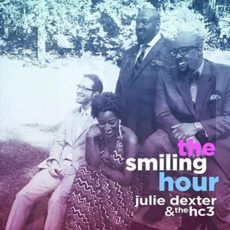
Review: Julie Dexter & The HC3 | The Smiling Hour
There is an inherent understanding of individual artistry I bring to this listening experience. I am filled with anticipation, expectation and a curiosity of what this ensemble will do with the compendium of genius represented in part by Carmichael, Ellington, Lins, Shorter and Higginbotham.
The true measurement of a vocalist is the musicians encircling her and this storyteller has chosen well. With minimalistic accompaniment, they cajole the melody along with a voice that undeniably understands what the lyricist penned. Her interpretations are pure and simple statements from the emotional depths of her soul. Of course, I speak of Julie Dexter, who brings to bear a jazz sensibility reminiscent of the legendary jazz vocalists of the last century.
But do not be deceived. This is far from a project of solo amplitude but a synergy of rhythmic voices that speak volumes. The subtleties in their playing do not bemoan their complete lack of ego as they unfold the story in each song. Like children passing notes in school, this rhythm section comprised of pianist Nick Rosen, bassist Kevin Smith and the anchor Henry Conerway III on drums, easily play off one another, keeping the improvisation of the story vibrant while maintaining the integrity of the composition.
They begin the set with an up-tempo swing invitation to come along to the Black Nile interjected with a bit of scatting on her interpretation of a Vanessa Rubin lyric. Turning to a light-hearted lament, Julie relates her loss of words that’s more a compliment that a complaint with You Leave Me Breathless. The quartet reaches back some forty years to remind the listener that Thom Bell and Linda Creed are still relevant in this modern day world of strife with People Make The World Go Round.
There are three moments of quiet during this session where the ballad takes the spotlight: Jay Livingston’s Never Let Me Go, Hoagy Carmichael’s The Nearness Of You and Good Morning Heartache by Irene Higginbotham. Kevin’s refreshing bowing and plucks, Nick’s offerings of piano accents and Henry’s brush setting tempos compliment Julie’s heartfelt interpretations.
Returning to the fun, we have Nat Adderley’s composition The Old Country, an easy romp with That’s Livin’, a tribute to Duke Ellington that showcases the trio’s interaction on the lone instrumental, Cotton Tail. Well placed in the lineup is the gentle Ivan Lins’ bossa title track The Smiling Hour giving you to sway to the rhythms before closing out the set with the classic Mongo Santamaria’s Afro Blue.
In a world where the milieu seeks style over substance, this formidable foursome is notorious for the honesty of their sound, thus proving substance is their style. There is sparseness in their articulation exhibiting a maturity that echoes less is more. Within this offering lies an unscripted collective intimacy that captures the discipline and freedom in each performance and they have given a new bloom to the classics that will stand the test of time. But what I like most about this expose they’ve aptly titled The Smiling Hour is… the promise of things to come.
carl anthony | notorious jazz | may 19, 2015
Give A Gift Of Jazz ~ Share 
#preserving genius
More Posts: bandleader,bass,drums,history,instrumental,jazz,music,piano,review,vocal
Daily Dose Of Jazz…
Billy Cobham was born William Emanuel Cobham on May 16, 1944 in Panama but moved to New York City with his family during his early childhood. A drummer from his youth, he attended New York’s High School of Music and Art. Graduating in 1962, he played in a U.S. Army Band from 1965 to 1968, followed by joining Horace Silver’s ensemble for a year. He went on to work with Stanley Turrentine, Shirley Scott and George Benson.
Branching out into jazz fusion Cobham blended elements of jazz, rock and funk to create a signature sound and recorded with the Brecker Brothers in their 1970 group Dream. From here he performed with John Abercrombie, then touring extensively with Miles Davis and recording on may albums including A Tribute To Jack Johnson.
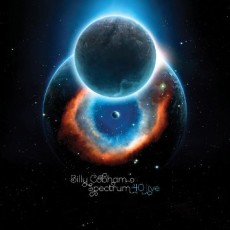
By 1970s, Cobham was working with John McLaughlin, co-founding the Mahavisnu Orchestra, released his first solo debut titled Spectrum, and played with Carlos Santana, George Duke and Jan Hammer. It was during this period that he began recording a series of groundbreaking fusion records and experiencing astral projections during his concerts.
He would record extensively for the fusion-oriented CTI Records, while simultaneously becoming a member of the New York Jazz Quartet. By the Eighties he was working with Jack Bruce & Friends, joined up with the Grateful Dead for a performance at Radio City Music Hall, formed his Glass Menagerie, releasing two albums with Michael Urbaniak, Gil Goldstein, Tim Landers and Mike Stern. The Nineties saw Billy with an all-star cast Live At The Greek with Stanley Clarke, Larry Carlton, Najee and Deron Johnson.
In the millennium a number of solo albums have followed with drummer Billy Cobham releasing more than 30 recordings under his own name, and continuing to record, perform and teach.
Put A Dose In Your Pocket
More Posts: drums,keyboard,percussion
Daily Dose Of Jazz…
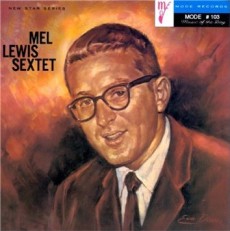
Mel Lewis was born Melvin Sokoloff on May 10, 1929 in Buffalo, New York. He started playing professionally as a teen, eventually joining Stan Kenton’s outfit in 1954. H e moved to Los Angeles to further his career in 1957 and then cross-country to New York City in 1963.
By 1966 in New York, he teamed up with Thad Jones to lead the thad Jones/Mel Lewis Orchestra. The group started as an informal jam session with the top studio and jazz musicians of the city, but eventually began performing regularly on Monday nights at the Village Vanguard. Though it was a sideline gig for the musicians, in 1979 the band won a Grammy for their album Live in Munich. When Jones moved to Denmark it became known as Mel Lewis and the Jazz Orchestra.
Mel recorded and performed in small group configurations occasionally but he led the band until shortly before his death. It has now become known as the Vanguard Jazz Orchestra and has released several CDs. Over his career Lewis recorded with Manny Albam, Chet Baker, Bud Shank, Bob Brookmeyer, Kenny Burrell, Eric Dolphy, Dizzy Gillespie, Joe Lovano, Herbie Mann, Jack McDuff, Gary MacFarland, Jimmy McGriff, James Moody, Chico O’Farrill, Shirley Scott, Sonny Stitt, Thad Jones, Pepper Adams and Jimmy Witherspoon to name a few.
In the late 1980s, Lewis was diagnosed with melanoma in his arm, then surfaced in his lungs and ultimately traveled to his brain. The drummer and bandleader played exclusively on a lighter Turkish made Istanbul cymbals that exuded a dark, overtone-rich sound, as well as his wood-shell drums were considered warm and rich in their sound. Mel Lewis passed away on February 2, 1990 in New York City, just days before his band was to celebrate its 24th anniversary at the Village Vanguard.
Dose A Day – Blues Away
More Posts: drums
Daily Dose Of Jazz…
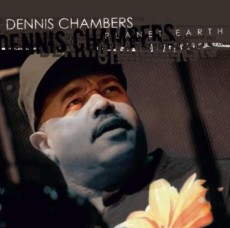
Dennis Chambers was born May 9, 1959 in Baltimore Maryland. He started playing drums at the age of 4 and his ardent interest in drums at that age propelled him to keep playing whenever he got a chance. A child prodigy started performing in clubs at the age of 6, despite his lack of formal training. Within a short time, he had been invited to perform in most nightclubs in Baltimore area.
After graduating from high school in 1978, Chambers, then 18, joined George Clinton and Parliament Funkadelic, a band he played with until 1985. He was recruited in 1981 by the Sugar Hill Label to be their house drummer and played on many Sugar Hill releases including, “Rapper’s Delight”. A sought after first call drummer for his technique and speed, as well as his ability to play “in the pocket”. His session work and performance have included John Scofield, George Duke, The Brecker Brothers, Santana, John McLaughlin, Mike Stern, CAB, Craig Howe, Sugar Hill Gang and his own band Niacin, among others.
Dennis went on to gain membership with Special EFX for two years, then joined David Sanborn, and performed on the critically acclaimed Maceo Parker live album “Roots and Grooves” with the WDR Big Band. He has played with most of the major jazz-fusion musicians.
Drummer Dennis Chambers has appeared as a featured drummer on the late Show with David Letterman’s Drum Solo Week II, alongside other such notable players Tony Royster Jr., Gavin Harris, Neil Peart and Stewart Copeland. He continues to perform, tour and record.
Dose A Day – Blues Away
More Posts: drums,percussion