

Daily Dose Of Jazz…
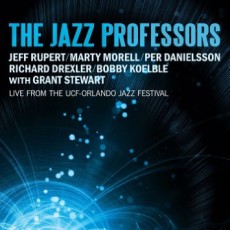
Marty Morell was born on February 25, 1944 in New York City. He attended the Manhattan School of Music studying mallets, and tympani at the Julliard School of Music.
Marty worked and/or recorded with the Al Cohn-Zoot Sims Quintet, Henry “Red” Allen, Gary McFarland, Steve Kuhn and Gabor Szabo before joining pianist Bill Evans. This would be his most prolifically recording period alongside bassist Eddie Gomez from late 1968 through 1974. After leaving the trio, Marty settled in Toronto, Canada where he became a highly sought after studio drummer and percussionist.
Morell fronted his own bands as a drummer and also worked as a vibist and pianist with his Latin band and played congas with the 1970s funk-jazz band Ravin’. He would go on to work with Don Sebesky, Pee Wee Russell, Henry “Red” Allen, Stan Getz, Kenny Wheeler, Claus Ogerman, Rob McConnell & the Boss Brass and Kenny Drew Jr.
A highly versatile musician, Marty has performed with the Toronto Symphony, Canadian opera Company, the Hamilton Philharmonic and the Royal Winnipeg Ballet and with The Phantom of The Opera orchestra in Toronto.
In 1998 he moved back to his hometown, New York City, to play the Tony award-winning musical Ragtime. After a two-year run on Broadway, he toured nationally with the show, did the Tony award winning revival of Kiss Me Kate, and Seussical: The Musical.
Marty took the drumming seat with the Duke Ellington Orchestra in 2006 and the following year accepted a professorship to teach jazz drum set and percussion at the University of Central Florida. In addition to teaching, he is currently a member of the Jazz Professors, has released two hit albums, and I has been performing a Bill Evans Tribute program with Japanese pianist Takana Miyamoto.

Inspire A Young Mind
More Posts: drums
Daily Dose Of Jazz…
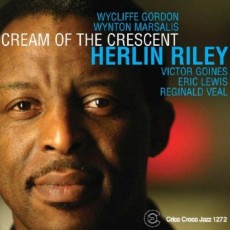
Herlin Riley was born February 15, 1957 in New Orleans, Louisiana into a musical family and first began playing the drums at the age of three. He studied trumpet throughout high school and for two years of college, but his interest in the instrument waned and he began to focus again on drums.
From 1984 to 1987, Riley was a member of Ahmad Jamal’s group. He then joined Wynton Marsalis in 1988, and toured and performed with the outfit until the group disbanded in 1994. He also performed music by Duke Ellington on the first Lincoln Center Jazz Orchestra U.S. tour in 1992.
He has made recordings with Marcus Roberts, Dr. John, Harry Connick Jr., George Benson, Bennie Wallace and Mark Whitfield. In addition, Herman has released two albums as a leader, and has played in theatrical performances, including One Mo’ Time and Satchmo: America’s Musical Legend. In 2010 he was honored with the Ascona Jazz Award from the Ascona Jazz Festival in Switzerland.
Whirlin’ Herman Riley, as he is affectionately known, is a regularly featured musician at Jazz at Lincoln Center, is a member of the Lincoln Center Jazz Orchestra, and played a large part in developing the drum parts for Wynton Marsalis’s Pulitzer Prize-winning Blood on the Fields. He is a lecturer in percussion for the jazz studies program at the Bienen School of Music at Northwestern University. The neo-bop drummer continues to perform, record and tour.
Jazz Is Global – Share
More Posts: drums
Daily Dose Of Jazz…
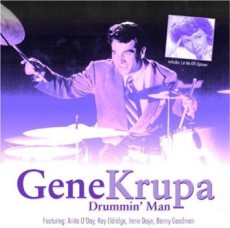
Gene Krupa was born Eugene Bertram Krupa on January 15, 1909 in Chicago, Illinois. Originally groomed for the priesthood by his parents, he He spent his grammar school days at various parochial schools and upon graduation, attended Saint Joseph’s College for a year, but later decided it was not his vocation. He studied with Sanford A Moeller and began playing drums professionally in the mid-1920s with bands in Wisconsin.
Gene broke into the Chicago scene in 1927, when he was picked by MCA to become a member of Thelma Terry and Her Playboys, the first notable American Jazz band to be led by a female musician. The Playboys were the house band at The Golden Pumpkin nightclub in Chicago and also toured extensively throughout the eastern and central United States.
Making his first recordings in 1927 with a band under the leadership of guitarist Eddie Condon and Red McKenzie, Krupa recorded others on the Chicago scene such as Bix Beiderbecke. His big influences during this time were Tubby Hall, Zutty Singleton and Baby Dodds.
By 1934 he joined Benny Goodman’s band, where his featured drum work made him a national celebrity. His tom-tom interludes on their hit “Sing, Sing, Sing” were the first extended drum solos to be recorded commercially. He made a cameo appearance in the 1941 film, Ball of Fire, in which he and his band performed an extended version of the hit Drum Drum Boogie, which he had composed with trumpeter Roy Eldridge. He also appeared in The Best Years Of Our Lives in 1946 during the waning years of the big band era.
1951 saw Gene leading a trio or quartet, appeared regularly with the Jazz At The Philharmonic band, never quite adjusted to be-bop, and by the end of the decade returned to Hollywood appearing in such films as The Glenn Miller Story, The Benny Goodman Story and had a biography starring Sal Mineo titled The Gene Krupa Story, featuring a cameo appearance by Red Nichols.
During the 1960s he played clubs in Washington, DC and New York but increasingly troubled by back pain, he retired in the late 1960s and opened a music school. He would give instruction to future KISS drummer Peter and Jerry Nolan of the New York Dolls. He occasionally played in public in the early 1970s until shortly before his death. Gene Krupa, big band drummer, band leader, actor and composer, known for his highly energetic and flamboyant style passed away on October 16, 1973.
Take A Dose On The Road
More Posts: drums
Daily Dose Of Jazz…
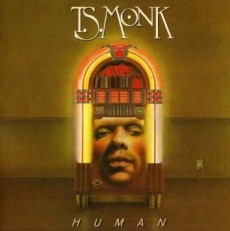
T. S. Monk was born Thelonious Sphere Monk, III on December 27, 1949 in New York City. He began his music career as a child when Max Roach gave him his first drum set before he turned 10. After graduating from school he joined his father’s trio touring with him until 1975. Leaving jazz for R&B, he toured with Natural Essence and then formed his own band with his sister.
By the 80s he was recording his debut album House of Music that charted several hits on Billboard, followed by the release of two more albums during the decade.
Shortly after his father died in 1982, in honor his father’s legacy and support the efforts of education, T. S. turned his attention toward forming the Thelonious Monk Institute of Jazz. As chairman, Monk has been at the forefront of helping to create a number of programs that range from sponsoring music education for students in the form of full scholarships to funding and supporting after-school athletic programs across the nation.
In the 1990s, Monk began his solo career taking a jazz-oriented direction and presented “A Celebration Of America’s Music” on ABC TV in 1996 and 1998 hosted by Bill Cosby and bringing together such artists as Natalie Cole, Jon Secada, Tony Bennett, k. d. lang, Herbie Hancock, Pat Metheny and Nnenna Freelon
T. S. has received the New York Jazz Awards First Annual “Recording of the Year” award and ‘Downbeat’s’ prestigious 63rd annual Album of the year Reader’s Choice Award for “Monk On Monk”. He continues in the tradition of creating great music as he performs, records and tours.
Give A Gift Of Jazz – Share
More Posts: drums,percussion
Daily Dose Of Jazz…
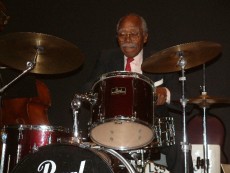
Butch Ballard was born George Edward Ballard on December 26, 1918 in Camden, New Jersey but grew up in Frankford, Pennsylvania. Following American Legion parades near his home, as a child he focused on the drummer and around 10 years old, his father bought him a set of drums. He took lessons for 75 cents each and continued his musical education Northeast High School in Philadelphia.
By 16 Ballard saw Herb Thorton, sat in and played and was invited to join a band by a man who heard him, and over the next few months rehearsed and played. In 1938, he started playing with Louis Armstrong’s band The Dukes, followed by stints with Cootie Williams, Ella Fitzgerald, Sarah Vaughan, Dinah Washington and Pearl Bailey.
Butch served in the Navy during WWII, then went to New York and worked with Eddie “Lockjaw” Davis, Eddie Vinson, Arnett Cobb and Clark Terry. He replaced Shadow Wilson in the Basie band in the late 1940s. The Fifties saw him touring Europe with the Ellington outfit and playing with Harry Carney, Paul Gonsalves, Billy Strayhorn, Kay Davis and Wendell Marshall. He declined the invite to join permanently because he didn’t want to change his drumming style to suit Duke, though he did record with him on such tunes as Satin Doll.
By the Sixties he was back in Philadelphia leading his own band and over the course of his career worked with the likes of John Coltrane, Harry “Sweets” Edison, Cat Anderson, Fats Waller, Lucky Millinder, Bootsie Barnes and Mercer Ellington among others.
In his later years he became a music teacher and played with the Philadelphia Legends of Jazz Orchestra and was honored with the Mellon Jazz Community Award for his continued education of young jazz musicians. Butch Ballard, who got the nickname after Machine Gun Butch, a character in the 1930 film The Big House, passed away on October 1, 2011.
Jazz Is Global – Share
More Posts: drums