

Daily Dose Of Jazz…
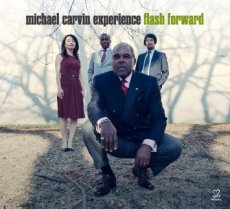
Michael Carvin was born December 12, 1944 in Houston, Texas. He began his drumming education at age six with his father, a top drummer in the city. By 12 he began playing professionally and won the first of five consecutive Texas rudimental championships.
By the Sixties he joined Earl Grant’s big band, then served a tour of duty during the Vietnam incursion. After his discharge he joined Freddie Hubbard in 1973, moved to New York and became a formidable drummer on the jazz scene. Carvin has worked with Pharoah Sanders, Lonnie Liston Smith, McCoy Tyner, Abbey Lincoln, Johnny Hartman, Jimmy Smith, Alice Coltrane, Hampton Hawes, Mickey Bass, Charles Davis and Jackie McLean among numerous others.
In addition to being a sought after sideman Michael led his own groups and recording sessions for Muse and Steeplechase for more than three decades and has recorded over 250 albums over the course of his career. A prolific contributor to the contemporary jazz scene with outstanding technique and sensitive accompanying skills he has been a staff drummer at Motown Records and has performed extensively as a studio musician and in television.
As an educator he is a world-class clinician and teacher, attracting students from all over the U.S., Europe, South America, Australia, Japan and India to study at the Michael Carvin School of Drumming in New York, graduating the likes of Victor Jones, Ralph Peterson Jr., Woody Shaw III, Babatunde Lea and Nasheet Waits.

Jazz Is Global – Share
More Posts: drums
Daily Dose Of Jazz…
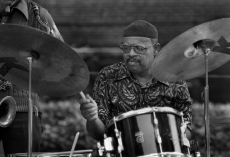
Eddie Gladden was born on December 6, 1937 in Newark, New Jersey and became interested in drums before he was ten years old. He would bet on the furniture around the house until his mother bought him a drum set. He attended Newark’s Arts High School, majored in music, and eventually got into different groups.
As an up-and-comer, Gladden held down a few jobs outside music but by his early ’20s he was working professionally around Newark. He played jam sessions, gigged and recorded with Larry Young, Freddie Roach, Woody Shaw, Johnny Coles, Connie Lester and Buddy Terry. By 1972 he was touring with James Moody, then worked with Kenny Dorham, Jimmy McGriff, Shirley Scott, Richie Cole and Horace Silver prior to joining Dexter Gordon.
Performing, recording and touring worldwide with Gordon was Eddie’s crowning career achievement with performances on such classic albums as “Live at Carnegie Hall” and “Nights at the Keystone”. Suffering a stroke in 1988 he was sidelined from music and it took several years to recuperate but finally returning to play occasionally. His list of who’s who includes but not limited to Eddie Jefferson, Cecil Payne, David “Fathead” Newman, Jimmy McGriff, Richard “Groove” Holmes, Kirk Lightsey, Clifford Jordan, Albert Dailey and Jimmy Ponder to name a few.
Eddie Gladden, the powerful, fiery and creative drummer who was easy to work with, passed away of a heart attack on September 30, 2003.
Inspire A Young Mind
More Posts: drums
Daily Dose Of Jazz…
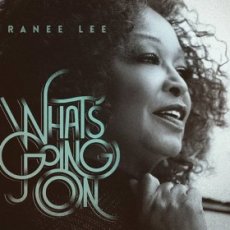
Ranee Lee was born October 26, 1942 and raised in Brooklyn, New York. She performed as a singer while in high school and after graduation she began her professional career as a dancer, and during the Seventies began playing drums and saxophone with various touring groups in the U.S. and Canada.
Settling in Montreal she turned to the stage starring in Lady Day as Billie Holiday, winning a Dora Mavor Moore Award and singing took over her past musical endeavors. She began recording and released her first album Deep Song in 1989 with bassist Milt Hinton and Oliver Jones followed up with her sophomore project Jazz On Broadway with Red Mitchell.
Over the years with numerous releases Ranee has become one of Canada’s most popular jazz vocalists and was named a member of the Order of Canada in 2006, the second highest order of merit. Her music appears in the animated short film, Black Soul, and has won a 2010 Juno Award for her album Ranee Lee Lives Upstairs.
An accomplished author, Lee has written children’s books, has performed on stage, television, film and jazz festivals, has sat on the faculty of the University of Laval in Quebec City for seven years and The Schulich School of Music of McGill University. She continues to record, perform and tour.
Inspire A Young Mind
Daily Dose Of Jazz…
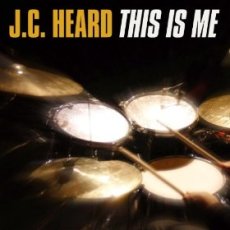
J. C. Heard was born James Charles Heard on October 8, 1917 in Dayton, Ohio. A very supportive drummer, versatile enough to fit comfortably into swing, bop and blues settings, he landed his first important professional job with Teddy Wilson in 1939. This kicked off a long and fruitful career.
By 1946 he was recording with top bop musicians such as Charlie Parker, Dizzy Gillespie and Dexter Gordon. Heard would go on to lead his own groups and in the Fifties spent a few years in Japan. Late in the decade he returned to New York and freelanced, even reuniting with Teddy Wilson in ’61.
Throughout his career J. C. would play, record and tour with Lena Horne, Coleman Hawkins, Cab Calloway, Benny Carter, Erroll Garner, Jazz At The Philharmonic, Pete Johnson, Sir Charles Thompson and Roy Eldridge among others.
In 1966 J.C. Heard moved to Detroit, worked as a bandleader and a mentor to younger musicians into the mid-’80s and passed away on September 27, 1988 in Royal Oak, Michigan.
Take A Dose On The Road
More Posts: drums
Daily Dose Of Jazz…
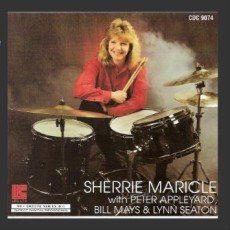
Sherrie Maricle was born Sharon Lee Maricle on September 2, 1963 in Buffalo, New York. She began playing drums professionally performing locally with Slam Stewart while studying music at SUNY-Binghamton. She then attended New York University where she completed a Masters in Jazz Performance and a Doctorate of Philosophy in Jazz Performance and Composition.
Maricle directed Saturday jam sessions at the Village Gate from 1987 until the venue closed in 1993. Beginning in 1987, she also began collaborating and leading small groups with Peter Appleyard. In the late 1980’s, she was appointed director of percussion studies at NYU.
By the 1990’s Sherrie was performing with the New York Pops, Clark Terry, Al Grey and began working with the group DIVA, currently leading the DIVA Jazz Orchestra, the DIVA Jazz Trio, and the quintet Five Play.
As an educator she teaches on the jazz faculty of the New York State Summer Music Festival, as well as running her own private drum and percussion studio. In 2009, she received the Lifetime Achievement Award at the Mary Lou Williams Women in Jazz Festival. Drummer Sherrie Maricle continues to perform, tour and record.
Take A Dose On The Road
More Posts: drums