

Three Wishes
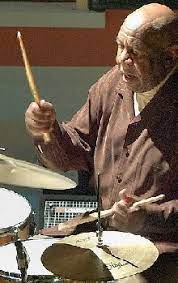
After a set, Pannonica sat down by Mickey Roker and during the conversation the subject of three wishes came up and when she inquired he answered:
- “Health first. I know I can always use that.”
- “Music – like, study some more. I don’t know what else I want, really! Because if I could maintain those two, I’d be cool. That’s enough.”
*Excerpt from Three Wishes: An Intimate Look at Jazz Greats ~ Compiled and Photographed by Pannonica de Koenigswarter

More Posts: baroness,drums,history,instrumental,jazz,music,pannonica,three,wishes
JASON MARSALIS: LIONEL HAMPTON TRIBUTE
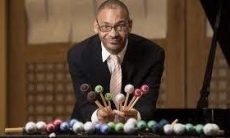
From a very young age it was clear that Jason Marsalis had what it took to be great. Jason is the son of pianist and music educator Ellis Marsalis and the youngest sibling of Wynton, Branford and Delfeayo. Together, the four brothers and their patriarch Ellis, comprise New Orleans venerable first family of jazz.
As a drummer who established his career on the red-hot New Orleans jazz scene, he spent more than a decade in the Marcus Roberts Trio, one of jazz’s most accomplished and stylistically encompassing ensembles.
Showtimes: 6:30pm & 8:30pm
Fees Applied To All Ticket Purchases
More Posts: adventure,album,club,drums,festival,genius,jazz,museum,music,preserving,restaurant,travel,vibraphone
Daily Dose Of Jazz…
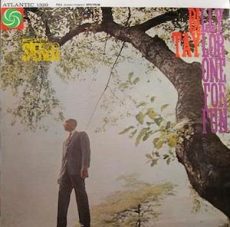
Kenny Dennis was born May 27, 1930 in Philadelphia, Pennsylvania and began his musical career in the United States Army Band, playing drums in three bands from 1948-1952. After being discharged, he connected with junior high school mate, pianist Ray Bryant and became part of The Ray Bryant Trio along with Jimmy Rowser on bass. They became the house trio at the North Philadelphia Jazz Club, Blue Note where they played with Kai Winding, Chris Connor and Sonny Stitt among others.
Moving to New York City he worked with Miles Davis, Phineas Newborn, Jr., Billy Taylor, Erroll Garner, Charles Mingus, Johnny Griffin, Slide Hampton and Sonny Rollins. In 1957, Dennis performed in Sonny Rollins’s Trio with bassist Wendell Marshall at Carnegie Hall, a historic performance that was commemorated in 2007 with a 50th anniversary concert.
Dennis migrated to California, when Miles Davis recommended him to Lena Horne. There he recorded with Davis, Michel Legrand, Charlie Mingus, Gerald Wilson, poet Langston Hughes and Nancy Wilson, the latter he married and they had a son. He would also record with Oscar Brown Jr., Langston Hughes, Dodo Greene, Roy Ayers, Mal Waldron and Burt Bacharach.
Since 1997 drummer Kenny Dennis, who never recorded as a leader, has been an assistant director of the Lab Band at the award winning Los Angeles County High School for the Arts.

More Posts: drums,history,instrumental,jazz,music
Daily Dose Of Jazz…
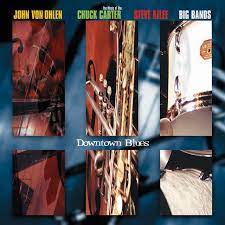
John Von Ohlen was born in Indianapolis, Indiana on May 13, 1941. He began playing trombone in middle school, and continued playing through high school. Graduating from North Central High School in 1960, he briefly studied at North Texas State, but returned to Indianapolis shortly after.
From 1967 to 1968, Von Ohlen toured with Billy Maxted’s Manhattan Jazz Band. He also worked for Woody Herman in 1967 and 1969, then with Stan Kenton from 1970 to 1972.
John went on to lead the Blue Wisp Big Band in Cincinnati from 1980 to 2018 and his own groups under his name ranging from quartets to big bands. During this period of the 1980s and 1990s, he was a member of a big band led by pianist Steve Allee.
Drummer John Von Ohlen transitioned in Cincinnati, Ohio on October 3, 2018 at the age of 77.
More Posts: bandleader,drums,history,instrumental,jazz,music
The Jazz Voyager
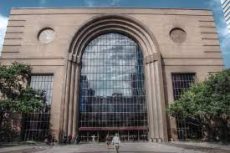
Houston is the next stop for this Jazz Voyager who will be in the audience for an evening of music, poetry and visuals this coming Friday, May 12th at the Cullen Theater. The venue, which opened in 1987, sits inside the Wortham Center Complex, seats 1100 and offers concessions, merchandise, bar and disabled access.
Native son Kendrick Scott returns home to wow those who have the temerity to attend this star-studded amalgamation of artists honoring what is now known as Sugar Land 95. Unearthed pays tribute to the tragic history behind the recent discovery of the remains of 95 Black people (94 men, 1 woman) in unmarked graves in Sugar Land, Texas. They were convict laborers, swept back into “slavery by another name” in the post-Civil War era, arrested for petty crimes like vagrancy and forced into back-breaking and often fatal labor in the sugar fields of Texas.
Joining composer and drummer Kendrick Scott are Deborah D.E.E.P. Mouton, poet, Poet Laureate Emeritus of Houston, visual artist Robert Hodge, the Harlem String Quartet featuring violinists Ilmar Gavilán, Melissa White, violist Jaime Amador, and cellist Felix Umansky, pianist Gerald Clayton, saxophonist Walter Smith III, and bassist Joe Sanders.
Located in the city’s theater district in the heart of downtown at 501 Texas Avenue, Texas 77002 and can reach the venue by phone at 713-524-5050. You can always get ticket information at boxoffice@dacamera.com.

More Posts: adventure,album,club,drums,festival,genius,jazz,museum,music,preserving,restaurant,travel