

Daily Dose Of Jazz…
Bobby Orr was born Robert on August 15, 1928 in Cambuslang, Scotland and began playing drums at the age of three, encouraged by his father, a drum major. From the age of 16 he started playing the trumpet, as a member of Basil Kirchin’s band; however, he had difficulties with his embouchure and returned to the drums.
In the 1950s and 1960s, Orr was a fixture on the London jazz scene, including as a founder member of Joe Harriott’s quintet, which he left and subsequently rejoined, and played for Tubby Hayes among others. He also served as a house drummer at Ronnie Scott’s Club, backing top American visitors such as Zoot Sims, Al Cohn, Milt Jackson, and Dizzy Gillespie.
He had three tours with Benny Goodman, then as a freelance musician from 1970, he also toured with Billy Eckstine and Sammy Davis Jr., as well as Tommy Whittle and Don Lusher. In the 1990s, Bobby toured extensively with the UK Glenn Miller Tribute Band.
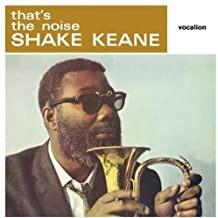
Over the course of his career he recorded with Sandy Brown, George Chisholm, Digby Fairweather, and Shake Keane. Drummer and session musician Bobby Orr, who played on many recording sessions for pop and rock artists such as Donovan and Dusty Springfield, passed away on March 12, 2020.

More Posts: drums,history,instrumental,music

Daily Dose Of Jazz…
Bruz Freeman was born Eldridge Freeman on August 11, 1921 in Chicago, Illinois. With his brothers, guitarist George Freeman and tenor saxophonist Von Freeman, he played for several years in the house band at the Pershing Hotel.
In 1950, he was a member of John Young’s trio with LeRoy Jackson on bass, and recorded with Young’s orchestra backing vocalist Lurlean Hunter. That same year with his brothers George and Von, originally misidentified as Claude McLin, LeRoy Jackson, and Chris Anderson, he played with Charlie Parker shortly before his death, at a jam session recorded at Bird’s apartment which was released in 1960 by Savoy Records.
The mid-1950s saw him as a member of the Hampton Hawes Quartet, with Red Mitchell and Jim Hall, and with line-ups led by Herb Geller. In 1977-8, he joined a short-lived band based in California, led by Kenny Mann and with Britt Woodman on trombone. Drummer Bruz Freeman, who was also known as Buzz and the uncle of Chico Freeman, the son of Von Freeman, passed away in 2006.
More Posts: drums,history,instrumental,music

Daily Dose Of Jazz…
William E. Clark was born July 31, 1925 in Jonesboro, Arkansas. He worked professionally starting shortly after World War II, playing drums with Jimmy Jones, Dave Martin, Mundell Lowe, and George Duvivier.
He was principally active in the 1950s, working with Lester Young, Mary Lou Williams, Lena Horne, Hazel Scott, Duke Ellington, Don Byas, Arnold Ross, Bernard Peiffer, George Shearing, Toots Thielemans, Ronnell Bright, Jackie Paris, and Rolf Kuhn. Later in his career Bill worked with Eddie Harris and Les McCann.
Drummer Bill Clark, known for his versatility playing Dixieland, swing, bebop, avant-garde and fusion, passed away on July 30, 1986 in Atlanta, Georgia.Share a dose of a Jonesboro drummer to inspire inquisitive minds to learn about musicians whose legacy lends their genius to the jazz catalog…

More Posts: drums,history,instrumental,jazz,music
Daily Dose Of Jazz…
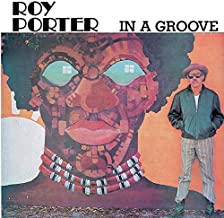
Roy Lee Porter was born on July 30, 1923 in Walsenburg, Colorado and when he was eight his family moved to Colorado Springs. He began playing drums in rhythm and blues bands while a teenager, then attended Wiley College in Texas briefly, where trumpeter Kenny Dorham was a fellow student.
Replacing Joe Marshall he joined Milt Larkin’s band in 1943. After military service, Roy settled in Los Angeles, California and soon was in demand by some of the pioneers of bebop. He worked with Teddy Bunn and Howard McGhee, making his first recordings with the latter. In 1946, he backed Charlie Parker on such Dial classics, A Night In Tunisia, Yardbird Suite, Ornithology and Lover Man.
Porter played on Los Angeles’ Central Avenue with such bebop players as Dexter Gordon, Wardell Gray and Teddy Edwards, and in San Francisco, California with Hampton Hawes and Sonny Criss. He organized a big band and went on the road in 1949 that included Art Farmer, Jimmy Knepper and Eric Dolphy.
During the 1950s he was inactive as a jazz musician due to drug problems and returned to music only infrequently afterwards. Drummer Roy Porter passed away on January 24 or 25, 1998 in Los Angeles.
More Posts: bandleader,drums,history,instrumental,music
Three Wishes
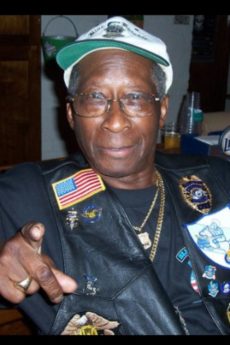
Nica asked Frankie “Downbeat” Brown what he would wish for if he had three and he told her:
1. “A successful music career. By that I mean year~round.”
2. “That I could have my home, car, and a few dollars in the bank, so that, if I get old, I’m covered, in fact.”
3. “The third one would be for my two sons and my daughter to be successful in whatever they do. In other words: behind me.”
*Excerpt from Three Wishes: An Intimate Look at Jazz Greats ~ Compiled and Photographed by Pannonica de Koenigswarter

More Posts: baroness,drums,history,instrumental,jazz,music,pannonica,three,wishes