

Daily Dose Of Jazz…
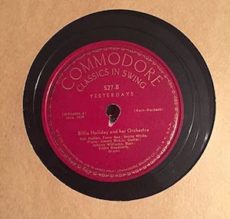
Eddie Dougherty was born July 17, 1915 in Brooklyn, New York. Playing drums from age 13, then started working with Billy Gusak before Dickie Wells’s band at 18 in Harlem, New York by the beginning of the 1930s. He gigged regularly up through 1940 with Kenny Watts & His Kilowatts. His recording career started as a sideman in the 1930s, with Taft Jordan, Frank Froeba, Mildred Bailey, Harry James, Billie Holiday, Frankie Newton, Pete Johnson, and Meade Lux Lewis.
Alongside this he held a gig as the drummer for Keny Watts and his Kilowatts through 1940. He subbed for Dave Tough in the Bud Freeman Orchestra in 1940, then played with Art Tatum, Joe Sullivan, Benny Carter, Benny Morton, and others in the first half of the 1940s. He worked with James P. Johnson several times, including on 1944 recording sessions. His later work included recordings with Cliff Jackson, Mary Lou Williams, Clyde Bernhardt, Wilbur De Paris, Teddy Wilson, and Albert Nicholas. He was still active into the 1980s.
When he finally retired from full-time music decades later, he had amassed a list of credits that not only rivals the length of some short stories, but represented a thorough involvement in many different styles of jazz, vocal music, and rhythm & blues. Drummer Eddie Dougherty passed away on December 14, 1994 in Brooklyn.

More Posts: drums,history,instrumental,jazz,music
Daily Dose Of Jazz…
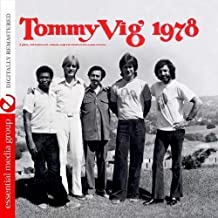
Tommy Vig was born on July 14, 1938 in Budapest, Hungary. Internationally recognized as a child prodigy by the age of 6, he played drums with his father, clarinetist Gyorgy Vig and performed concerts on Budapest State Radio, at the City Theatre, the Academy of Music, and the National Circus. By age 8, he made the album The World Champion Kid Drummer with Austrian jazz players in Vienna, Austria including Hans Koller, Ernst Landl, and the Hot Club of Vienna for Elite Special. The following year his drumming won him the 1947 MGM-Jazz Competition in Budapest and as a result made several recordings with the Chappy’s Mopex Big Band for His Master’s Voice.
Completing his studies at the Bartók Conservatory in 1955 and the Ferenc Erkel Music High School in 1956, due to the crushing of the Hungarian Revolution of 1956, he fled to Vienna, where he played concerts with Fatty George and Joe Zawinul. A move to the United States saw him on scholarship at Juilliard School of Music. Since then he has been writing and conducting concerts.
In 1970 Vig relocated to Los Angeles, California where he worked in the studios of Warner Bros., Fox, Universal, CBS, Columbia, ABC, Disney, Goldwyn, MGM, and Paramount. He played on 1500 studio sessions in Hollywood, two Academy Awards, and produced, directed, and conducted the official 1984 Olympic Jazz Festival for the Los Angeles Olympic Organizing Committee. He wrote the music for 30 films and television shows, and added percussion on the recording of Quincy Jones’s soundtrack to Roots.
Vig has worked with Red Rodney, Don Ellis, Cat Anderson, Terry Gibbs, Art Pepper, Milcho Leviev, Joe Pass, the Miles Davis-Gil Evans Big Band. Frank Sinatra, Sammy Davis Jr., Tony Curtis, Woody Allen, Judy Garland, Tony Bennett and Rod Stewart.
Since 2006, vibraharpist, drummer, percussionist, xylophonist and marimba player Tommy Vig, who has won several awards, has been performing concerts with his wife, appearing on radio and television, and recording albums.
More Posts: bandleader,drums,educator,history,instrumental,jazz,marimba,music,percussion,vibraharp,xylophone
Three Wishes
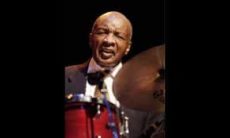
When Ed Thigpen was approached by Nica and asked what his three wishes would be if given he told her: 1. “That there would be love amongst all people in the world~complete, you understand.” 2. “That I always keep my family happy. You know, my wife. It would be nice to say “in sickness and in health.” 3. “I’d like to be a master, or a complete musician. Know music completely, inside out.”
*Excerpt from Three Wishes: An Intimate Look at Jazz Greats ~ Compiled and Photographed by Pannonica de Koenigswarter

More Posts: baroness,drums,history,instrumental,jazz,music,pannonica,three,wishes
Daily Dose Of Jazz…
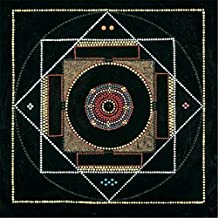
Sameer Gupta was born July 1, 1976 in San Francisco, California. Now based in Brooklyn, New York he is a co-founder of Brooklyn Raga Massive, the jazz ensemble The Supplicants and drummer for the Marc Cary Focus Trio.
He has also worked with vidyA, Kosmic Renaissance, Grachan Moncur III, Victor Goines, Vincent Gardner, Sekou Sundiata, Sonny Simmons, Marcus Shelby, Calvin Keys, Richard Howell, Dayna Stephens, and Julian Lage.
Percussionist, tabla player, and composer Sameer Gupta continues to compose, perform and record.
More Posts: drums,history,instrumental,jazz,music,percussion,tabla
Daily Dose Of Jazz…
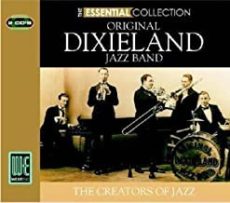
Antonio Sparbaro was born on June 27, 1897 in New Orleans, Louisiana to an immigrant Sicilian family. Early in his career he played with the Frayle Brothers Band, possibly as early as 1911, and the Reliance Band of Papa Jack Laine. He did side work with Merritt Brunies and Carl Randall.
He joined the Original Dixieland Jass Band for their initial recordings in 1917 and he became its leader in the 1940s, remaining a member of the ensemble until its dissolution in the 1960s. He was the only founding member still in the group at that time. Sbarbaro composed for the group, writing the tune Mourning Blues among others. He remained a fixture of Dixieland jazz performance for most of his life. He played later in life in New Orleans with Miff Mole, Big Chief Moore, Pee Wee Erwin, and Eddie Condon.
He played at the New York World’s Fair in 1941 and with Connee Boswell in the 1950s. Quitting music in the 1960s due to the popularity of rock & roll, drummer Tony Sparbaro, known professionally as Tony Sbarbaro or Tony Spargo, passed away on October 30, 1969 in New York City. He was the drummer of the Original Dixieland Jass Band for over 50 years and their tune Darktown Strutters’ Ball was inducted into the Grammy Hall of Fame in 2006

More Posts: drums,history,instrumental,jazz,music