

Daily Dose Of Jazz…
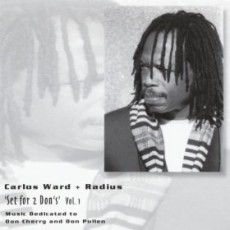
Carlos Ward was born on May 1, 1940 in Ancon, Panama and was raised in Panama City. His first instrument was the ukulele and by age 12 he took to the clarinet. His early influences were his aunt and uncle, both pianist, the former classical. He listened to Bob Crosby’s Dixieland clarinet on the radio as were as calypso.
By 1952 his family relocated to Seattle, Washington where his friend Marion Evans introduced him to the alto saxophone. Through high school he hung out with drummer Doug Robinson and the rock group The Playboys. Ward would go on to attend the Navy School of Music and worked with Albert Mangelsdorff when he was stationed in Germany.
He listened to Monk and Coltrane but it was Ornette Coleman’s “The Shape of Jazz to Come” that made the greatest impression on him. After a prophetic meeting with John Coltrane, in 1965 he took his advice and moved to New York. This led to his first major effort was his work with John Coltrane’s unrecorded octet in the period between 1965-66. He had a long-lasting association with Don Cherry from 1973 to 1980 and beyond. His duet association with pianist Abdullah Ibrahim has also been significant to his career.
Ward was a member of Cecil Taylor’s group in the period immediately after altoist Jimmy Lyons death in 1986. He also was a member of The Ed Blackwell Project and led his own quartet in 1987.
Alto saxophonist and flautist Carlos Ward has four albums as a leader and has some 15 as a sideman while working with Carla Bley, Roswell Rudd and the Jazz Composers Orchestra, Karl Berger, Abdullah Ibrahim, Paul Motian, Sunny Murray, Sam Rivers, Rashied Ali and Don Pullen & The African-Brazilian Connection.
It is unfortunate for the industry that an injury to his playing hand has sidelined this musician for many years. However, Ward is readying himself for a return to the scene and hopefully we will hear from future generations of players who will partake of the opportunity to glean knowledge from this master.

Put A Dose In Your Pocket
Daily Dose Of Jazz…
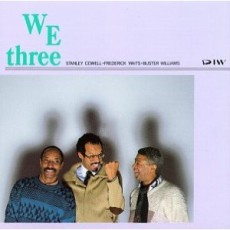
Freddie Douglas Waits was born on April 27, 1943 in Jackson, Mississippi. He played flute early on and majored in flute in at Jackson Street College but soon turned to drums as a profession. His earliest gigs were with blues artists including Memphis Slim and John Lee Hooker followed by performing soul music.
By 1962 Waits was in Detroit playing with the Jimmy Wilkins Orchestra, then the Johnny Winter band. A move to Los Angeles put him with the Gerald Wilson Orchestra before relocating to New York in the mid-‘60s. This period began some of his most important musical collaborations with Sonny Rollins, Andrew Hill, McCoy Tyner, Lee Morgan, Pharoah Sanders, Gene Harris and Max Roach.
Freddie was a founding member of M’Boom, the group Colloquim and during the Eighties played with Bill Dixon and Cecil Taylor. A respected sideman, he never led a recording session. However, he left a legacy of music along with his son, drummer Nasheet Waits.
Hard bop and post-bop drummer Freddie Waits passed away on November 18, 1989 in New York City.
Inspire A Young Mind
Daily Dose Of Jazz…
Alejandro Santos was born on April 11, 1956 in Buenos Aires, Argentina. He is widely-recognized both in his home country of Argentina and internationally as an extraordinary flutist and multi-instrumentalist playing the piccolo, bass flute, native wood-flutes, tenor and soprano sax, piano, and synthesizers.
He has developed a career as a composer with a unique style, which fuses modern jazz with traditional Argentinean rhythms like candombe, tango, and folk music. He has collaborated on recording and performing projects with Dino Saluzzi, Gonzalo Rubalcaba, Anthony Jackson, Bob Moses, Claudio Roditi, Toquinho, Maria Creuza, Fito Paez and others. Since 2001 he has steadily worked with Al Di Meola’s World Symphony and has recorded on De Meola’s latest album “Flesh on Flesh”.
Alejandro released three solo albums with RCA and GNA/Invasion Records, one of them: 5 Carnavales 4, released in the States, received excellent reviews and reached into the top 30 jazz playlist of the Gavin Report magazine. Alejandro Santos currently performs with his quartet that includes bandoneon, bass and drums.
Jazz Is Global – Share
More Posts: flute,piano,piccolo,saxophone,synthesizer
Daily Dose Of Jazz…
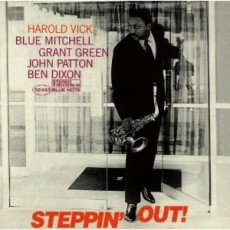
Harold Vick was born on April 3, 1936 in Rocky Mount, North Carolina. His uncle, reed player Prince Robinson gave him a clarinet when he was thirteen and two years later he switched to the tenor saxophone. He rose to prominence playing with organ combos in the mid-60s performing and recording with Jack McDuff, Jimmy McGriff and Big John Patton among others.
During this period in his career Harold also performed and recorded as a leader releasing eight albums between 1963 and 1977. He would work with the likes of Blue Mitchell, Ben Dixon, John Patton, Bobby Hutcherson, Walter Bishop Jr., Grady Tate and Teddy Charles, just to name a few. Also working as a sideman he performed and recorded with Grant Green, Shirley Scott, Nat Adderley, Aretha Franklin, Dizzy Gillespie, Mercer Ellington, Sarah Vaughan, Billy Taylor, Donald Byrd, Horace Silver, Ray Charles and Gene Ammons.
He played in films such as “Stardust Memories” and “Cotton Club”, in which he played a musician. He also was in the Spike Lee film “School Days” and was featured on the soundtrack for “She’s Gotta Have It”.
Harold Vick, tenor saxophonist and flautist in the hard bop and soul jazz genres passed away on November 13, 1987.
Daily Dose Of Jazz…
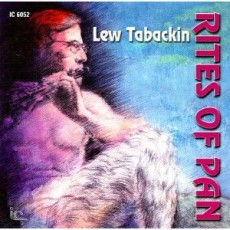
Lew Tabackin was born March 26, 1940 in Philadelphia, Pennsylvania. Tabackin studied flute at the Philadelphia Conservatory of Music and also studied music with composer Vincent Persichetti. Graduating in he did a stint with the Army, and then worked with Tal Farlow. He also worked in a combo that included Elvin Jones, Donald Byrd and Roland Hanna. He eventually took a chair in the band of the Dick Cavett Show.
He formed a quartet with Toshiko Akiyoshi in the late 1960s, and in 1973 co-founded the Toshiko Akiyoshi – Lew Tabackin Big Band that would later transform into the Toshiko Akiyoshi Jazz Orchestra featuring Lew Tabackin. He would be the principal soloist for the big band/orchestra from 1973 through 2003. The orchestra would play bebop in the Duke Ellington-influenced arrangements and compositions by Akiyoshi.
Tabackin has become a great supporter of The Jazz Foundation of America in their mission to save the homes and the lives of America’s elderly jazz and blues musicians including musicians that survived Hurricane Katrina. He has been seated on the Advisory Committee of the Foundation since 2002.
Saxophonist Lew Tabackin has some 54 albums under his belt as a leader and co-leader as well as another twenty-eight in his catalogue as a sideman. He has been a Down Beat Critic’s and Reader’s Poll winner numerous times for Jazz Album of the Year, Big Band and Flute, has been nominated for a Grammy for Best Jazz Instrumental Performance – Big Band ten times as well as Stereo Review magazine Jazz Album of the Year and recognition in Japan winning four Gold and Silver Disks from Swing Journal. He continues to perform and record.