

Daily Dose Of Jazz…
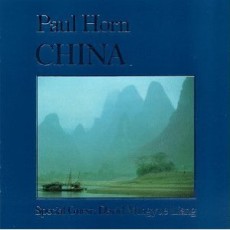
Paul Horn was born March 17, 1930 in New York City and began playing piano at the age of 4 and the saxophone at 12. He studied the flute in 1952 at the Oberlin Conservatory of Music in Ohio and then earned a master’s degree from the Manhattan School of Music.
Moving to Los Angeles in 1956 Paul played with Chico Hamilton’s Quintet till 1958 and two years later recorded his debut album “Something Blue”. By now an established West Coast session player he played on the Duke
Ellington Orchestra’s Suite Thursday and during this period worked with Nat King Cole, Tony Bennett and others. In 1970, he moved Vancouver Island, formed his own and has recorded film scores for the National Film Board of Canada.
Widely known for his innovations on both metal and traditional wood flutes, Horn has recorded some truly exotic albums. Perhaps most famous of these are his “Inside” recordings, which feature airy, echoing sounds created in places of spiritual importance. While he is undoubtedly a jazz musician, many of his works defy categorization. As well as the Inside series, he has recorded other albums of jazz with musicians from a range of cultures and backgrounds including China and Africa. He continues to perform and record.

Daily Dose Of Jazz…
Bobby Jaspar was born February 20, 1926 in Liege, Belgium and at a very young age learned to play piano and clarinet. He later took up the tenor saxophone and flute that became his working instruments. Bobby took his first steps in the jazz world with the Bop Shots band but in 1950, Jaspar moved to Paris, played and recorded with the best musicians of the era and met his future wife, Blossom Dearie.
In 1956, Jaspar was persuaded to try his luck in the U.S. where his reputation in jazz circles had preceded him. He played and recorded with J. J. Johnson, Kenny Burrell, Miles Davis, John Coltrane, Toshiko Akiyoshi, Donald Byrd and many others.
In 1961/1962, Jaspar returned to Europe for a year for a series of concerts and a number of recordings. With his colleague, Belgian guitarist Rene Thomas, they formed a successful quintet and in some sessions, this was expanded to a powerful sextet with American trumpeter Chet Baker.
Bobby Jaspar, tenor saxophonist and flautist of the hard bop and cool jazz genres, died from a heart attack in New York City on February 28, 1963 at age 37.
Daily Dose Of Jazz…
Henry Threadgill was born February 15, 1944, in Chicago, Illinois and first performed as a percussionist in his high school marching band before taking up the baritone saxophone and later a large portion of the woodwind instruments. He soon settled upon the alto saxophone and flute as his main instruments.
He was one of the original members of the legendary AACM – Association for the Advancement of Creative Musicians in Chicago, working under the guidance of Muhal Richard Abrams before leaving to tour with a gospel band. In 1967, he enlisted in the Army, playing with a rock band in Vietnam through 1968. Discharged in 1969 he returned to Chicago, formed a trio that eventually became “Air”, one of the most celebrated and critically acclaimed avant-garde jazz groups of the 1970s and 1980s.
Threadgill had moved to New York City and began pursuing his own musical visions, exploring musical genres in innovative ways with his first nonet X-75. In the early Eighties, Threadgill created the Henry Threadgill Sextet, his first critically acclaimed ensemble as a leader, with two drummers as a single unit. He has recorded three albums under X-75 for About Time Records, reformed his sextet and released three albums on the Novus label.
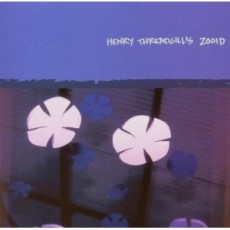
Since the 90s Threadgill has continued to compose, create, perform and record music with various group configurations such as “Very Very Circus” and “Zooid” utilizing electric guitars, French horn, Latin percussion, accordion, cello and tuba.
Daily Dose Of Jazz…
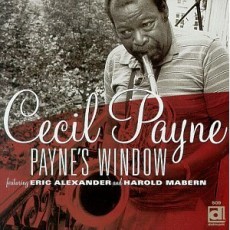
Cecil Payne was born December 14, 1922 in Brooklyn, New York. He received his first saxophone at age 13, asking his father for one after hearing Count Basie’s version of Honeysuckle Rose performed by Lester Young and took lessons from Pete Brown, a local alto sax player.
Payne began his professional recording career with J. J. Johnson on the Savoy label in 1946. During that year he played with Roy Eldridge, through whom he met Dizzy Gillespie. His earlier recordings would largely fall under the “swing” category, until Gillespie hired him, a relationship that lasted until 1949.
By the early 50s, Cecil found himself working with Tadd Dameron, Illinois Jacquet, James Moody, Machito, Woody Herman, Count Basie and freelancing around New York, frequently performing with Randy Weston. Throughout his fifty plus year career baritone saxophonist he recorded as a leader and a sideman for Decca, Savoy, the Charlie Parker label, Muse, Spotlite and Strata East, and regularly for Delmark Records in the nineties, when he was in his seventies, and on into the new millennium.
Cecil Payne, baritone and alto saxophonist and flautist, passed away on November 27, 2007. Although largely unknown to the public he was one of the pioneers in adapting the baritone saxophone to bebop and post-bop.
Daily Dose Of Jazz…
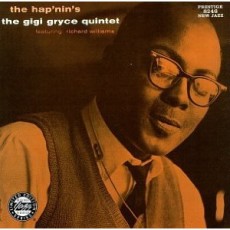
Gigi Gryce was born George General Grice, Jr. on November 28, 1925 in Pensacola, Florida but grew up in Hartford Connecticut. He studied classical composition at the Boston Conservatory, studied with private teachers, then won a Fulbright scholarship and continued his studies in Paris.
His performing career was relatively short in comparison to other musicians of his generation, his work little known, however, several of his compositions have been covered extensively – “Minority,” “Social Call,” and “Nica’s Tempo” are frequently heard in mainstream jazz venues. Gigi’s compositional bent includes harmonic choices similar to those of Benny Golson, Tadd Dameron and Horace Silver in the contemporaneous period. Gryce’s playing, arranging, composing is consonant with the hard bop classic period was generally considered to be 1953-1965.
During the 1950s he achieved some renown for his innovative bebop playing, his primary instrument being the alto saxophone. Among the musicians with whom Gryce performed were Thelonious Monk, Tadd Dameron, Lionel Hampton, D, Howard McGhee, Clifford Brown, Art Farmer, Lee Morgan, Max Roach, Oscar Pettiford, Teddy Charles and Benny Golson. In 1955, Gryce formed the Jazz Lab Quintet, which included trumpeter Donald Byrd.
In the mid-1950s he converted to Islam and adopted the name Basheer Qusim. By the 60s he stopped using the name Gigi Gryce partly due to personal problems that took their toll on his financial and emotional state, withdrawing from performing. During this last period of his life he taught at a series of public schools in Long Island and New York City and the Community Elementary School 53 on 168th Street in the Bronx, the last school renamed the Basheer Qusim School in his honor.
Gigi Gryce, saxophonist, flautist, clarinetist, composer, arranger, educator, and big band leader died of an apparent epileptic seizure on March 14, 1983 in Pensacola, Florida.