

Daily Dose Of Jazz…
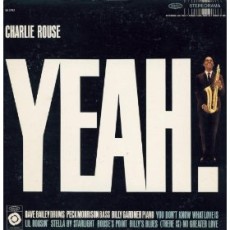
Charlie Rouse was born on April 6, 1924 in Washington, DC. He played tenor saxophone and flute, developing a distinctive nasal tone complimenting a bop-oriented style. Rouse moved very little, looked straight-ahead and wore a solemn expression when he played. He became highly influential by association with Thelonious Monk from 1959 to 1970. He would later become a founding member of Sphere, a band that paid tribute to Monk’s music.
Throughout the forties Rouse worked with Billy Eckstine, Dizzy Gillespie, Duke Ellington, made his recording debut with Tadd Dameron, and as the 50’s opened he was a part of Count Basie’s octet, and worked with Clifford Brown and Oscar Pettiford. He co-led the Jazz Modes with Julius Watkins and would go on to work with Mal Waldron. He would record, as a leader gaining some recognition by the eighties; with Carmen McRae on her classic Carmen Sings Monk project, and his last recording would be a Monk tribute concert.
The hard bop tenor and flautist died of lung cancer at the age of 64 in Seattle, Washington on November 30, 1988. Coincidently, Monk’s patroness NIca de Koenigswarter died the same day in New York City.

Daily Dose Of Jazz…
James Moody was born March 26, 1925 in Savannah, Georgia but grew up in New Jersey. He was attracted to the saxophone after hearing George Holmes Tate, Don Byas, and Count Basie. Joining the U.S. Air Force in 1943 he played in the “Negro Band” on the segregated base. Following his discharge, he began playing bebop with Dizzy Gillespie for two years. One of his colleagues was Kenny Barron, who would become an important collaborator.
He recorded his first record for Blue Note in 1948, the first in a long career playing both saxophone and flute. Relocating to Europe for three years stating he had been scarred by racism in the U.S., it was during this period that his acclaimed hit “Moody’s Mood For Love” was recorded and he added the alto to his repertoire. Returning to the States in 1952 he recorded with Prestige, played flute and sax with Pee Wee Moore and by the 60’s rejoined Dizzy.
Throughout the seventies he worked in Las Vegas show bands before returning to jazz as a leader and playing with the Lionel Hampton’s Golden Men Of Jazz. Preferring the tenor, Moody alternates with the alto and adding flute on many of his recordings.
The octogenarian continued to be a globetrotter with his quartet featuring pianist Renee Rosnes, bassist Todd Coolman and drummer Adam Nussbaum. He is a member of the Dizzy Gillespie Alumni All-Stars Big Band, often collaborating with conductor Jon Faddis, and worked alongside Jon in the WDR Big Band in Cologne, Germany. James Moody has been an institution in jazz since the 1940’s playing tenor, flute and occasionally the alto saxophone.
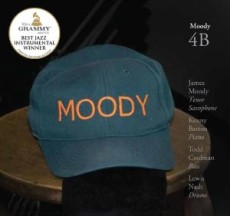
Saxophonist, flautist and composer James Moody passed away of complications from pancreatic cancer at age 85 in San Diego, California on December 9, 2010. Two months later he was posthumously awarded the Grammy Award for Best Jazz Instrumental Album for his recording “Moody 4B”, and named in his honor, the New Jersey Performing Arts Center hosts the James Moody Democracy of Jazz Festival.
Daily Dose Of Jazz…
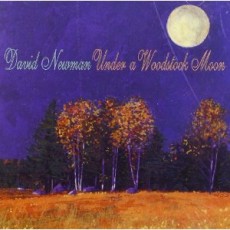
David Newman Jr. was born on February 24, 1933 in Corsicana, Texas. He got his nickname in high school when his then music teacher noticed his upside down sheet music tapped him on the head with his conductors baton and called him “Fathead”. Preferring to be called David, the jovial Newman accepted the nickname that stuck with him his whole life.
Moving to Dallas he graduated from Lincoln High School, began playing flute and tenor at local shows, and received a scholarship to Jarvis Christian College where he studied theology and music for two years. This brief stay was followed with him on the road touring with Bester Smith (Charlie Parker’s mentor) and dance hall one-nighters with T-Bone Walker.
Newman’s professional career as a musician began in 1954 as a member of the Ray Charles Band playing baritone sax that was the beginning of a twelve-year relationship followed by ten years with Herbie Mann and playing with Red Garland for a period in the 70’s. By the late 90’s he was recording for HighNote Records and a long and profitable relationship started producing some ten albums.
For over a half century, Newman recorded over thirty-eight albums under his own name beginning in 1958 with Fathead – Ray Charles Presents David Fathead Newman. Although best known for his hard bop style, he’s recorded with James Clay, Cannonball Adderley, Stanley Turrentine, Aretha Franklin, B. B. King, Natalie Cole, Average White Band, Eric Clapton, Jimmy McGriff and many others.
Always a musicians’ musician, Newman has influenced whole generations of saxophone players of different genres including R&B, blues and country, and texmex. On January 20, 2009, saxophonist and flautist David “Fathead” Newman died from complications of pancreatic cancer in Kingston, New York at age 75.

Daily Dose Of Jazz…
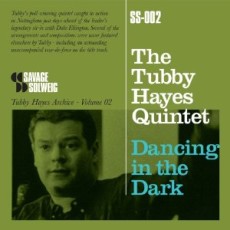
Tubby Hayes was born Edward Brian Hayes on January 30, 1935 in London and started playing the violin at the age of 8, changed to the tenor at twelve and started playing professionally at fifteen. His early influences were Charlie Parker, Sonny Rollins and Stan Getz. In 1951 he joined Kenny Baker and playing in the big bands of Ambrose, Vic Lewis and Jack Parnell.
Tubby led his own octet in 1956 and encourage by Victor Feldman he started playing the vibes in December of that year. Following his octet, Tubby co-led the Jazz Couriers with Ronnie Scott from ’57 to ’59 and toured Germany with Kurt Edelhagen. His international reputation grew rapidly and he was the first British contemporary to appear regularly in the U.S. at the Blue Note, the Boston Jazz Workshop and Shelly Manne’s Manne-Hole.
In 60’s London he led his own big bands, hosted his own TV show, sat in with Duke Ellington’s orchestra, and with Charles Mingus, Dave Brubeck and others. Tubby appeared in All Night Long, and with his own quintet in The Beauty Jungle and House of Horrors.
Hayes was a virtuoso musician on tenor and flute, an excellent vibist, and a composer/arranger of rare talent. He toured extensively through Europe playing the major festivals, such as Antibes, Lugano, Vienna and Berlin. He was one of the few Brits that recorded as a leader of all-American groups with Clark Terry, Roland Kirk and James Moody.
Plagued with heart trouble he underwent open-heart surgery in the late Sixties, putting him out of action until 1971. Working again was brief and while undergoing a second heart operation, Tubby Hayes died on June 8, 1973 in Hammersmith, London, England. He was just 38 years old.

More Posts: flute,saxophone,vibraphone
Daily Dose Of Jazz…
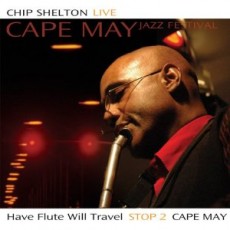
Chip Shelton was born Clarence Elmo Shelton, Jr. on December 2, 1944 in Welch, West Virginia. He studied drums with his multi-instrumentalist record collector father from age 5 to 7. He studied piano from age 8 to 11 and clarinet from age 11 to14 and finally settled on flute. A well-rounded student he found time to participate in choir, dance and sports.
Shelton attended high school in Dayton, Ohio, followed by 3 years of pre-med at University of Cincinnati, experimenting with his own brand of self-taught improvisation on piano, clarinet, and saxophone. At age 20, he became more focused musically and while at Howard University he jammed with notables like Donny Hathaway, Sherry Winston, and Lloyd McNeil, and led his own straight-ahead jazz quintet, the “DMZ Revisited”.
At age 24 Chip moved to New York, studying and/or performed with Bill Barron, James Moody, Hank Mobley, Irene Reid, Jimmy Ponder, Frank Foster, Jimmy Heath, Frank Wess, Hubert Laws, Ernie Wilkins, Joe Newman, and many others around New York and New Jersey.
Chip Shelton has gone on to perform live alongside Greg Bandy, Peter Bernstein, Philip Harper, Herman Foster, Lou Donaldson, and TK Blue. In the 90s he would record for with Rise Up Label, Satellites Records, and performed with Louis Hayes, Bob Baldwin, Roy Ayers, Roy Merriwether, John Hicks, Lynn Seaton and numerous others. He has recorded nearly a dozen albums and continues to compose, perform and tour.

More Posts: flute