

Daily Dose Of Jazz…
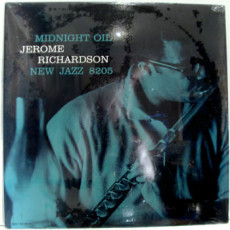
Jerome Richardson was born November 15, 1920 in Oakland, California and started on alto saxophone at the age of eight. In his teens Benny Carter, Johnny Hodges and Willie Smith were his idols. He became a professional musician at the age of fourteen, and had a brief stint with Lionel Hampton, and worked with Bay Area bands until 1941, during which time he also studied music at San Francisco State College. The flute was added to his working compliment in 1940. Both this and his alto sax were used to advantage in a Navy band, under the direction of Marshall Royal, at St. Mary’s Pre-Flight from 1942 to 1945. He joined the Lionel Hampton band again in 1949, with whom he recorded what is widely regarded as the first modern jazz solo played on flute on “Kingfish”, and was also a member of the Earl Hines big band.
Settling in New York in 1954 he began a very active session career, but continued to make his mark in a purely jazz context. He worked with bands led by Lucky Millinder and Cootie Williams, led his own quartet at Minton’s Playhouse in Harlem in 1955 and was part of Oscar Pettiford’s group that summer.
Over the next decade Jerome continued to lead his quartet, work the Roxy pit orchestra, regularly worked with Quincy Jones, toured Europe with Harold Arlen’s blues opera, was a founder member of the Thad Jones-Mel Lewis Orchestra, organizing and performing many Thad Jones tribute concerts. He played with a number of other notable big bands during his long career, including bands led by Jimmy Lunceford, Gerald Wilson, Gil Evans and Charles Mingus.
His standing as a superbly accomplished soloist on a range of reed and wind instruments was complemented by an equally strong reputation as an accompanist of singers, including the likes of Ella Fitzgerald, Frank Sinatra, Sarah Vaughan, Billie Holiday, Peggy Lee, Nancy Wilson, Billy Eckstine, and Lena Horne. Richardson performed with practically every significant post-war jazz artist, including Miles Davis, Dizzy Gillespie, Duke Ellington, Louis Armstrong, John Coltrane, Cannonball Adderley, Lionel Hampton, Herbie Hancock, Milt Jackson, Oliver Nelson, Art Farmer, Clifford Jordan, Slide Hampton, Horace Silver, Gerry Mulligan, Jimmy Smith, Wes Montgomery, Cal Tjader, and Antonio Carlos Jobim, as well as a whole range of blues, soul and pop artists.
Jerome Richardson played tenor, alto, baritone saxophone, clarinet, piccolo, and flute passed away in Englewood, New Jersey on June 23, 2000 recorded sparingly as a leader but was one of the most sought after session musicians for more than half a century was probably the most recorded saxophonist of his generation.
Daily Dose Of Jazz…
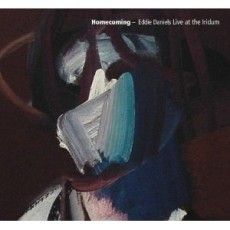
Eddie Daniels was born on October 19, 1941 in New York City and grew up in the Brighton Beach neighborhood of Brooklyn. He became interested in jazz as a teenager when impressed by listening to the recordings of the musicians accompanying singers, such as Frank Sinatra. Eddie’s first instrument was the alto saxophone, started on clarinet at 13 and later received his Masters in Clarinet from Julliard. By 15 he would add the Newport Jazz Festival Youth Competition to what would become a long list of credits. By the time he entered college, he was playing alto, clarinet and adding tenor saxophone to his arsenal.
Daniels has led a variety of bands from small combos to orchestras and has toured worldwide, recorded and appeared on television. Since the 1980s he has focused mainly on the clarinet and in 1989 he won one of many Grammy awards for playing on the Roger Kellaway arrangement of “Memos From Paradise”.
Over the course of his career he has captured Down Beat Magazine’s International Critics New Star on Clarinet Award, played and recorded with the Thad Jones/Mel Lewis Orchestra at the Village Vanguard, George Benson, Joe Farrell, Johnny Hammond, Richard Davis, Yusef Lateef, Airto Moreira and Don Patterson Gordon Goodwin’s Big Phat Band. Clarinetist Eddie Daniels, who also plays saxophone, flute and piccolo, performs commissioned classical compositions, has revolutionized the blend of classical and jazz and continues to tour and record.
Daily Dose Of Jazz…
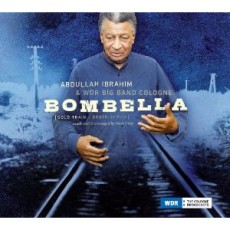
Abdullah Ibrahim was born October 9, 1934 in Cape Town, South Africa, formerly known as Adolph Johannes Brand, and as Dollar Brand. He first received piano lessons at age seven, was an avid consumer of jazz records brought by American sailors, and was playing jazz professionally by 1949. In 1959 and 1960, he played alongside Kippie Moeketsi and Hugh Masekela with The Jazz Epistles in Sophiatown, later recording the first jazz LP by Black South African musicians in 1960. Ibrahim then joined the European tour of the musical King Kong.
Moving to Europe in 1962, it was in the following year that Duke Ellington heard the Dollar Brand Trio at Zurich’s Africana Club at the request of Brand’s wife-to-be Sathima Bea Benjamin. As a result, Duke Ellington presents The Dollar Brand Trio was recorded at Reprise followed by a second session of the trio with Duke Ellington and Billy Strayhorn also on piano performing with Sathima as the vocalist. The recording, A Morning In Paris, remained unreleased until 1996 and then under Benjamin’s name. This led to wider appearances of the Dollar Brand Trio at many European festivals, as well as on radio and television.
Ibrahim has toured mainly in Europe, the United States, and South Africa, the band performing mainly in concert and club settings, and sometimes playing solo piano. Mainly playing the piano, he also plays the flute, saxophone, and cello, performing mostly his own compositions, although he sometimes performs pieces composed by others.
Abdullah Ibrahim to date has recorded more than forty albums as a leader, has written the soundtracks for a number of films, Chocolat and No Fear, No Die; and was a part of the 2002 documentary Amandla! – A Revolution in Four Part Harmony where he and others recalled the days of apartheid. He has ventured into orchestral performances with the inauguration of Nelson Mandela and the later initiation of the 18-piece Cape Town Jazz Orchestra in 2006.
A pianist and composer, Abdullah Ibrahim’s music reflects many of the musical influences of his childhood in the multicultural port areas of Cape Town, ranging from traditional African songs to the gospel of the AME church and ragas, to more modern jazz and other Western styles reflecting the influences of Thelonious Monk and Duke Ellington. He continues to perform, record and tour.
Daily Dose Of Jazz…
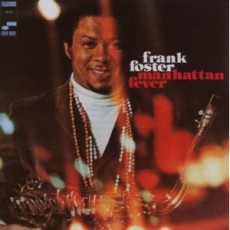
Frank Benjamin Foster III was born September 23, 1928 in Cincinnati, Ohio and began his musical career when he took up the clarinet at 11. Two years later he was playing the alto saxophone, quickly advanced and played with local bands by 14. He began composing and arranging at 15, leading his own 12-piece band while still in high school. He received his continued musical education at Wilberforce University but left with Snooky Young, moved to Detroit, playing the local jazz scene with Wardell Gray.
From 51-53 he served in Korea followed by joining Count Basie’s Big Band, contributed both arrangements and original compositions to Count Basie’s band including the standard, “Shiny Stockings” and other popular songs such as “Down for the Count,” “Blues Backstage,” “Back to the Apple,” “Discommotion,” and “Blues in Hoss Flat” as well as arrangements for the entire “Easin’ It” album.
From 1970 to 1972 he played with Elvin Jones, and in 1972 and 1975 with the Thad Jones-Mel Lewis big band. Frank went on to form and lead several groups, most notably Living Color and The Loud Minority while also co-leading a quintet with Frank Wess in 1983, and toured Europe with Jimmy Smith’s quintet in 1985.
By June 1986 Foster succeeded Thad Jones as leader of the Count Basie Orchestra and during his tenure Dr. Foster received two Grammy Awards for his big band arrangement of the Diane Schuur composition “Deedles’ Blues” and for his arrangement of the renowned guitarist/vocalist George Benson’s composition “Basie’s Bag”.
Over his career he was never far from education spending time teaching at the New England Conservatory of Music, New York City Public School System in Harlem, and State University of New York, Buffalo. Suffering a stroke in 2001, Frank Foster discontinued his playing but continued to lead The Loud Minority on limited engagements but soon passed the helm to trumpeter Cecil Bridgewater.
The tenor and soprano saxophonist and flautist amassed throughout his career twenty-six albums as a leader, thirty-four as a sideman and arranged five albums for Sarah Vaughan, Diane Schuur, Frank Sinatra, George Benson and Count Basie. Saxophonist Frank Foster continued to compose and arrange until his passage on July 26, 2011 at the age of 82.
Daily Dose Of Jazz…
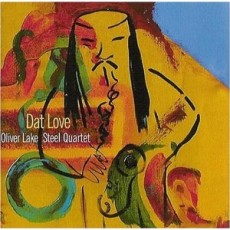
Oliver Lake was born in Marianna, Arkansas on September 14,1942 and his family moved to St. Louis when he was two. He began drawing at the age of thirteen and soon after began playing cymbals and the bass drum in a variety of drum and bugle corps. At 17, he began to take a serious interest in jazz and started playing percussion followed by alto saxophone. His piercing, bluesy, biting sound is his trademark and his explosive unpredictable solos are akin to Eric Dolphy.
During the 1960s Oliver taught school, worked in several contexts around St. Louis and led along with Julius Hemphill and Charles “Bobo” Shaw, BAG, the Black Artists Group. In 1972 Lake moved to Paris for two years working with his colleagues from BAG, returned to New York and immersed himself into the then burgeoning jazz loft scene. Like many other members of BAG, (Black Artists Group) and its Chicago-based sister organization, the Association for the Advancement of Creative Musicians (AACM), he moved to New York in the mid-’70s, working the fertile ground of the downtown loft scene and quickly establishing himself as one of its most adventurous and multi-faceted musician.
Oliver is co-founder of the internationally acclaimed World Saxophone Quartet with Julius Hemphill, Hamiet Bluiett and David Murray in 1977. Over the next two decades the group crossed over to new audiences, in part, due to their late 80s albums of Ellington and popular R&B tunes. He leads his own Steel Quartet and Big Band; has worked with hip hop artists Mos Def and A Tribe Called Quest and Me’shell Ndegeocello; has created a groundbreaking roots/reggae ensemble “Jump Up”; founded Passin’ Thru, Inc. – a non-profit dedicated to fostering, promoting and advancing the knowledge, understanding and appreciation of jazz, new music and other disciplines related to music.
Oliver Lake, the alto saxophonist, flautist, composer, poet and painter has collaborated with numerous notable choreographers, poets and a veritable Who’s Who of the progressive jazz scene of the late 20th century. He has recorded as a leader for Freedom, Black Saint, and Black Lion, Novus, Gramavision, Blue Heron Gazell, Soul Note and other record labels. The mainstay of the avant-garde and free jazz realms continually performs all over the U.S. as well as in Europe, Japan, the Middle East, Africa and Australia. He paints daily, using oil, acrylics, wood, canvas, and mixed media.