

Daily Dose Of Jazz…
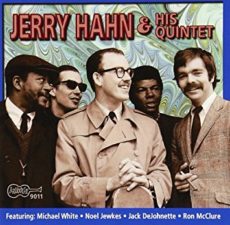
Jerry Hahn was born on September 21, 1940 in Alma, Nebraska and began playing the guitar at age 7. By 11 he was playing professionally with the Bobby Wiley Rhythmaires, appearing daily on Wichita’s first television station, KEDD.
He went on to study music at Wichita State University. Moving to San Francisco, California in 1962, he played with John Handy in 1964 and recording a live album with him at the Monterey Jazz Festival in 1966, then toured with the 5th Dimension in 1968 before joining Gary Burton in 1968 with Roy Haynes and Steve Swallow, With Burton he recorded three albums and toured the United States, Europe, Canada and Japan.
He began his recording career with his debut album Ara-Be-In as a leader in 1967 and led the Jerry Hahn Brotherhood in 1970, a country-blues jazz-rock ensemble, that was one of the trailblazers of the jazz-rock movement. In 1972, Jerry went back to Wichita, Kansas, where he became a full-time member of the Wichita State University faculty and established the degree program in jazz guitar.
1986 saw him relocating to Portland, Oregon where he joined the Bennie Wallace Quartet, recording and touring the United States, Europe and Japan. In 1992 he moved to Denver, Colorado, where he taught at the Colorado Institute of Art and in 1995 Jerry returned to Portland and joined the faculty of Portland State University and developed the curriculum for the Jazz Guitar program.
Jerry wrote a five-year monthly column for Guitar Player magazine titled Jerry Hahn’s Guitar Seminar, penned The Jerry Hahn Method for Jazz Guitar, published by Mel Bay Publications in 2003 and can also be heard on the movie sound track for White Men Can’t Jump.
He has recorded eight albums as a leader and over the years has been seen working with Michael White, Jack DeJohnette, Noel Jewkes, Ron McClure, Paul Simon and Ginger Baker among others. Guitarist Jerry Hahn is a contributor to the emerging fusion movement and continues to conduct clinics and work on new publications and recordings.
More Posts: guitar
Daily Dose Of Jazz…
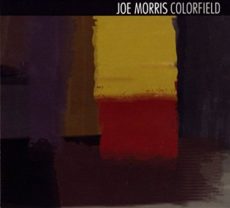
Joseph Francis Michael Morris was born September 13, 1955 in New Haven, Connecticut. Starting on guitar he was primarily self-taught with only a few lessons, and played his first professional gig in 1969 . Jimi Hendrix and other guitarists of that period inspired him to learn to play the blues and John Coltrane’s Om inspired him to learn about jazz. From the age of 17 he worked to establish his guitar voice in the free jazz context, inspired by Cecil Taylor, Eric Dolphy, Leroy Jenkins and Thelonious Monk. After high school he performed in rock bands, rehearsed in jazz bands, and played improvised music until 1975, when he moved to Boston, Massachusetts.
By 1983 he formed his own record company, Riti, and recorded his first album, Wraparound. An early mentor and playing partner was pianist Lowell Davidson. Between 1989 and 1993 he performed and recorded with his electric trio Sweatshop and electric quartet Racket Club. 1994 saw Joe become the first guitarist to lead his own session in the twenty-year history of Black Saint/Soul Note with the trio recording Symbolic Gesture.
Morris has continued to record extensively for Leo, Knitting Factory, AUM Fidelity, Hathut, Clean Feed, ESP and RogueArt record labels. He has led his own groups and has recorded and performed with Matthew Shipp, William Parker, John Zorn, Joe Maneri, Rob Brown, Ivo Perelman, Ken Vandermark and DKV Trio, Jim Hobbs, Steve Lantner, Daniel Levin, Petr Cancura and David S. Ware among others.
He has lectured and conducted workshops throughout the United States and Europe, is a former member of the faculty of Tufts University Extension College and is currently on the faculty at New England Conservatory in the jazz and improvisation department. Guitarist, bassist, improviser and composer Joe Morris continues to perform and record.
Daily Dose Of Jazz…
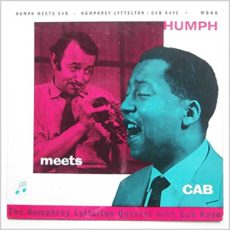
Cab Kaye was born Nii-lante Augustus Kwamlah Quaye on September 3, 1921 on St. Giles High Street in Camden, London to a musical family of Ghanaian ancestry. After his father’s death when he was four months they moved to Portsmouth where he was introduced to the timpani by a soldier who taught him how to count and use the mallets. At fourteen, he began visiting nightclubs where Black musicians were welcome, and where he eventually won first prize in a song contest and a tour with the Billy Cotton band. In 1936, he recorded his first song Shoe Shine Boy under the name Cab Quay.
During 1937 Kaye played drums and percussion with Doug Swallow and his band, the Hal Swain Band and Alan Green’s band. Until 1940 he sang and drummed with the Ivor Kirchin Band, with Steve Race on piano, in the Paramount Dance Hall on Tottenham Court Road. When a guest was refused entrance because of their skin colour, Kaye refused to perform, the incident led to the regular acceptance of black people and the venue grew into a sort of Harlem of London.
He would go on to play with Britain’s first black swing bandleader Ken “Snakehips” Johnson and His Rhythm Swingers, play in several radio broadcasts and joined the British Merchant Navy before his mother and Johnson were killed in bombings during World War II. A move to New York saw him playing in Harlem and Greenwich Village with Roy Eldridge, Sandy Williams, Slam Stewart, Pete Brown, Charlie Parker, Dizzy Gillespie and Willie “The Lion” Smith. Returning to London in 1943 he sang with clarinetist Harry Parry, then formed a band that included 16-year-old saxophonist Ronnie Schatt (Ronnie Scott), Ralph Sharon and Dick Katz on piano. Following this he sang with Vic Lewis, Ted Heath, Tito Burns and Jazz In The Town. Leading his own bands Ronnie Scott, Johnny Dankworth and Denis Rose. Throughout his career he formed several bands that included Mary Lou Williams, Dizzy Reece, Dennis Rose, Denny Coffey, Dave Smallman, Pat Burke and performed with Billy Daniels, Benny Payne Eartha Kitt, and 16 year old Shirley Bassey among numerous others
Opening his own club in Amsterdam he performed with visiting musicians such as Rosa King, Slide Hampton, Aart Gisolf, Dirk-Jan “Bubblin” Toorop, David Mayer, Gerrie van der Klei, Cameron Japp, Max Roach, Oscar Peterson, Pia Beck and others. During this period Cab played all the major festivals until the 1990s when he was diagnosed with mouth floor cancer that resulted in the loss of the ability to speak. On March 13, 2000 vocalist, pianist, guitarist, drummer and composer Cab Kaye, also known as Cab Quay, Cab Quaye and Kwamlah Quaye and who recorded for the Melody Maker label, passed away at the age of 78.

More Posts: composer Instruments Vocals,drums,guitar,piano,vocal
Daily Dose Of Jazz…
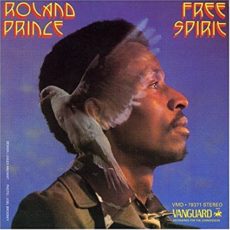
Roland Prince was born on August 27, 1946 in St. John’s, Antigua and Barbuda. He was active player on the world stage in the 1960’s and Seventies and in 1977 he released his debut album Color Vision as a leader along with sidemen Virgil Jones, Frank Foster, Kenny Barron, Al Foster, Eddie Moore and Bob Cranshaw.
Followed by two more albums as a leader, he has also recorded as a sideman with Roy Haynes, Billy Mitchell, David Murray, Compost, Elvin Jones, Shirley Scott and Buddy Terry before returning to his home in Antigua & Barbuda.
Once home he remained active on the music scene in Antigua and across the Caribbean playing jazz with the Roland Prince Quartet until his passing on July 15, 2016 aged 69 in Antigua.
More Posts: guitar
Daily Dose Of Jazz…
Pat Martino was born Pat Azzara in South Philadelphia, Pennsylvania on August 25, 1944 and began playing professionally at the age of 15 after moving to New York City. He resided with Les Paul for a while before moving into a suite in the President Hotel on 48th Street. He started playing jazz clubs like Smalls Paradise and would play at Smalls for six months of the year and then in the summer play at Club Harlem in Atlantic City.
Early in his career Martino played and recorded with Lloyd Price, Willis Jackson, Eric Kloss, Charles Earland, Richard “Groove” Holmes, Jack McDuff, Don Patterson, Trudy Pitts, Jimmy Smith, Gene Ludwig, Bobby Pierce and Joey DeFrancesco.
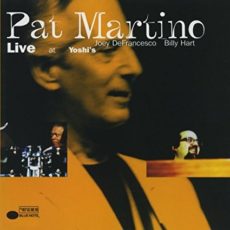
He has been awarded Guitar Player of the Year in Down Beat Reader’s Poll in 2004, NARAS Songs from the Heart Award, been nominated for a Grammy for Best Jazz Instrumental Album, Live at Yoshi’s, and Best Jazz Instrumental Solo on ‘All Blues‘ and has received Philadelphia Alliance Walk of Fame Award and National Academy of Recording Arts & Sciences “2nd Annual Heroes Award among others.
The list of jazz musicians he has performed and recorded as a sideman with are John Handy, Jimmy Heath, Charles McPherson, Sonny Stitt, The Philadelphia Experiment as well as released three-dozen albums as a leader. Guitarist and composer Pat Martino, noted for his mathematical approach to the instrument and plays in the post-bop, fusion, mainstream and soul jazz idioms, continues to perform and tour.
More Posts: guitar