Daily Dose Of Jazz…
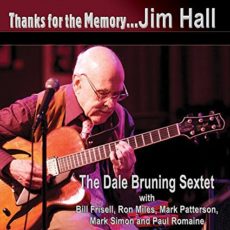
Dale Bruning was born on November 8, 1934 in Carbondale, Pennsylvania and as a small child played piano. When he was in high school he moved to the guitar and went on to become adept at playing tuba, double bass, vibraphone and drums. He was influenced by a wide range of jazz and classical musicians and composers. It was on guitar, however, that he went on the road with various small groups before playing for four years in US Navy bands.
In 1961, he led the house band on The Del Shields Show on NBC in Philadelphia, Pennsylvania that attracted him considerable attention. He performed during the Fifties and following decades were Dennis Sandole, his mentor and principal tutor, Jim Hall, Red Norvo, Dave McKenna, Dizzy Gillespie, Erroll Garner, Marian McPartland, Michael Moore, Gus Johnson, Bill Frisell, and Chet Baker.
He also recorded with bassist Ted Alexander, Nicky DeMatteo and Tony Luis in the late 1950s to early Sixties, and with Rich Chiaraluce in the early 70s. Moving to Denver, Colorado for domestic reasons, he has remained a resident and became an educator in 1960. His playing is inventive in conception and fluid in execution albeit regional in recognition. Though he won many awards, it was not until the late NIneties that Bruning’s reputation began to spread both nationally and internationally.
His book published in 1997, The Dale Bruning Jazz Guitar Instruction Book Series, Vol. I: Phrasing and Articulation, along with new albums received critical acclaim. His profile rose with a series of theme concerts, conceived in collaboration with writer-producer Jude Hibler, that celebrated the music of Duke Ellington, Hoagy Carmichael, Harold Arlen, Harry Warren, Johnny Mandel, Michel Legrand, Cole Porter and Kurt Weill, among others.
Guitarist Dale Bruning continues to educate, has also composed several songs, is an accomplished arranger and continues to perform.

More Posts: guitar
Daily Dose Of Jazz…
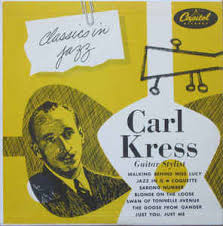
Carl Kress was born on October 20, 1907 in Newark, New Jersey and started on piano before picking up the banjo. Beginning in 1926, he played guitar during his brief time as a member of the Paul Whiteman orchestra. For most of his career, he was a studio musician and sideman buried in large orchestras, and his name was little known.
During the 1920s and 1930s Carl worked recording sessions with The Boswell Sisters, The Dorsey Brothers, Bix Beiderbecke, Hoagy Carmichael, Miff Mole, Red Nichols, Adrian Rollini, and Frankie Trumbauer.
Outside of orchestras, Kress played in several guitar duets with Eddie Lang and Dick McDonough in the Thirties, Tony Mottola in 1941, and George Barnes in the Sixties. The late Thirties saw him recording as a solo with Peg Leg Shuffle, Helena, Love Song, Sutton Mutton and Afterthoughts. During the 1940s, he played Dixieland jazz with Bobby Hackett, Pee Wee Russell, and Muggsy Spanier.
Moving to New York City with his wife Helen who sang with the Satisifiers, Perry Como, Frank Sinatra and Jo Stafford. Guitarist Carl Kress continued a career as a bandleader and session player until his passing away of a heart attack on June 10, 1967 while he was on tour in Reno, Nevada.

More Posts: guitar
Daily Dose Of Jazz…
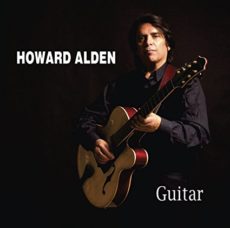
Howard Vincent Alden was born in Newport Beach, California on October 17, 1958. Growing up in Huntington Beach, he played piano, harmonica, the four-string tenor guitar, and then four-string banjo at age ten. After hearing recordings of Barney Kessel, Charlie Christian, Django Reinhardt and other jazz guitar greats, he got a six-string guitar and started teaching himself to play.
As a teenager he played both instruments at venues in the Los Angeles area and studied guitar with Jimmy Wyble when he was 16. In 1977 he studied jazz guitar for a year at the Guitar Institute of Technology (GIT) in Hollywood with Herb Ellis, Joe Pass, and Howard Roberts. While there he assisted Roberts in organizing and preparing curriculum materials, then conducted some of his own classes at GIT.
Making his first trip to the east coast in the summer of 1979, he played in the trio led by vibraphonist Red Norvo for 3 months at Resorts International in Atlantic City. Moving to New York City in 1982, Howard played an extended e engagement at Café Carlyle with jazz pianist/songwriter Joe Bushkin. Soon afterwards, he was discovered by Joe Williams and Woody Herman. 1983 saw him collaborating with Dick Hyman, appearing with him and a host of other musicians at Eubie Blake’s 100th birthday concert.
With Dan Barrett he formed the Alden-Barrett Quintet in 1985 which played in the swing idiom, as he has done for most of his career. He also began partnerships with Kenny Davern and Jack Lesberg, joined George Van Eps, innovator of the seven-string guitar, on tour and recorded albums with him, switching to the seven-string himself in 1992.
Alden has recorded the guitar performances for Sean Penn’s character Emmet Ray in the Woody Allen 1999 film Sweet and Lowdown, and taught Penn how to mime the performances for the film. He has received Best Emerging Guitar Talent by JazzTimes, Talent Deserving Wider Recognition, from Down Beat four times, named Guitar Player of the Year by American Guitar Museum and included on the Down Beat list of Top 75 Guitarists. He continues to perform and compose.

More Posts: guitar
Daily Dose Of Jazz…
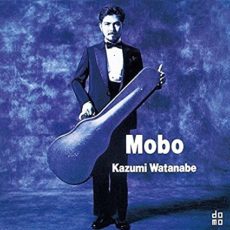
Kazumi Watanabe (渡辺香津美) was born on October 14, 1953 in Tokyo, Japan. He learned to play the guitar at the age of 12 from Sadanori Nakamure at the Yamaha Music School in Tokyo. He released his debut album as a leader at the age of 18 in 1971. By 1979, he had put together a jazz rock band with some of Japan’s leading studio musicians, and recorded the album Kylyn. The same year, he toured with the pop band Yellow Magic Orchestra.
The 1980s saw him touring as guest soloist with different groups – Steps, the Brecker Brothers, and Word of Mouth, led by Jaco Pastorius. Watanabe created the jazz-rock/jazz-fusion band Mobo in 1983 with saxophonist Mitsuru Sawamura, pianist Ichiko Hashimoto, Gregg Lee on guitar, Shuichi Murakami on drums, and Kiyohiko Senba.
During the eighties Kazumi also released the jazz-rock albums To Chi Ka (1980), Mobo Club (1983) Mobo Splash(1985), and Spice of Life (1987). A DVD was issued from the tour which featured drummer Bill Bruford and bassist Jeff Berlin, who also played on the record.
In the 1990s Kazumi assembled an all-Japanese line-up called Resonance Vox with Vagabonde Suzuki on bass, Rikiya Higashihara on drums and Tomohiro Yahiro on percussion, releasing several adventurous fusion albums. Over his career he has released four dozen albums as a leader, four DVDs of live performances and has worked with numerous musicians such as Lee Ritenour, Steve Gadd, Tony Levin, Jeff Berlin, Bill Bruford, Sly and Robbie, Wayne Shorter, Patrick Moraz, Marcus Miller, Richard Bona, and Peter Erskine.
Since 1996, he has been a visiting professor of music at Senzoku Gakuen College and has been chosen Best Jazzman 24 years in a row by Swing Journal magazine’s annual poll. Jazz fusion guitarist Kazumi Watanabe continues to perform, record, tour and teach.

More Posts: guitar
Daily Dose Of Jazz…
Charles Davis was born on September 29, 1946 in Sydney, Australia and started playing flute during his youth. After a short period of studying classical guitar in Sydney, he started playing jazz, rock and folk in groups after moving to Brighton. Hearing a lot of music in a rock music context, I was so fascinated.
A move to Germany in the Seventies saw him playing the flute and later for a short period of time, the saxophone in jazz rock groups. By 1980 he started playing guitar and piano. Being inspired by the various saxophone groups that appeared in the 70s, by the 90s Davis formed one of the first jazz groups composed solely of flutes. This ground breaking group required that the various members compose for this unique formation taking into account the different types of flutes. Later in the decade, after meeting bansuri player Joachim Hübner, his interest turned to the classical north indian music and became a student of the Chanchala and Duo Bubachala.
Charles has attended workshops and masterclasses conducted by James Newton, Robert Dick and Dieter Bihlmeier, Hari Prasad Chaurasia, Jeremy Steig, Hossein Omoumi and Herbie Mann. Alto, bass and double bass flautist Charles Davis currently resides in Germany and continues to compose, record and perform.