

Daily Dose Of Jazz…
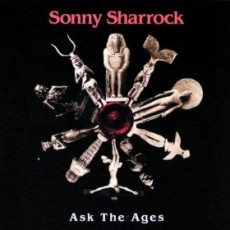
Warren Harding “Sonny” Sharrock was born on August 27, 1940 in Ossining, New York. His first love as a child was the saxophone after hearing John Coltrane play on Miles Davis album Kind Of Blue. Unfortunately asthma prevented him from the course so he began playing the guitar. By the time he was a teenager, he started singing in doo-wop groups.
By the late 60s he was collaborating with Pharoah Sanders and Alexander Solla during the first wave of free jazz. He made his recording debut on the 1966 Sanders album Tauhid. Sharrock performed with flautist Herbie Mann, made an un-credited guest appearance on Miles Davis’s project A Tribute To Jack Johnson and the Complete Jack Johnson Sessions, arguably his most famous cameo. He recorded three albums as a leader in the late 1960s through the mid-1970s: Black Woman, Monkey-Pockie-Boo, and an album his wife Linda titled Paradise.
Sonny semi-retired for much of the 1970s, got divorced, got divorced, and worked as a chauffeur and caretaker for mentally challenged children. He returned at the urging Bill Laswell in 1981 and recorded Laswell’s project Memory Serves. He went on to work on the punk/jazz session with the band Last Exit, and during the late 1980s, he recorded and performed extensively with the New York-based improvising band Machine Gun, as well as leading his own bands.
Sharrock flourished with Laswell’s help, performing together, as well as producing his albums such as his solo project Guitar, the metal-influenced Seize the Rainbow, and the well-received Ask the Ages where he featured Pharoah Sanders and Elvin Jones. He would go on to compose the soundtrack for the Cartoon Network program Space Ghost Coast To Coast, recording a total of twelve albums as a leader and six with Last Exit. He would perform and record as a sideman with Ginger Baker, Don Cherry, Pheeroah akLaff, Roy Ayers, Brute Force, and Wayne Shorter among others.
On May 26, 1994 guitarist Sonny Sharrock died unexpectedly of a heart attack in his hometown of Ossining, just as he was on the verge of signing the first major label deal in his entire career. He was 53.

Give A Gift Of Jazz – Share
More Posts: guitar
Daily Dose Of Jazz…
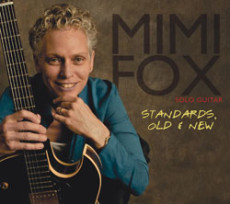
Mimi Fox was born of August 24, 1956 in New York City and started playing drums at nine and guitar when she was ten. She was inspired by a wide variety of music in her house from show tunes, classical, Dixieland, Motown pop, folk, and R&B. By fourteen she bought her first jazz album, John Coltrane’s classic Giant Steps and her course of her musical life changed. She began touring right out of high school and eventually settled in the San Francisco Bay area where she became a sought after player.
Fox has performed and recorded with Charlie Byrd, Stanley Jordan, Charlie Hunter, Mundell Lowe, Branford Marsalis, David Sanchez, Houston Person, Don Lanphere, Abbey Lincoln, Diana Krall, Kevin Mahogany, Janis Siegel, Joey DeFrancesco, Barbara Denerlein, Dr. Lonnie Smith, Terri Lyne Carrington, Stevie Wonder and John Sebastian and the list continues to grow.
Mimi has been named a winner in 6 consecutive Downbeat Magazine international critic’s polls, hit #23 on the Billboard Top Jazz Albums chart, recognized by the IAJE for her outstanding service to jazz education, has released ten albums as a leader, published several instructional books and interactive CD-Roms.
As a composer she has written and performed original scores for orchestras, documentary films and dance projects. As an educator she teaches master classes worldwide, is currently the Chair of the Guitar Department, a faculty advisor and instructor at the Jazz School for Musical Study and Performance in Berkeley, California. Guitarist Mimi Fox continues to composer, record, teach and perform at festivals around the world.
Take A Dose On The Road
More Posts: guitar
Daily Dose Of Jazz…
Guillermo Serpas was born on August 1, 1969 in San Salvador, El Salvador and grew up in an environment of rich musical tradition of legendary singers and masterful guitarists of the popular folklore. A gifted musician he was inspired him to learn the highly versatile and lyrical classical guitar. By his early teens he was studying with Maestro Candido Morales.
In 1983, the family moved to Calgary, Alberta bringing the young artist new artistic experiences to embrace. He immersed himself in the music genres of blues, jazz and rock. Guillermo soon joined several local bands and experimented with these different styles, while keeping his focus on classical guitar. He went on to acquire formal studies at the University of Calgary, graduating with a Bachelors Degree in music in 1996.
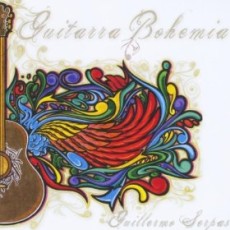
With his deep Latin roots ever present in his music Serpas has infused rhythmic elements of jazz, salsa, bolero, samba, blues and rock in his performing. Always present is the exotic percussion from his Latin American folklore creating a unique mosaic of sound. He released his debut recording Mi Sol y MI Luna in 2006 with his sophomore project following in 2011 titled Guitarra Bohemia. Guitarist Guillermo Serpas continues to perform, record and tour.
Give A Gift Of Jazz – Share
More Posts: guitar
Daily DoseOf Jazz…
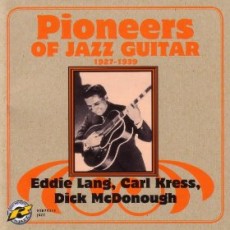
Dick McDonough was born on July 30,1904. As a child learning and perfecting his technique on the banjo, by 1927 at age 23 he was playing and recording Chasin’ A Buck and Feelin’ No Pain with Red Nichols. Soon after he joined Paul Whiteman’s outfit and later exchanged the banjo for guitar.
As a guitarist Dick did extensive work as a session musician in the 1930s playing with Jimmy and Tommy Dorsey, The Boswell Sisters, Joe Venuti, Benny Goodman, Miff Mole, Adrian Rollini, Red Norvo, Jack Teagarden, Johnny Mercer, Billie Holiday, Pee Wee Russell Frank Trumbauer, Glenn Miller and Gene Gifford among others too numerous to list.
McDonough teamed with Carl Kress to record as a guitar duet in the mid-1930s as well. He played in the Jam Session at Victor with Fats Waller, Tommy Dorsey, Bunny Berigan and George Wettling. His more notable compositions included Dr. Heckle and Mr. Jibe, recorded by the Dorsey Brothers Orchestra with Johnny Mercer on vocals; Stage Fright with Carl Kress, Chicken a la Swing and Danzon.
An influential guitarist and composer, the recording of his version of Fats Waller’s Honeysuckle Rose has to be considered the first “guitar solo” rendition of a jazz standard still preserved. It is a known fact that New Orleans’ guitarist Snoozer Quinn did the same in the 1920’s before everybody else, but those recordings were never issued and, until now, are considered totally lost.
The ‘guitar unaccompanied solo’ tradition followed with among others, Carl Kress, Oscar Aleman, Django Reinhardt, George Van Eps, Al Viola and in the Seventies Joe Pass brought it to a new level. But had it not been for Dick McDonough with his acoustic L5 giving to guitar a new dimension in 1934, this tradition would not have been created. Dick McDonough was unfortunately also an alcoholic and subsequently succumbed to the illness at the age of 33 on May 25, 1938.
Dose A Day – Blues Away
More Posts: guitar
Daily Dose Of Jazz…
Bill Lee was born William James Edwards Lee III on July 23, 1928 in Snow Hill, Alabama the son of Alberta Grace Edwards, a concert pianist, and Arnold Wadsworth Lee, a musician. A bassist by profession, he is also a composer, arranger and conductor.
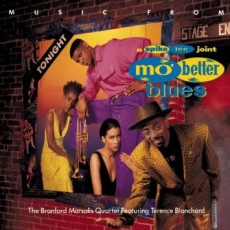
Bill scored his son’s first four movies, and was also the musical director and performer Sonny Darling in She’s Gotta Have It, the bassist in the Phyllis Hyman Quartet and the music conductor of the Natural Spiritual Orchestra for School Daze and Do The Right Thing, and appeared as Father of the Bride and also the music director for Mo’ Better Blues.
Lee was arrested in 1991 during a police drug sweep for heroin possession, fell out with his son, Spike Lee, over the arrest and subsequent interracial marriage to second wife that took place shortly after his first wife Jacquelyn, Spike’s mother, passed away from cancer. Bad blood continued as Spike made Jungle Fever that set a negative light on White/Black romantic relationships.
Along with Stuart Scharf he was the music arranger for the stage play A Hand is on the Gate. He has appeared on the Today Show, the Harry Belafonte television specials, has composed operas, stage music for the Apollo Theatre and has recorded with The Brass Company, Stanley Cowell, Richard Davis, Clifford Jordan, Harold Mabern, Pat Martino, Johnny Griffin, Aretha Franklin, Bob Dylan, Odetta, Judy Collins, Gordon Lightfoot and Peter, Paul and Mary among others. Double bassist and bass guitarist Bill Lee continues to compose, arrange and conduct.
Dose A Day – Blues Away