

Daily Dose Of Jazz…
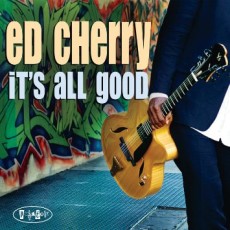
Ed Cherry was born in New Haven, Connecticut on October 12, 1954. Moving to New York City, the guitarist began a long association with Dizzy Gillespie playing in his quartet, big band and the United Nation Orchestra from 1978 until shortly before the trumpeter’s death in 1993. During this tenure he was a part of the Grammy winning recording Live At Royal Festival Hall.
Ed recorded his debut album as a leader in 1993 titled First Take and was a part of the recording session for Paquito D’Rivera’s Havana Café. His sophomore project A Second Look was released in 1995.
As an educator Cherry has taught guitar at Essex Community College in Newark, New Jersey, at the Henry Street Settlement in New York City, has been a faculty member at Montclair State University, School of Fine and Performing Arts for J.O.Y. (Jazz Opportunity for Youth) and is currently a staff member at Jazzmobile in New York City.
When not leading his own groups he is in the studio holding down sideman duties working with Paquito D’ Rivera, Jon Faddis, John Patton, Hamiet Bluiett, Henry Threadgill, Mark Weinstein, C.I. Williams and Paula West to name a few. He has recorded several albums as a leader, more than a dozen as a sideman and continues to perform with his current trio.

Take A Dose On The Road
More Posts: guitar
Daily Dose Of Jazz…
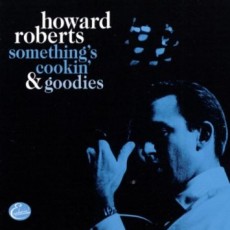
Howard Roberts was born on October 2, 1929 in Phoenix, Arizona and began playing guitar at the age of 8. By the time he was 15 he was playing professionally locally. He moved to Los Angeles in 1950 and with the help of Jack Marshall he began working with musicians, arrangers and songwriters including Neal Hefti, Henry Mancini, Bobby Troup, Chico Hamilton, George Van Eps and Barney Kessell.
Around 1956 Troup signed Howard to Verve Records as a solo artist and he he decided to concentrate on recording. He recorded both as a solo artist and “Wrecking Crew” session musician, a direction he would continue until the early 1970s. He would go on to play guitar on television themes such as The Twilight Zone, The Munsters, Bonanza, The Brady Bunch, Green Acres, Get Smart, Batman, Beverly Hillbillies, Andy Griffith, Peter Gunn, Mannix, Dick Van Dyke, I Dream of Jeannie, The Odd Couple and Mission Impossible among others. He also performed the theme for the classic Steve McQueen film Bullitt.
In 1961, Roberts designed a signature guitar, which was originally produced by Epiphone, a division of Gibson. The Howard Roberts signature was borne by two other models made by Gibson: the Howard Roberts Custom and the Howard Roberts Fusion III.
By 1963, Roberts recorded Color Him Funky and H.R. Is A Dirty Guitar Player, his first two albums after signing with Capitol Records. They both featured the same quartet with Roberts (guitar), bassist Chuck Berghofer, Earl Palmer on drums and Paul Bryant alternating with Burkley Kendrix on organ. He would go on to record nine albums with Capitol before signing with ABC Records/Impulse Records.
Over the course of his career he recorded with David Axelrod, June Christy, Buddy Collette, Milt Jackson, Hank Jones, John Klemmer, Charles Kynard, Herbie Mann, Thelonious Monk, Lalo Schifrin, Bud Shank, Bob Cooper, Gabor Szabo and Larry Williams, to name a few. As a member of the Wrecking Crew, he was a part of Phil Spector’s ‘Wall of Sound’ and played guitar on some of the most famous songs in pop music history.
From the late 1960s, Roberts began to focus on teaching rather than recording. He traveled around the country giving guitar seminars, and wrote several instructional books. For some years he also wrote an acclaimed column called “Jazz Improvisation” for Guitar Player magazine. he developed accelerated learning concepts and techniques, which led to the founding of Playback Music Publishing and the Guitar Institute of Technology. As a co-founder of GIT, now known as the Musicians Institute, his philosophy remains an integral part of the curriculum.
Guitarist Howard Roberts, who played rhythm and lead guitar, bass and mandolin, passed away of prostate cancer in Seattle, Washington on June 28, 1992. His life in music inspired the opening of Roberts Music Institute in Seattle, Washington, which is currently owned by his son, Jay Roberts.
Jazz Is Global – Share
Daily Dose Of Jazz…
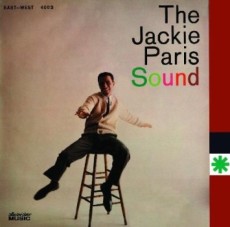
Jackie Paris was born Carlo Jackie Paris on September 20, 1924 in Nutley, New Jersey. His uncle Chick had been a guitarist with Paul Whiteman’s orchestra. A very popular child entertainer in vaudeville, the pint-sized song and dance man shared the stage with Bill “Bojangles” Robinson and the Mills Brothers.
After serving in the Army during World War II, Paris was inspired by his friend Nat King Cole to put together a trio featuring himself on guitar and vocals. The Jackie Paris Trio was a hit at the Onyx Club, playing for an unprecedented 26 weeks, perhaps the longest-running residency in the history of Swing Street.
The first song that Jackie’s trio recorded was Hoagy Carmichael’s Skylark for MGM Records in 1947. In 1949, he was the first white vocalist to tour with the Lionel Hampton for a 78 one-night tour. Coming off the road, he received an offer to join the Duke Ellington Orchestra, but at that time was too exhausted to take it.
Paris was the first singer to record Thelonious Monk’s future jazz anthem Round Midnight, which was produced by Leonard Feather and featured a young Dick Hyman on piano with drummer Roy Haynes and bassist Tommy Potter. He was the only vocalist to ever tour as a regular member of the Charlie Parker Quintet but unfortunately no recordings exist of the Parker-Paris combo.
In 1953, Jackie was named Best New Male Vocalist of the Year in the first ever Down Beat Critics Poll. Ella Fitzgerald won the female category and repeatedly named Paris as one of her favorites as well as Charles Mingus, who enlisted the talented vocalist on several projects and club dates over many decades. He shared the bill with comic Lenny Bruce and recorded with Hank Jones, Charlie Shavers, Joe Wilder, Wynton Kelly, Eddie Costa, Coleman Hawkins, Bobby Scott, Max Roach, Lee Konitz, Donald Byrd, Gigi Gryce, Ralph Burns, Tony Scott, Neal Hefti, Terry Gibbs, Johnny Mandel and Oscar Pettiford and the list continues.
He recorded consistently through the years, from the 1940s and in 2001, he played to a standing room crow and to a standing ovation at Birdland. He was virtually the only performer to have appeared at every incarnation of the famed nightspot, from the 1950s to the present. Jackie Paris passed away on June 17, 2004 in New York City.
Give The Gift Of Knowledge
Daily Dose Of Jazz…
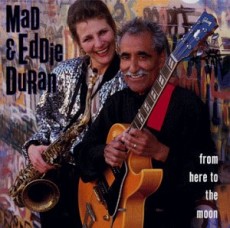
Eddie Duran was born Edward Lozano Duran on September 6, 1925 in San Francisco, California. He started learning to play piano at age seven, and switched to guitar by the time he was 12. After about seven months of lessons he began teaching to himself. Within his household was plenty of jazz growing up as his older brothers Carlo was a jazz pianist and Manuel was a jazz bassist.
Duran recorded as leader in 1956 with Fantasy Records, and around 1957, he was the guitarist in the CBS Radio Orchestra under the direction of Ray Hackett for the Bill Weaver Show. While playing with the CBS Orchestra, he met Ree Brunell and performed on her debut album, Intro To Jazz of the Italian-American. The album was the first LP recorded by the short-lived San Francisco Jazz Records label under the umbrella of the radio station.
Throughout the fifties he performed or recorded with his childhood friend Vince Guaraldi, as well as with Cal Tjader in his Mambo Quintet, and Stan Getz. In addition, Eddie was a featured performer and recording artist with several notable jazz combos that included his brothers. By 1960 he was leading his own trio for the next seven years but joined his brother Carlos on Benny Velarde’s 1962 album, Ay Que Rico. From 1976 to 1981 he was a member of Benny Goodman’s orchestras and octet.
Between 1980 and 1982, Duran recorded with Tania Maria, moved to New York City performing in a quartet that he organized and crossed paths with Getz again in 1983 while recording the Dee Bell studio album, Let There Be Love. The list of jazz artist he has performed with extends to Charlie Parker, George Shearing, Red Norvo and Earl Hines among others.
Eddie and his wife Mad (Madeleine) was initially a classically trained flutist, saxophonist and a music educator, continue to co-lead, perform and collaborate on five albums as well as individual endeavors.
Give The Gift Of Knowledge
More Posts: guitar
Daily Dose Of Jazz…
Warren Harding “Sonny” Sharrock was born on August 27, 1940 in Ossining, New York. His first love as a child was the saxophone after hearing John Coltrane play on Miles Davis album Kind Of Blue. Unfortunately asthma prevented him from the course so he began playing the guitar. By the time he was a teenager, he started singing in doo-wop groups.
By the late 60s he was collaborating with Pharoah Sanders and Alexander Solla during the first wave of free jazz. He made his recording debut on the 1966 Sanders album Tauhid. Sharrock performed with flautist Herbie Mann, made an un-credited guest appearance on Miles Davis’s project A Tribute To Jack Johnson and the Complete Jack Johnson Sessions, arguably his most famous cameo. He recorded three albums as a leader in the late 1960s through the mid-1970s: Black Woman, Monkey-Pockie-Boo, and an album his wife Linda titled Paradise.
Sonny semi-retired for much of the 1970s, got divorced, got divorced, and worked as a chauffeur and caretaker for mentally challenged children. He returned at the urging Bill Laswell in 1981 and recorded Laswell’s project Memory Serves. He went on to work on the punk/jazz session with the band Last Exit, and during the late 1980s, he recorded and performed extensively with the New York-based improvising band Machine Gun, as well as leading his own bands.
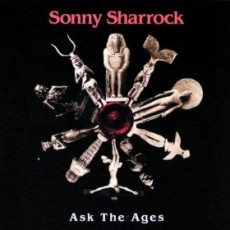
Sharrock flourished with Laswell’s help, performing together, as well as producing his albums such as his solo project Guitar, the metal-influenced Seize the Rainbow, and the well-received Ask the Ages where he featured Pharoah Sanders and Elvin Jones. He would go on to compose the soundtrack for the Cartoon Network program Space Ghost Coast To Coast, recording a total of twelve albums as a leader and six with Last Exit. He would perform and record as a sideman with Ginger Baker, Don Cherry, Pheeroah akLaff, Roy Ayers, Brute Force, and Wayne Shorter among others.
On May 26, 1994 guitarist Sonny Sharrock died unexpectedly of a heart attack in his hometown of Ossining, just as he was on the verge of signing the first major label deal in his entire career. He was 53.
Give A Gift Of Jazz – Share
More Posts: guitar