

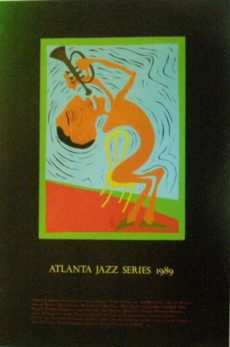
Atlanta Jazz Festival… 1989

#preserving genius
More Posts: festival,forty,free,history,jazz,music,tradition,years
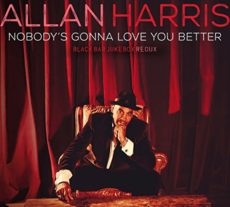
Review: Allan Harris | Nobody’s Gonna Love You Better
Choice, style and interpretation are the cornerstones of this vocalist who has an innate ability to proffer songs that allow him to eloquently emote. Having followed his career over the years there has been little he has been unable to do. Bringing four songs to the session that he penned, Allan deftly selected seven additional tunes composed by music’s elite that crosses all genres. Coupled with this, is his choice of musicians who pull off this roundhouse of songs that will definitely knock your socks off, if not off your feet. After numerous listening sessions and dancing around myself, I warn you now and it is my suggestion that you prepare to move about unabashedly through a variety of tempos. What is truly amazing is that Harris pulls this off without the use of any brass or wind instruments, producing not the sound but the feel of a Sixties rock and roll rhythm section.
This latest offering, Nobody’s Gonna Love You Better is evidence of that fact. An accomplished composer and lyricist, Allan kicks off this compendium of music with the uptempo wisdom of Mother’s Love, the formal name of the title track. Ever the griot, Harris plants thoughts worthy of rumination without being preachy but more of a gentle reminder for every son. He returns with Steely Dan’s brotherly advice by telling us Any Major Dude Will Tell You, giving the listener another lesson in keeping it real.
Covering a hit song is always a tribute to the original artist and requires it be performed just as well if not better. If you were around in 1969 then you remember a quintet called the Spiral Staircase who made More Today Than Yesterday popular for a couple of generations coming of age. Putting the right amount of swing in the mix he stays in the pocket with a big scoop of organ that will have you patting you foot and snapping your fingers, if not dancing around the house.
Giving us the opportunity to breathe a little lighter he drops down to ballad tempo to deliver a heartfelt rendition of the Johnny Mercer/Victor Schertzinger tune I Remember You. Love lost is not love forgotten and Mercer penned this song to Judy Garland, reminiscing over their short-lived romance when she was just 19. For those who may ask has Harris gone through this heartache himself given his superb delivery or like the bass keeping the heartbeat alive, does he just understand the emotional distress in the words, as does pianist Pascal Le Boeuf, who mirrors the sentiment throughout. Be comforted that he is just that good.
Rising up from the samba of Bahia, the bossa nova craze of Rio took the world by storm when the movie Orfeu Negro (Black Orpheus) hit the silver screen. Out of that explosion was birthed a host of composers, musicians and singers that included Dorival Caymmi and Antonio de Almeida who wrote Doralice. Fluently beautiful in the Portuguese language, Allan transports easily us to the side of her lover who is in strife because he loves her so but wants no wife, so he asks her what are they to do. For Brazil and bossa nova, it is nearly always about love. The rhythm is deceptive in its lightness for these star-crossed lovers.
Time has no meaning when one searches for the right song to add to their playlist and the Fields/McHugh tune I’m In The Mood For Love fit the bill perfectly. It was, however, refreshed with an improvised solo on the 1935 melody by James Moody and the lyrics by Eddie Jefferson, we add to the Great American Songbook the tune Moody’s Mood For Love. Harris stays away from the original rendition of performing the woman’s response in a high voice, delivering his version in ballad and taking the woman’s response to a mid-tempo beat and finishing his final words with brashness befitting someone who is smitten and confident and laying his emotions on the table.
Swing says it all in the title and having penned this one himself, Allan celebrate the big band era when teenagers and young adults all over America filled ballrooms like the Savoy, Palomar and Trianon and danced to jazz by Ellington, Goodman and Basie. A fitting tribute to the country’s most popular music between the Depression and a World War.
Hollywood is not off limits for this purveyor of song as he takes the theme song composed by Heinz Roemheld for the film Ruby Gentry. The lyrics by Mitchell Parish were added long after the tune had received wide acclaim. With a tempo suitable for dancing cheek to cheek, Harris speaks to the heart of the Ruby lyric and exposes the anguish, love and futility for this beauty that only the unloved would know. One will notice the bass line quietly captures the mood, with guitars in tow.
Your toes will tap once more as you are introduced to a swinging version of Jimi Hendrix’s Up From The Skies. This exemplifies Harris’ true talent in taking a rock song and giving it new life in jazz. The arrangement features the Hammond B3 gives it the punch need to get you on the floor or at the very least bopping in your seats and leaving you exhausted.
Blue Was Angry comes from the musical Cross That River that he wrote about the Black contributions, trials and accomplishments in the expansion of the West. Closing out this concert with a final ballad that he penned Secret Moments, he leaves us with a bit more wisdom about love and life.
I would be remiss if I didn’t pay my respects to the band that put in the hours to make this a winning project. Joining Allan Harris on Vocals, Acoustic Guitar, Resonator Guitar, D’Angelico Electric Guitar are Russell Hall – Acoustic Bass, Electric Bass; Pascal Le Boeuf – Piano, Fender Rhodes, Hammond B3; Shirazette Tinnin – Drums, Cajon; and Freddie Bryant playing Electric Guitar and Classical Guitar. Listening to them perform I can only surmise they truly had fun putting this one in the can and look forward to hearing them live. You chose well Mr. Harris.
What caught my eye at first glance were the classic songs that were chosen and the order in which they were placed. Introducing new songs, especially those you pen yourself, can often be a difficult task, but he does it well mixing them into the lineup. Next my ear was put to task to stay with a song to see developmental possibilities. As a deejay, I look for order and I will give any artist one opportunity to delight me. The song order in which Harris chose to present was pleasantly received having no inclination to skip a song or change the order. I was taken through all the emotions these composers and lyricists put into their compositions and felt buoyant and fully entertained. I heard versions of classics that were unexpected but fresh in their arrangements. If this is his brand, and I believe it is, he is not to be typecasted but embraced for the pioneering spirit that pushes his envelope to include all genres in this tapestry we call jazz.
For in this disposable world of short attention spans, where music is in your pocket, sold by the track, a click away from changing a song and one cannot listen longer than thirty seconds, there is no more getting up or walking across the room to the turntable, lifting the needle, moving to the next song or having to flip to the B side. I recognize the amount of thought that went into the order of his lineup and hopefully you will also. It may be a rollercoaster ride of emotions that begins on the downhill side of the first climb, winds around all the emotional twists and turns the music offers as it flows smoothly to a halt and we see just what has influenced his life and made him the superior musician and vocalist who has carved out his own niche in this world.
carl anthony | notorious jazz | january 3, 2017
Give A Gift Of Jazz ~ Share
#preserving genius
More Posts: bandleader,guitar,history,instrumental,jazz,music,review,vocal
The Jazz Voyager
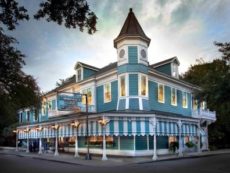
The Commander’s Palace is the destination at the end of this jazz voyager’s road trip and navigating through the Garden District in New Orleans, Louisiana for the jazz brunch fit for royalty. The restaurant is located at 1403 Washington Ave, 70130 / 504-899-8221 / $$$ / Brunch: 10:30am – 1:30pm
This former 1920s bordello turned restaurant is run by the Brennan family and housed in a bright blue Victorian mansion, built in 1880. They have been serving up refined Creole fare in a chandelier-hung space, and it is an elegant way to leisurely spend a late morning-early afternoon listening to jazz while dining.
Insider Tip: In the summer, the restaurant sells off inventory from their wine cellar at half price. There’s one catch: You have to mention the phrase “GrapeNutes” when making a reservation, then you’ll receive the discounted wine list.
Reservations are recommended and no shorts or t-shirts are allowed. Jackets are required on Sundays. To discover menu offerings visit commanderspalace.com #preserving genius
Sponsored By

www.whatissuitetabu.com
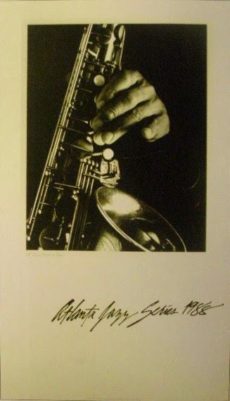
Atlanta Jazz Festival… 1988
More Posts: festival,forty,free,history,jazz,music,tradition,years
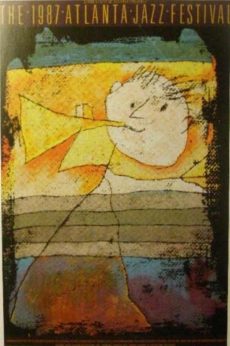
Atlanta Jazz Festival… 1987
More Posts: festival,forty,free,history,jazz,music,tradition,years